A student from the Moscow Aviation Institute (MAI), Alexander Shalaev, has developed a unique system that can be used in hazardous industries and surgery. His invention will allow manipulations with objects that pose a threat to life and health at a safe distance.
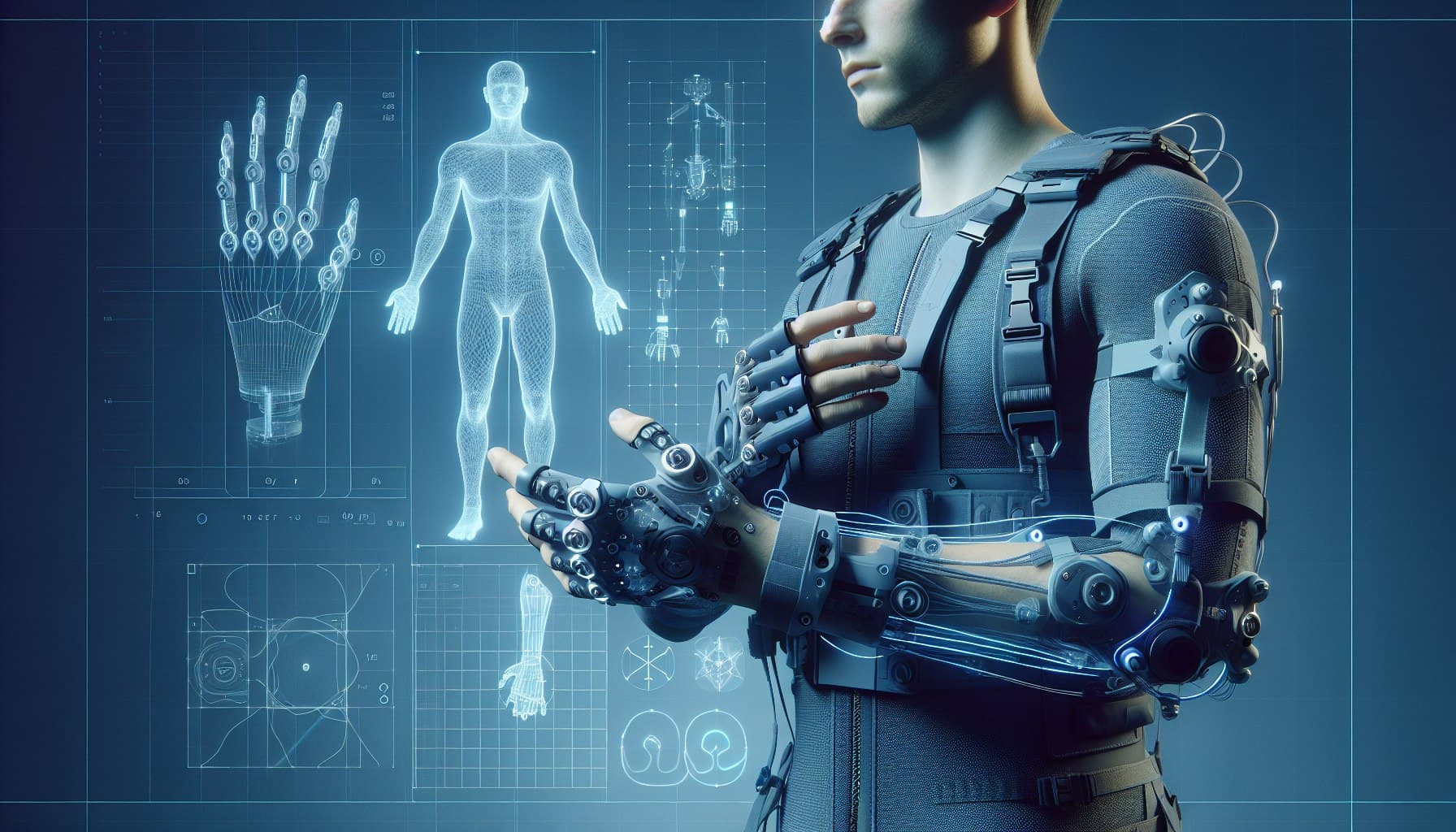
The system has a wide range of applications: it can be used wherever manipulators can be used. For example, in factories and research centers where people work with life-threatening materials, or in medicine for remote operations.
The plans include creating a neural network that, by learning from the actions of an experienced operator, will be able to perform typical operations instead of him.
This development is a unique mobile manipulator control system with tactile feedback. The wearable device consists of a frame, a sleeve, and a glove equipped with sensors.
The system determines the position of the hand in space relative to the X, Y, and Z axes. The microcontroller tracks the movements of the operator's hand, and the sensors, in contact with the skin, read the strength of the signals and transmit them to the manipulator connected to the system.
The manipulator recognizes commands and executes them, while providing feedback. Resistive pressure sensors located on the device give the operator a complete sense of touch of the object.
Earlier, Samara scientists released completely domesticvirtual simulators, which will be an excellent tool for training future doctors. The university's arsenal includes 13 simulators, including four new developments: "Registration and interpretation of an electrocardiogram", "Emergency medical care for a child aged 1-8 years", "Emergency medical care" and "Assessment of auditory function".
Read more on the topic:
The Russian company "SensoMed" presented an innovative simulator for rehabilitation after a stroke
A technology has been created to help make biofuel using neural networks
Highly sensitive sensors for detecting diseases by human breath will be created in Russia











