The Kingisepp Machine-Building Plant (KMZ) has completed the maintenance of water jets from the Swedish company Kamewa 36A3 for one of its clients.
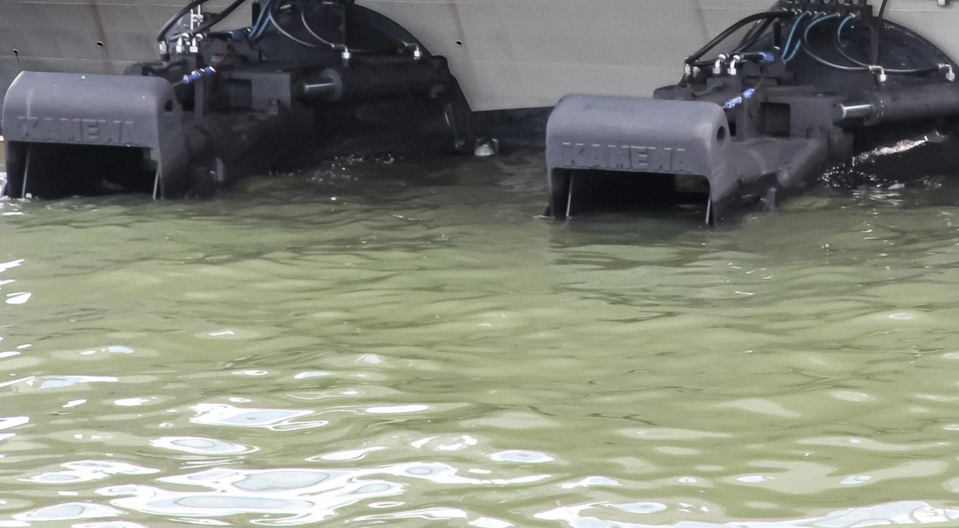
This required a special set of parts and spare parts that were not available on the Russian market due to sanctions. KMZ specialists manufactured the necessary components and successfully carried out all the work in accordance with the instructions.
KMZ has also developed its own line of water jet propulsion units: KMZJET-180, KMZJET-295, and KMZJET-340. These are mechanisms designed for the movement of vessels, operating on the principle of water jet propulsion. They suck water from the environment and eject it at high speed, creating a reactive force capable of propelling the vessel forward.
The propulsion units from KMZ are made entirely of Russian parts and are equipped with an external inspection hatch. This allows access to the impeller - a rotating element that creates centrifugal force - without the risk of flooding the vessel, thereby simplifying the maintenance process and reducing downtime.
KMZ has all the necessary production facilities and experience to perform reverse engineering on almost the entire range of spare parts for imported equipment.
Read more on the topic:
KMZ to produce special cranes for the Plesetsk Cosmodrome
KMZ used a new form of alloy to strengthen the cylinder heads of marine diesel engines
Never miss our newsAdd this site to your preferred sources to see us more oftenAdd on Google

















