Translated with AI from the Russian original.
The company "Russkiye Elektricheskiye Dvigateli" (RED, part of Transneft's structure) has completed the development and manufacturing of two prototype propulsion electric motors for the azimuth thrusters of shallow-draft icebreakers of Project 22740M. Tests were successful, the company reported.
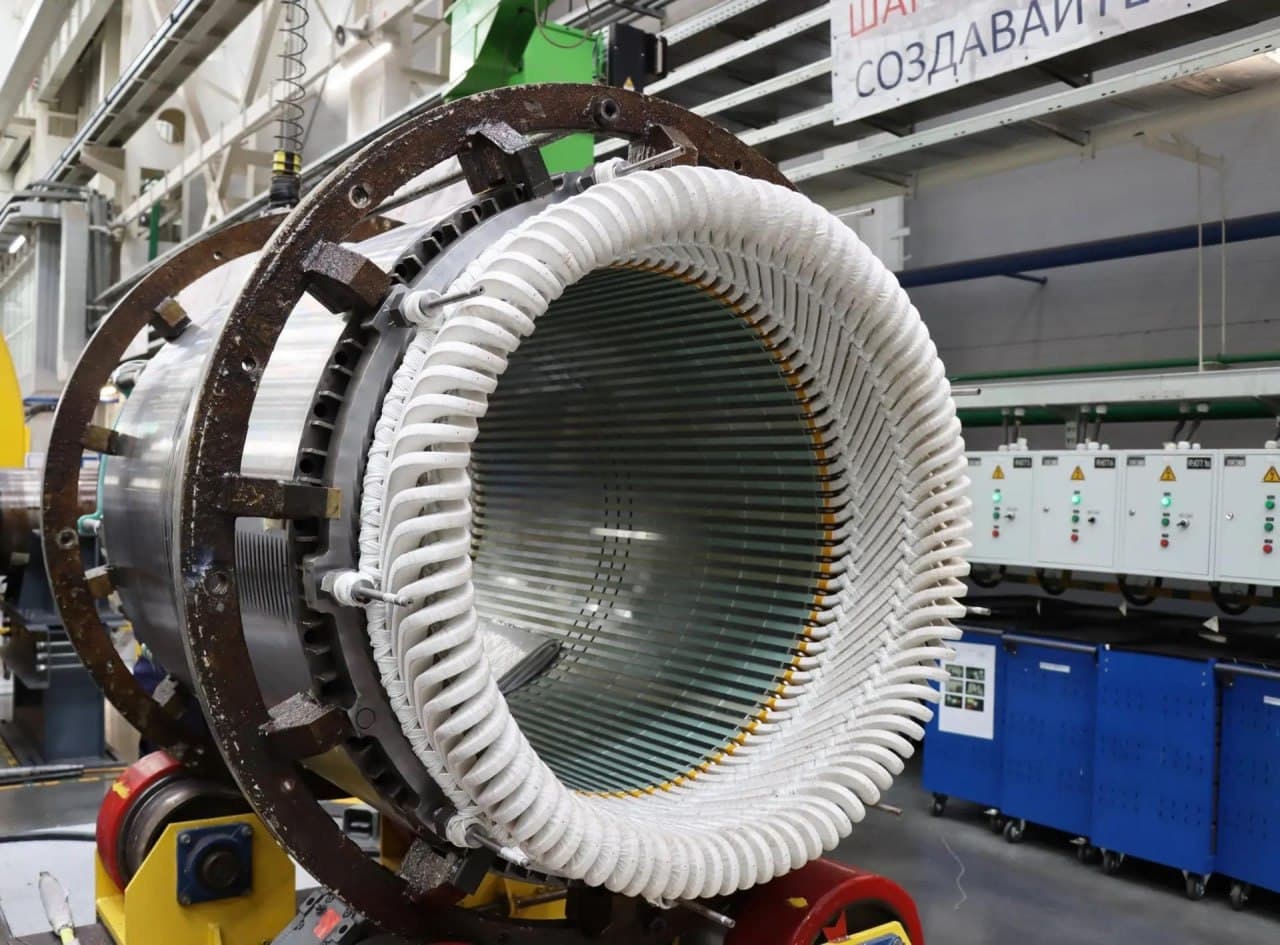
The new 2000 kW electric motor is designed for operation in heavy ice conditions. It ensures vessel movement through ice up to 1.5 meters thick and allows the icebreaker to continuously navigate through an ice field up to 1 meter thick. The developers claim that in terms of icebreaking capability, the engine has no domestic counterparts among shallow-draft icebreakers.
The Project 22740M icebreaker itself was designed by CDB "Lazurit". Its power is 6 MW, which is significantly more than previous vessels of this class. The vessel's length is 78 meters, width is about 17 meters, draft is 3.2 meters, and speed in clear water is 14 knots. The icebreaker is capable of operating in the shallow waters of the Caspian and Azov Seas, as well as on inland waterways: conducting convoys, performing towing, and emergency rescue operations. There is a helicopter pad on board for a drone that will conduct ice reconnaissance.
The engine's development was carried out as part of an import substitution program. Its low rotational speed required complex calculations of thermal regimes and the organization of effective cooling in a limited volume. The developed RED electric motors and "Konar" azimuth thrusters are a direct domestic analogue of the Swedish-Swiss Azipod ICE1400 azimuth thrusters from ABB.
Factory tests were conducted under the supervision of the Russian Maritime Register of Shipping. The equipment confirmed compliance with GOST requirements and RMRS standards and was approved for further onboard testing. The company emphasizes that creating its own line of azimuth thrusters with electric motors up to 15 MW is a strategic direction for the industry. These developments ensure the technological independence of the Russian icebreaker fleet amidst increasing load on the Northern Sea Route and sanction restrictions.
Read more on the topic:
Never miss our newsAdd this site to your preferred sources to see us more oftenAdd on Google

















