Russian scientists from NUST MISIS and NIIEFA have developed an innovative 3D printing technology for creating components for thermonuclear reactors.
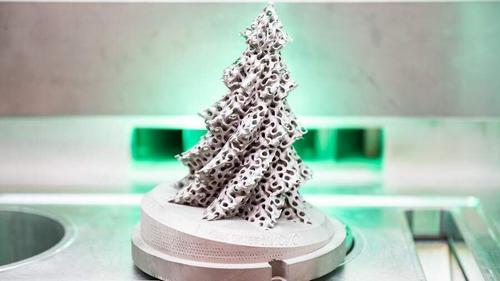
The method combines 3D printing with traditional methods and allows the production of parts that can withstand high temperatures and radiation. The bimetallic composite of copper and tungsten, obtained using this technology, has improved characteristics compared to analogues.
The technology uses selective laser melting to create porous tungsten structures, after which copper is added to the matrix, which improves the mechanical properties of the material. The new composite has a density of 96.7% and significantly greater ductility, without breaking down under deformation up to 35%.
The technology is aimed at creating materials for thermonuclear reactors that must operate in extreme conditions. Research is ongoing, and in the future, these materials may be used not only in the energy sector, but also in space flights, where thermonuclear reactors may become a key source of energy.
Read materials on the topic:
3D Printing for Nuclear Power Plants: Rosatom Changes Approach to Production
Rosatom Scientists Begin Printing Individual Titanium Implants on a 3D Printer
Russian 3D Printer for Printing Houses in Siberia Starts Operating
Never miss our newsAdd this site to your preferred sources to see us more oftenAdd on Google

















