Since December 19, 2024, users in Russia have begun to experience serious problems when trying to play videos on YouTube, both through mobile operators (MTS, MegaFon, Beeline, T2) and through wired networks. This led to a 10% drop in video service traffic in the Russian Federation in recent days.
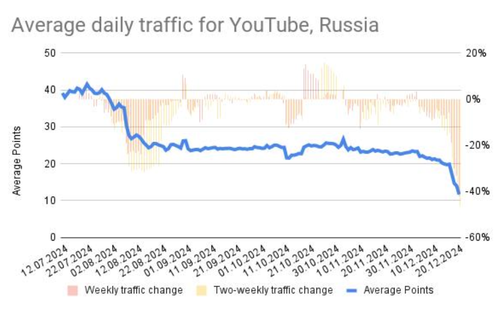
Currently, videos either do not load or load very slowly. According to a Google representative, problems with access to YouTube are not the result of technical failures of the service.
Roskomnadzor, in turn, pointed to the termination of Google Global Cache servers, which significantly worsened the quality of content delivery. The agency stated that it is considering the possibility of strengthening measures against YouTube in connection with violations of Russian legislation.
The use of various workarounds and direct connections to the main channels of telecom operators led to a slight increase in traffic on Google servers in the Netherlands. The problems affected not only access to the video service, but also other Google services, such as AMP and reCaptcha.
Read materials on the topic:
It's all Google!: Russian authorities have nothing to do with the slowdown of Youtube
Russian politicians are concerned about the prospect of blocking YouTube
Never miss our newsAdd this site to your preferred sources to see us more oftenAdd on Google

















