In the late 1970s and 1980s, the Soviet military machine worked on a series of upgrades to intercontinental missile systems. One such project was the Pioneer-3 system with the 15Zh57 missile - an attempt to adapt an existing design to new challenges posed by enemy air and missile defenses.
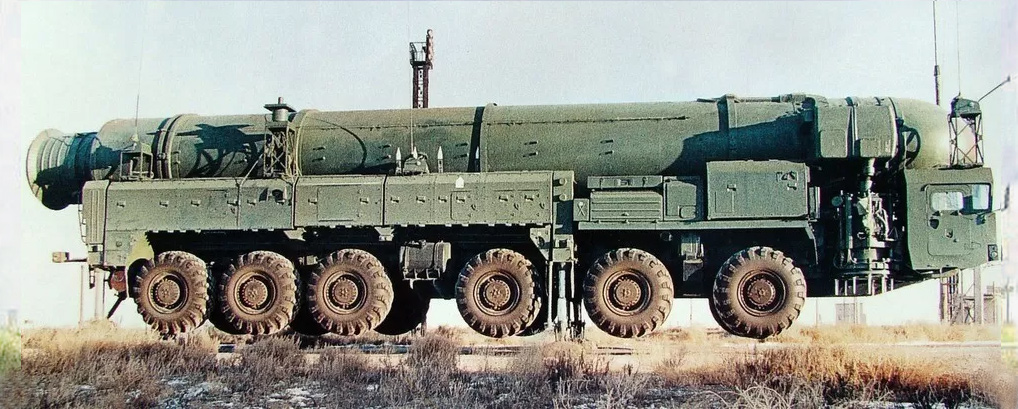
On November 12, 1979, the USSR Council of Ministers adopted a resolution on the creation of a missile system for the 15Zh57 missile. The development was led by the Moscow Institute of Thermal Technology (MIT) under the general supervision of A. D. Nadiradze. The decision to create a new modification was directly related to US plans to deploy ABM systems in the European theater, particularly based on the Patriot anti-aircraft missile system.
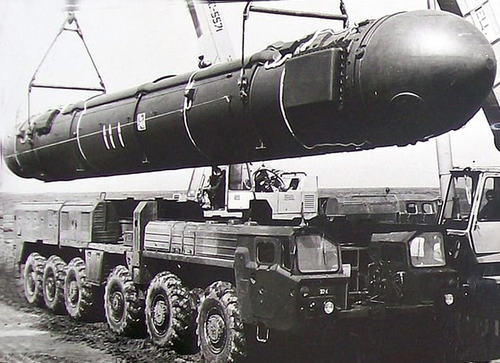
The Pioneer-3 project was based on the developments of the 15P653 Pioneer-UTTH system and the 15Zh53 missile. One of the key tasks was to ensure maximum unification with existing combat elements and, if possible, with promising elements of mobile ground missile systems (PGRK) - including the Topol ICBM. This provided a chance to reduce development time and use proven technical solutions.
The missile's length was about 12-13 meters, the diameter was about 1.0 meter, and the launch weight was about 4.5-5 tons. The missile could carry up to three small-sized nuclear warheads with high accuracy and reduced radar signature. The maximum flight range was estimated at 2,500-3,500 km. The system provided mobile launch from a railway or road platform and was equipped with an autonomous navigation and control system, which increased survivability and the ability to overcome enemy missile defenses.
In the context of the emergence and possible improvement of ABM systems, specific tasks were set:
- reduce the radar signature of warheads;
- make the warheads small and lightweight while maintaining their destructive effectiveness;
- provide the ability to increase the number of warheads on the carrier (initially, up to four were considered, then they returned to a three-warhead scheme);
- maintain the mobility and survivability of the system against destruction by enemy ABM and strike-reconnaissance assets.
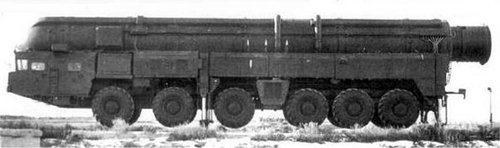
Testing of the system began in 1984. The work was carried out in conditions of fierce political and military competition and constant adjustment of technical requirements, taking into account the predicted methods of countering ABM systems. Despite the work done to create lighter and less visible warheads, the program was not brought to mass deployment.
In 1988, work on the project was terminated in connection with the signing of the Intermediate-Range Nuclear Forces Treaty (INF). The treaty, aimed at reducing precisely those classes of weapons to which a number of Soviet developments belonged, changed strategic priorities and made further development of a number of missile programs meaningless or politically undesirable.
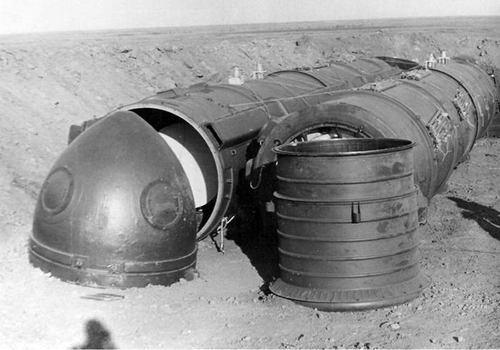
Although the Pioneer-3 did not reach the stage of being put into service, the project turned out to be important from the point of view of design developments: they tried to solve the problem of reducing visibility, compactness of warheads, and unification with existing solutions. In addition, it reflects a transitional stage in Soviet strategic thought - from a purely "massive" payload to a search for a balance between mobility, camouflage, and multiple warheads.
Read more materials:
- Like MT-LB but for something else: the Severyanin plant presented new drilling rigs
- Small targets - big threat: Pantsir-S SAM systems can shoot down drones measuring 30 by 30 cm
- UAC showed the armament compartments on the fifth-generation Su-57 fighter for the first time
Never miss our newsAdd this site to your preferred sources to see us more oftenAdd on Google