Translated with AI from the Russian original.
On November 5, 1955, the first serial Tu-104 (USSR-42318), built at the Kharkov Aviation Plant, took to the skies for the first time. At the controls was test pilot Valentin Fedorovich Kovalev. This flight marked the beginning of a new era - the era of jet passenger airliners.
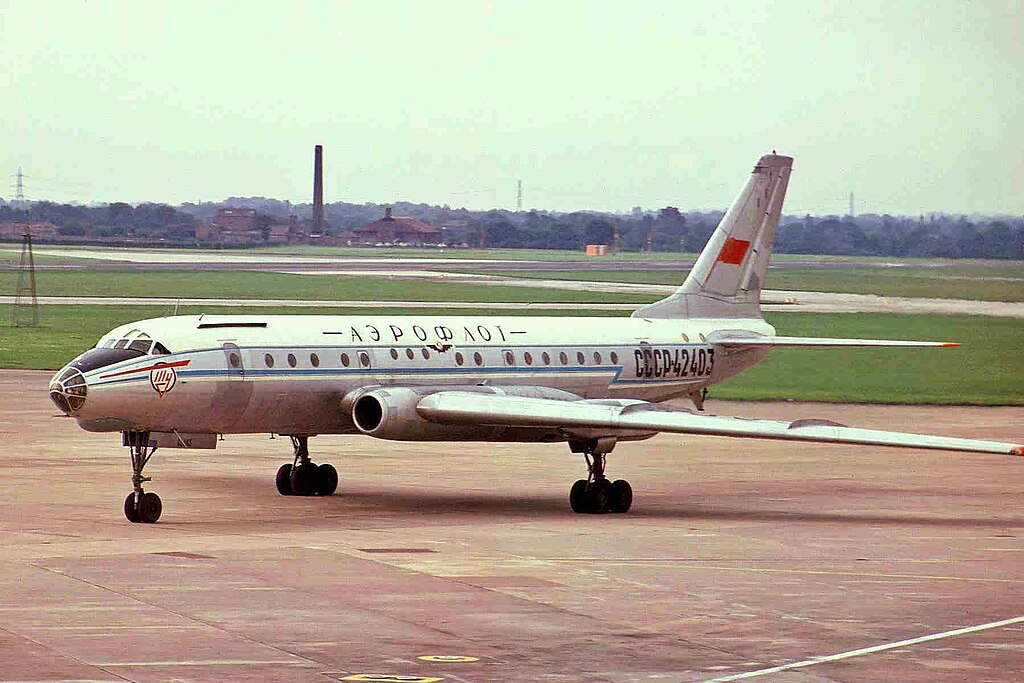
In 1956, the Soviet Union amazed the world when, during Nikita Khrushchev's visit to London, the Soviet jet Tu-104 arrived there as well. Western observers were stunned: a country devastated by war was the first to put a serial passenger jet into operation. From 1956, after the suspension of flights of the British De Havilland Comet, and until October 1958, when the Boeing 707 appeared, the Tu-104 remained the only jet airliner performing regular flights in the world.
The history of the Tu-104 began in 1953. The design bureau of Andrei Nikolaevich Tupolev, having completed work on the long-range jet bomber Tu-16, received the task of creating a passenger airliner. In order not to waste time, the designers took the already mastered military machine as a basis, adapting it to civilian needs.
On September 15, 1956, the Tu-104 made its first regular flight on the Moscow - Irkutsk route. The aircraft, piloted by the crew of E. P. Barabash, covered 4,570 kilometers (with a stopover in Omsk) in 7 hours 10 minutes. This was almost three times faster than piston aircraft of that time. The airliner, capable of carrying up to 100 passengers at a speed of 800-900 km/h, became the basis of the Aeroflot jet fleet and soon began flying on the Moscow - Tbilisi, Moscow - Tashkent, Moscow - Khabarovsk lines. In 1957, the Tu-104 also reached New York, confirming the world priority of the USSR in the field of jet technology.
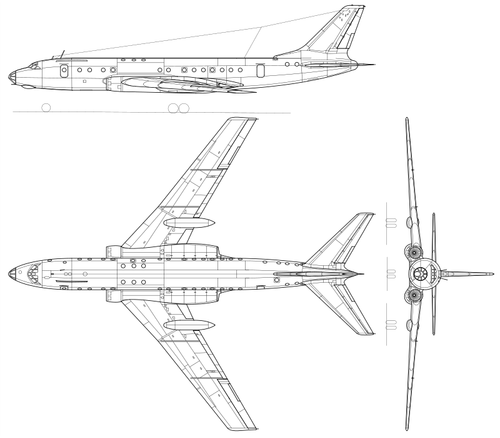
The Tu-104 had a length of 38.9 m, a height of 11.9 m, a wingspan of 34.5 m, and its cruising speed reached 800 km/h at an altitude of 12,000 m. Two engines with a thrust of 9,000 kgf provided confident flight, and the maximum range was 2,750 km. The empty weight of the aircraft was 41,600 kg, and the maximum take-off weight reached 76,000 kg.
From 1956 to 1960, 206 Tu-104 aircraft of various modifications were built. The first six machines appeared in 1955, eight were produced in 1956, twenty-three in 1957, fifty-seven in 1958, sixty-one in 1959, and fifty-one aircraft in 1960. In total, about twenty variants of the Tu-104 were created - from passenger and cargo to test and representative (VIP) versions.
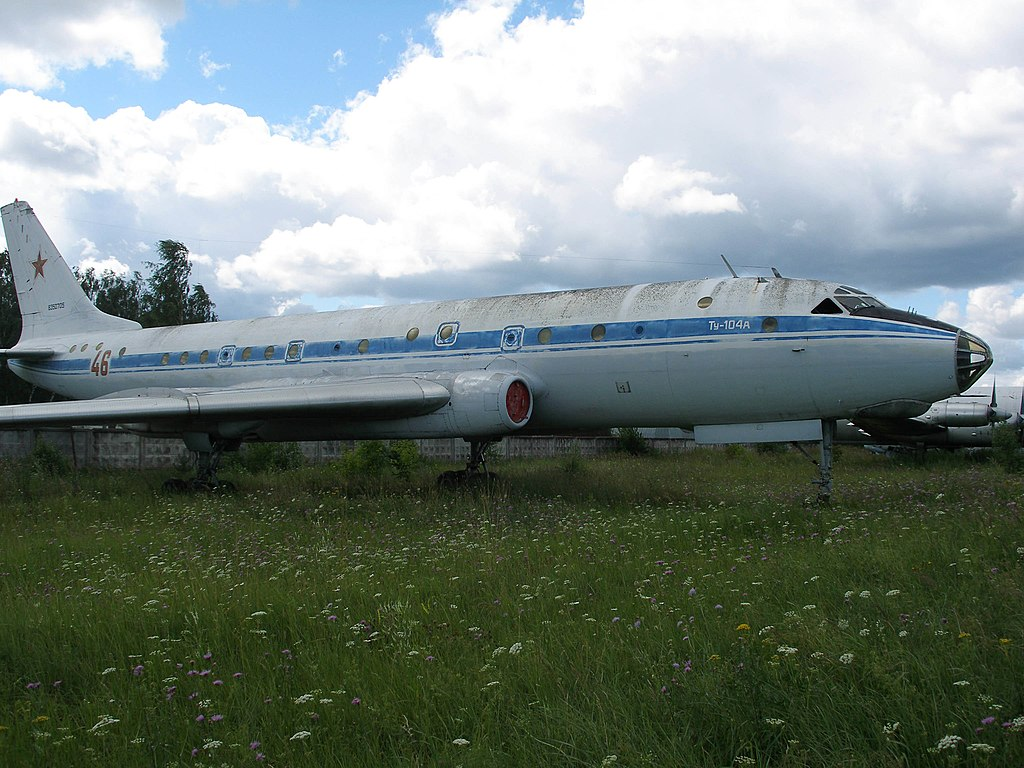
The last Tu-104s left the regular lines in 1979, but were still used for a long time as training, staff and flying laboratories, leaving a noticeable mark in the history of world aviation.
The Tu-104 became an intermediate link in the development of Soviet jet passenger aviation - it was followed by more advanced and safer airliners. The first was the Tu-124 (1958-1965), designed for short-haul flights. It was smaller in size, more reliable and used a new generation of turbojet engines, which made it more economical and convenient to operate compared to its predecessor.
Earlier,www1.ru reported thatthe legendary MiG-15Rbis reconnaissance aircraft was restored to life in the Kaluga region.
Read more materials:
- KAMAZ-53193 Confirmed Efficiency: Chistogor Hydrogen Truck Prototype Reduced Fuel Consumption in Tests
- Small Targets - Big Threat: Pantsir-S SAM Systems Can Shoot Down Drones Measuring 30 by 30 cm
- Banks began blocking the accounts of Russians for transfers to themselves
Never miss our newsAdd this site to your preferred sources to see us more oftenAdd on Google

















