Airplanes are elegant machines with impeccable aerodynamics and smooth lines. But the An-72 multi-purpose transport aircraft, created in the USSR, seems to deliberately break established canons. So what is the secret of the "Cheburashka ears" that became a true legend of the Soviet sky and an engineering masterpiece of aircraft construction?
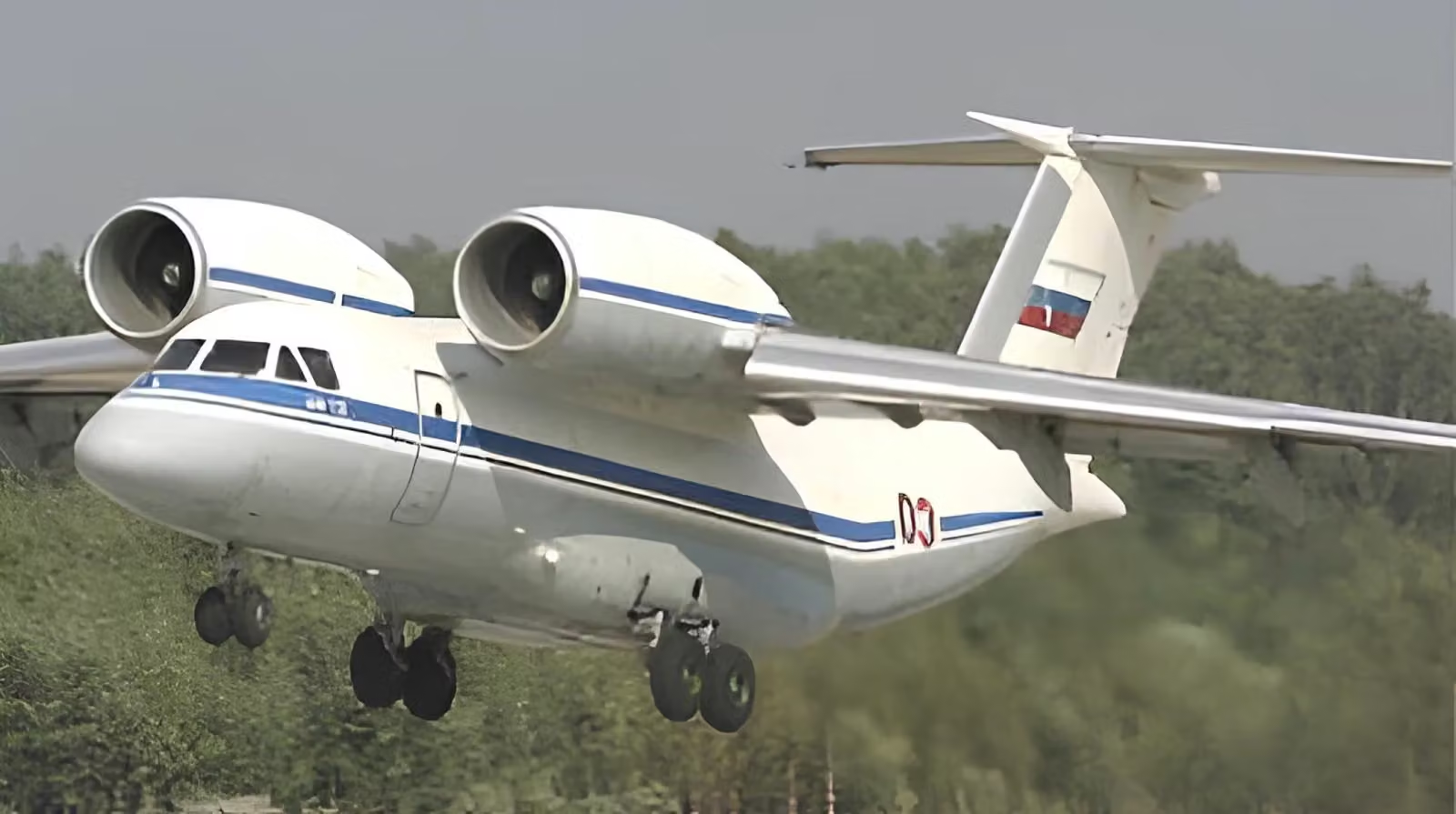
"Cheburashka"?! But why "Cheburashka"?
The name is simple. At first glance, the An-72 evokes a smile - the large round engines above the wing resemble the ears of the cartoon, affectionate and unusual Cheburashka. However, this is not just an external resemblance. Like the character in Eduard Uspensky's children's book, the plane is kind, reliable and a little incomprehensible at first glance.
Pilots love the An-72 for its loyal character. The aircraft is stable in flight, forgives mistakes and "pulls home" in all conditions. Piloting it is not just a job, it's almost a friendship with the machine.
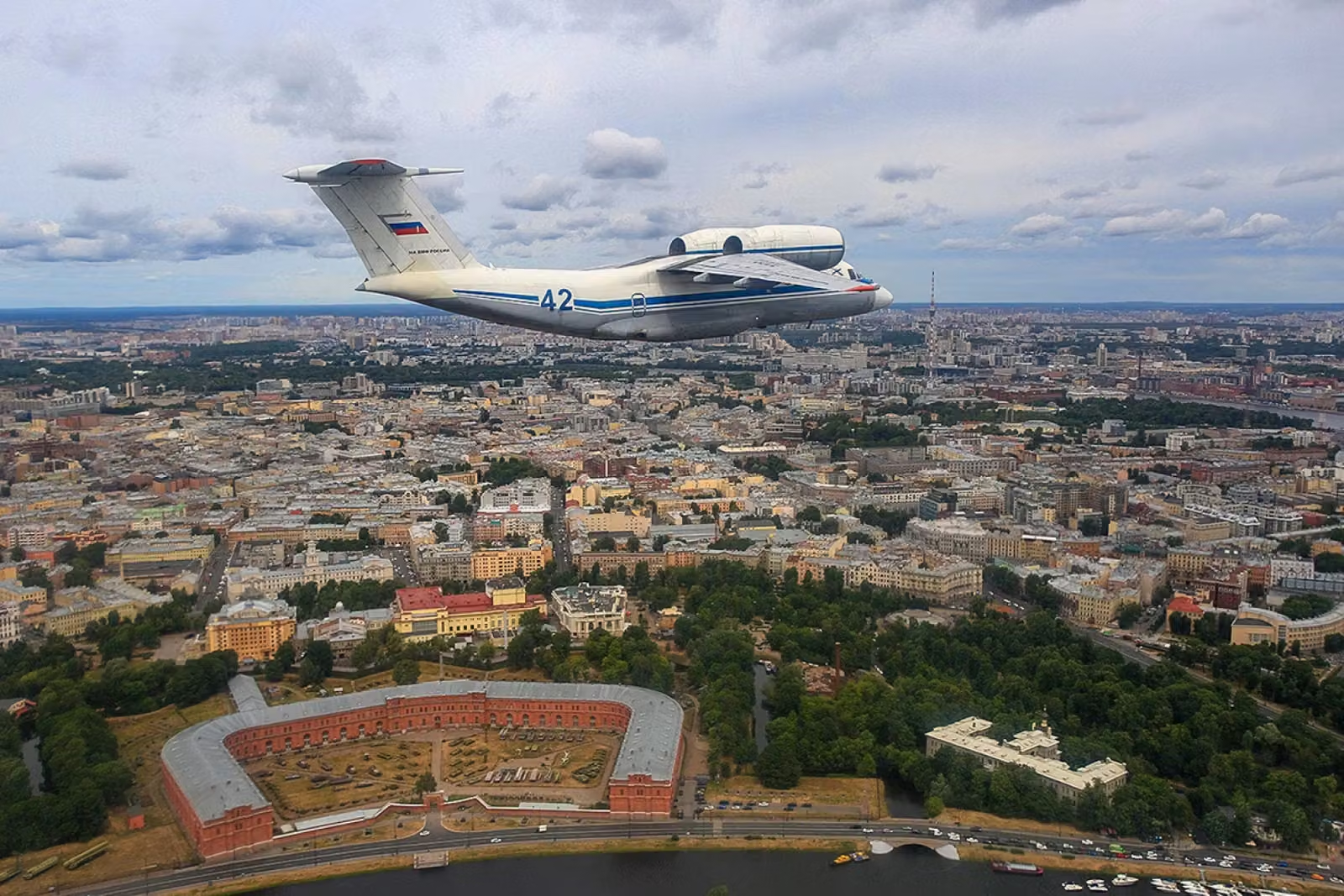
The engines above the wing are not a designer's whim, but a clever engineering find. So what is the secret of the "flying Cheburashka"?
The Coandă effect - what is that?
To understand how the An-72 deceived physics and became a legend, let's first get acquainted with one tricky phenomenon - the Coandă effect.
The effect was discovered in 1932 by the Romanian engineer Henri Coandă, who noticed that a jet of liquid or gas emerging from a nozzle does not rush to fly straight, but readily sticks to the nearest surface.
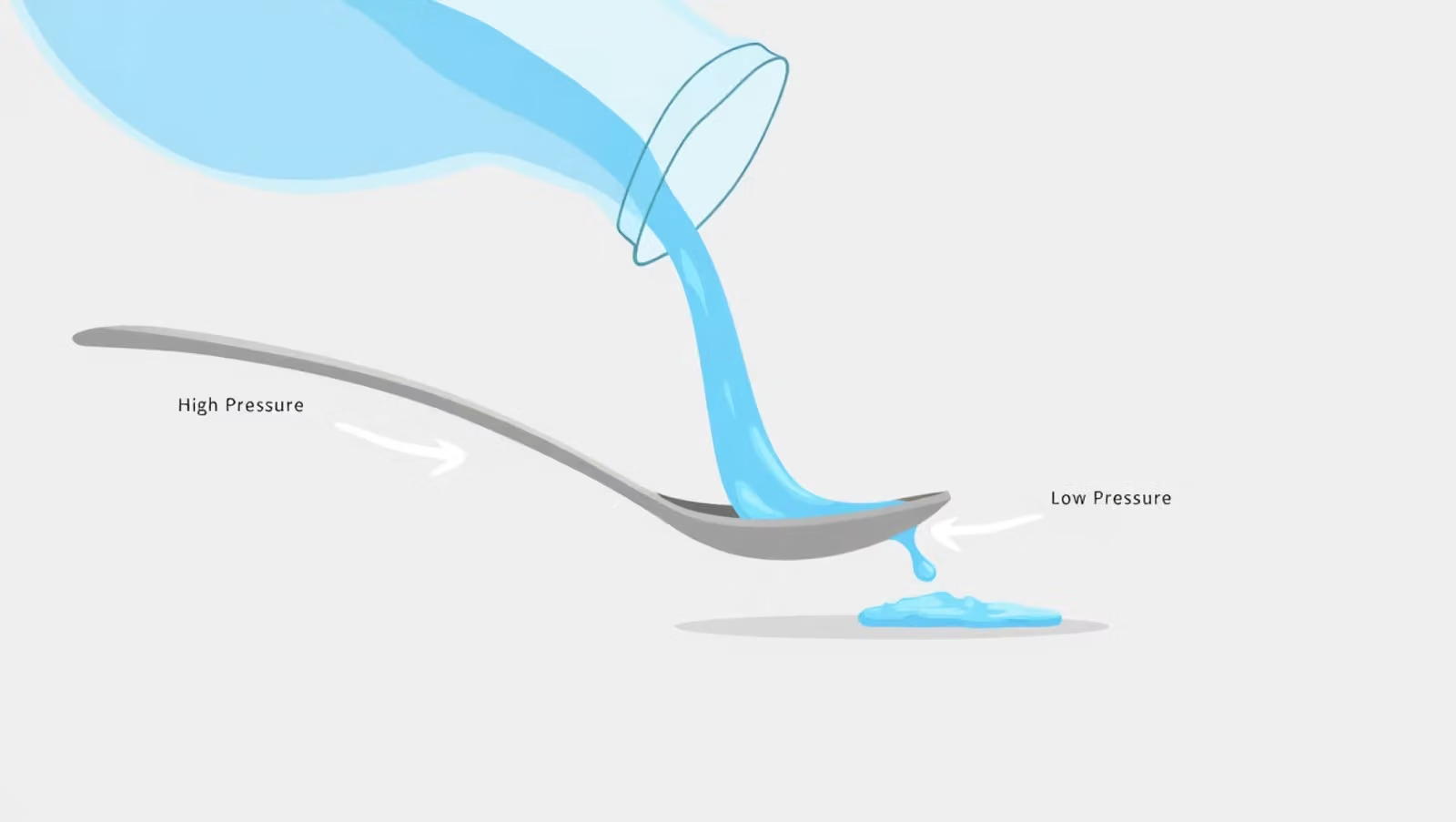
A nozzle is a channel (round, rectangular, or any other shape) through which a stream of liquid or gas is directed at the desired speed and in a specific direction. In essence, it is a "tube-rudder" that determines where and at what speed everything will fly. The simplest example of a nozzle is the spout of a kettle or a water tap.
The Coandă effect can even be seen in the kitchen. If you bring a spoon to a stream of water from the tap, the stream does not bounce off the spoon, but bends around it, drawn to it.

It's all about the pressure difference. When a stream of gas or water flows out of a nozzle and meets an obstacle, such as a spoon, a low-pressure zone is formed on one side. Air does not enter this area, and the flow is drawn to or sticks to the surface, as if it is being sucked in.
Simply put, water sticks to a spoon because there is no air on the surface side, but there is air outside. And liquid and gas, as you know, always strive to occupy all available space.
What does the "eared" An-72 have to do with it?
The An-72 uses the Coandă effect. Its engines direct a stream of hot air along the wing, creating additional lift. As a result, the aircraft does not just fly, but literally forces the air to hold it. This is how the flying "eared Cheburashka" learned to use physics to its advantage.
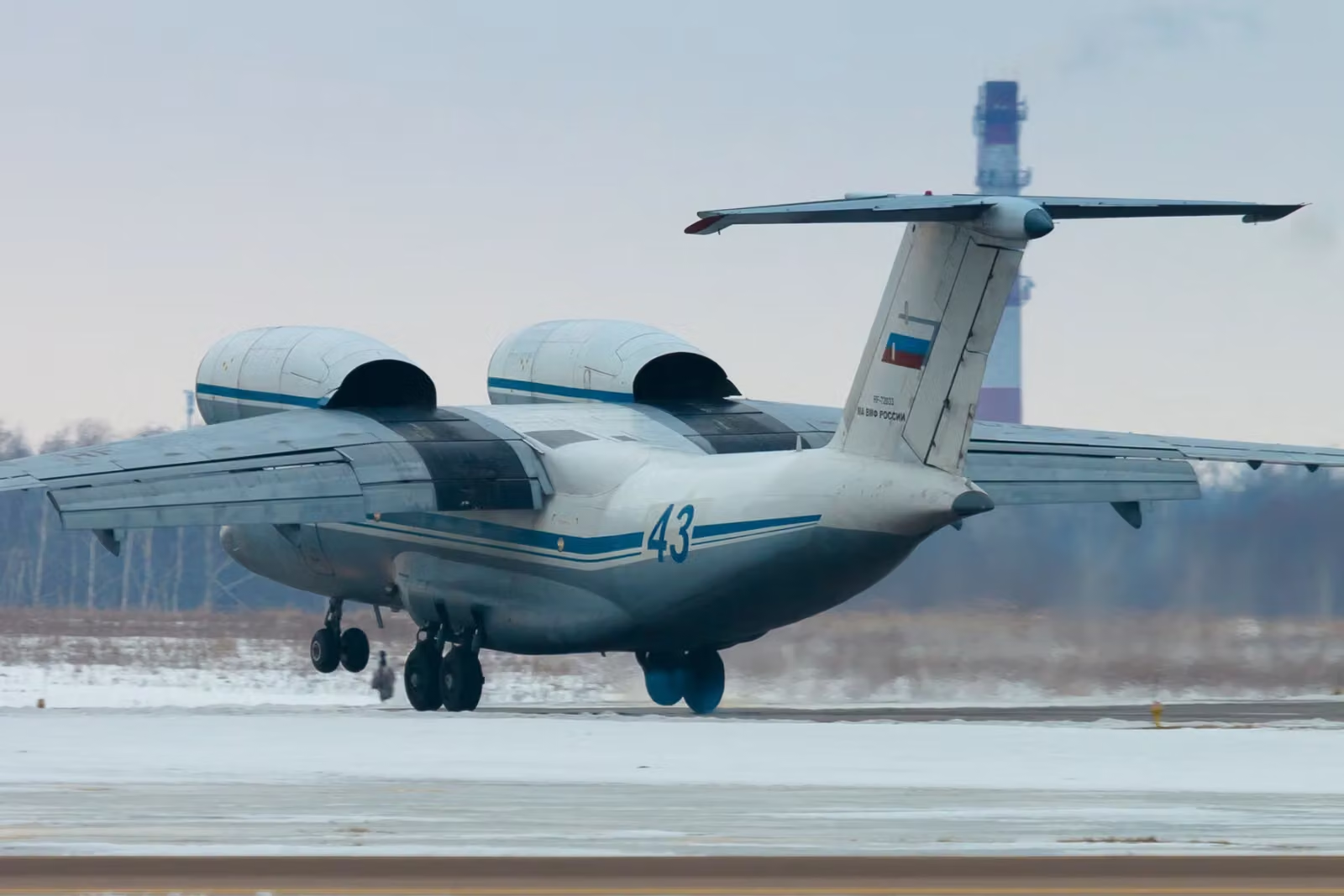
This design feature provides powerful lift even on short runways. The aircraft takes off from a site only a couple of football fields long. Stability is high even at low speeds - the air flow does not break away from the wing, and the machine remains controllable even at minimum speed.
Why was the An-72 created?
In the 1970s, the USSR needed an aircraft for the remote regions of the Arctic, Siberia and the Far East. Where there are no asphalt runways, and the climate ranges from -60°C to +45°C.
The O.K. Antonov Design Bureau created a reliable and multifunctional machine that was supposed to replace the obsolete An-26, but exceeded all expectations.
Many more modifications were created on the basis of the An-72 - a patrol aircraft for protecting sea borders, for ice reconnaissance, an Arctic "insulated" version, for transporting cargo.
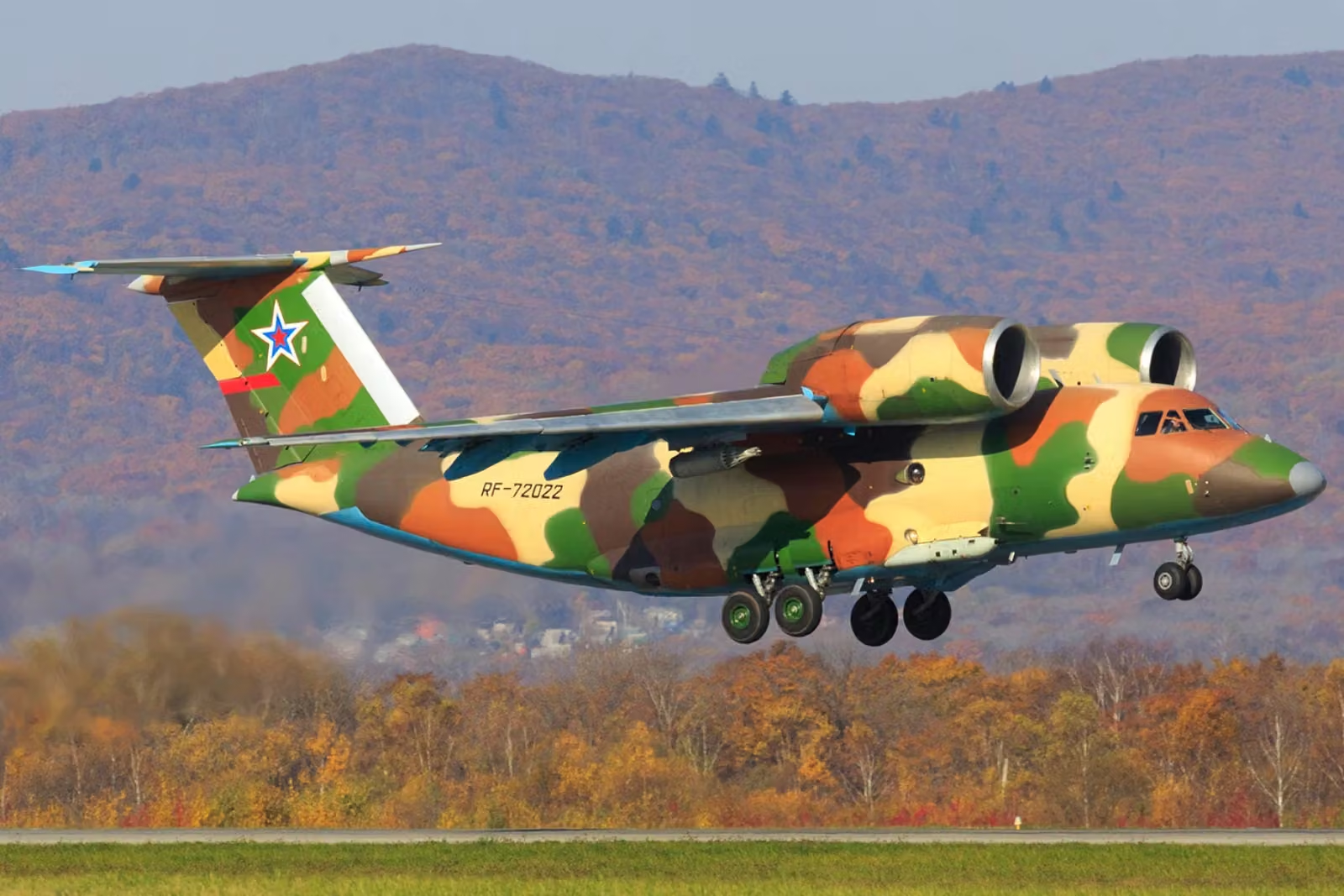
Due to its high reliability, it was also used in military aviation - transportation of troops and equipment, paratrooper drops, evacuation of the wounded and other military tasks.
Instead of an afterword
Today, the An-72 is a forgotten genius, an unpretentious and kind workhorse, a strange "eared" aircraft. Or is it an inspiration for the future? Modern aviation is moving towards impeccable streamlined design and minimal fuel consumption, against their background the clumsy An-72 seems like a guest from another era.
In fact, "Cheburashka" is more than just an airplane. It has become a symbol of engineering courage, which proves that even someone who goes against the laws of physics can fly in the sky.
Earlier,www1.ru reported thatAn-124 "Ruslan" went to Iran from the territory of the manufacturer of Su-30 and Yak-130.
Read more materials:
Never miss our newsAdd this site to your preferred sources to see us more oftenAdd on Google