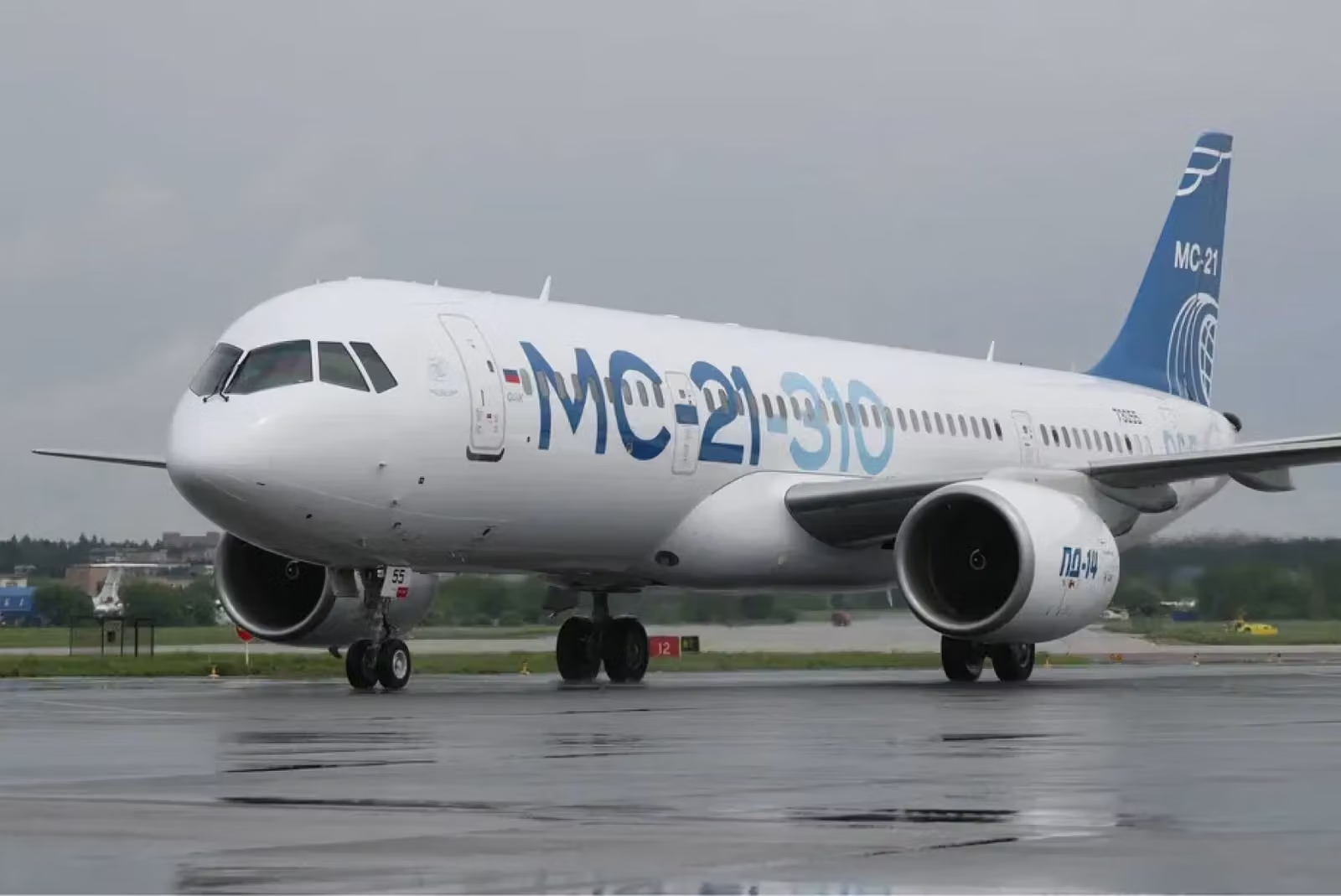
In late September, the Interfax agency published a piece stating that the Russian government plans tocut funding for the domestic aviation industry by 40% in 2026 and 2027. The publication "Technosphere Russia" explained why the reduction in the flow of money will not affect the production rate of new MC-21-310, SJ-100, Il-114-300, and other aircraft.
First, it is necessary to understand the amount and purpose of the allocated funds. However, more on that later. What's more important are the expenses in the industry andsources of funding.
Where does the money come from?
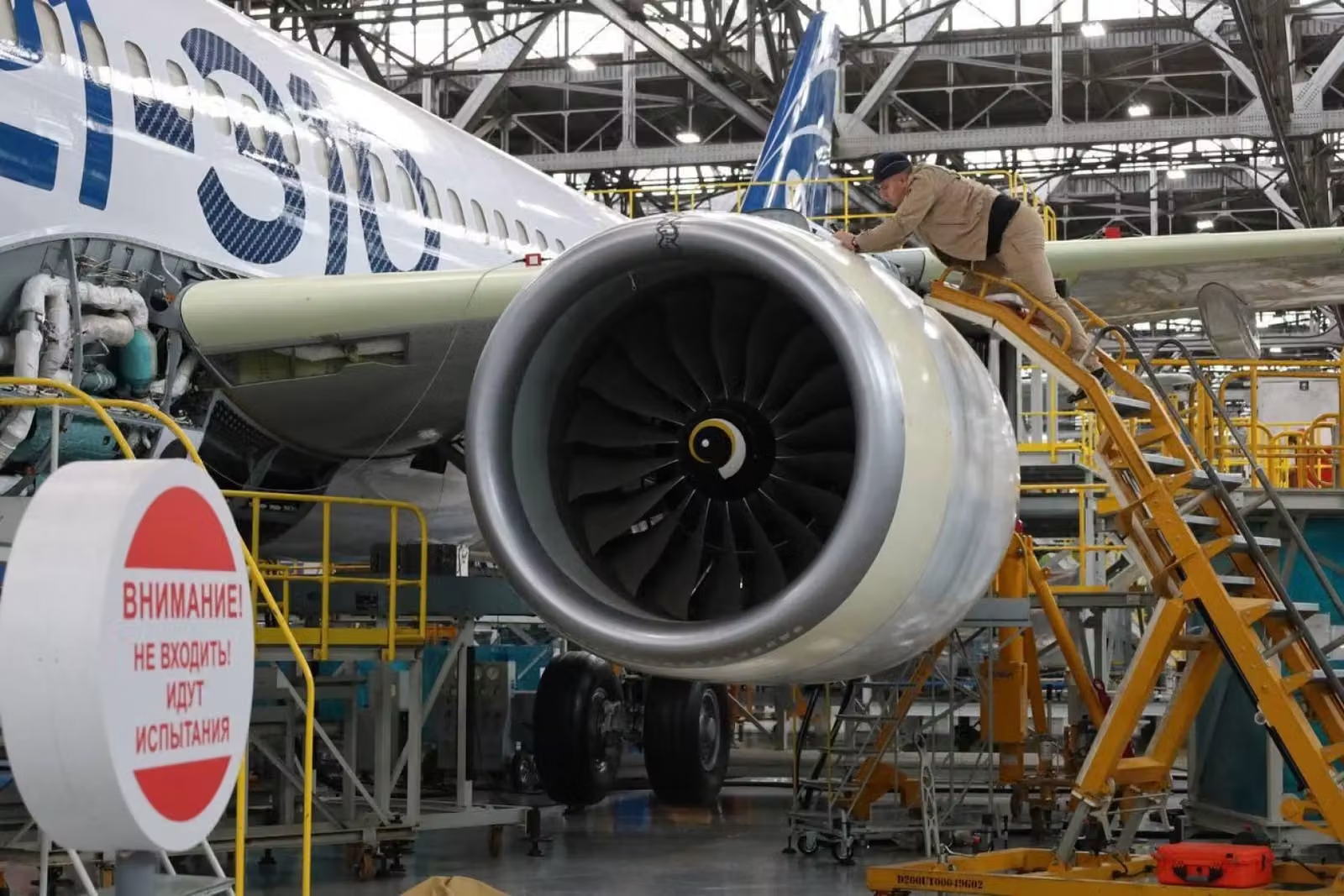
So, mainly, enterprises spend funds on the construction and renovation of workshops. At the same time, all work on engines is a separate line item.
The construction of new workshops is financed either from the state budget or from the own funds of the United Aircraft Corporation (UAC) - as in the case of the "Superjet", or from the investments of carriers - S7 ("Siberia") - with the Tu-214.
The production of aircraft is financed directly from credit funds orfunds from carriers. If money is allocated for an aircraft, it is built.
Certification andrefinement of aircraft require the least amount of spending. They only concern the first years of operation, when downtime is likely due to identified technical problems.
External revenue has not been canceled
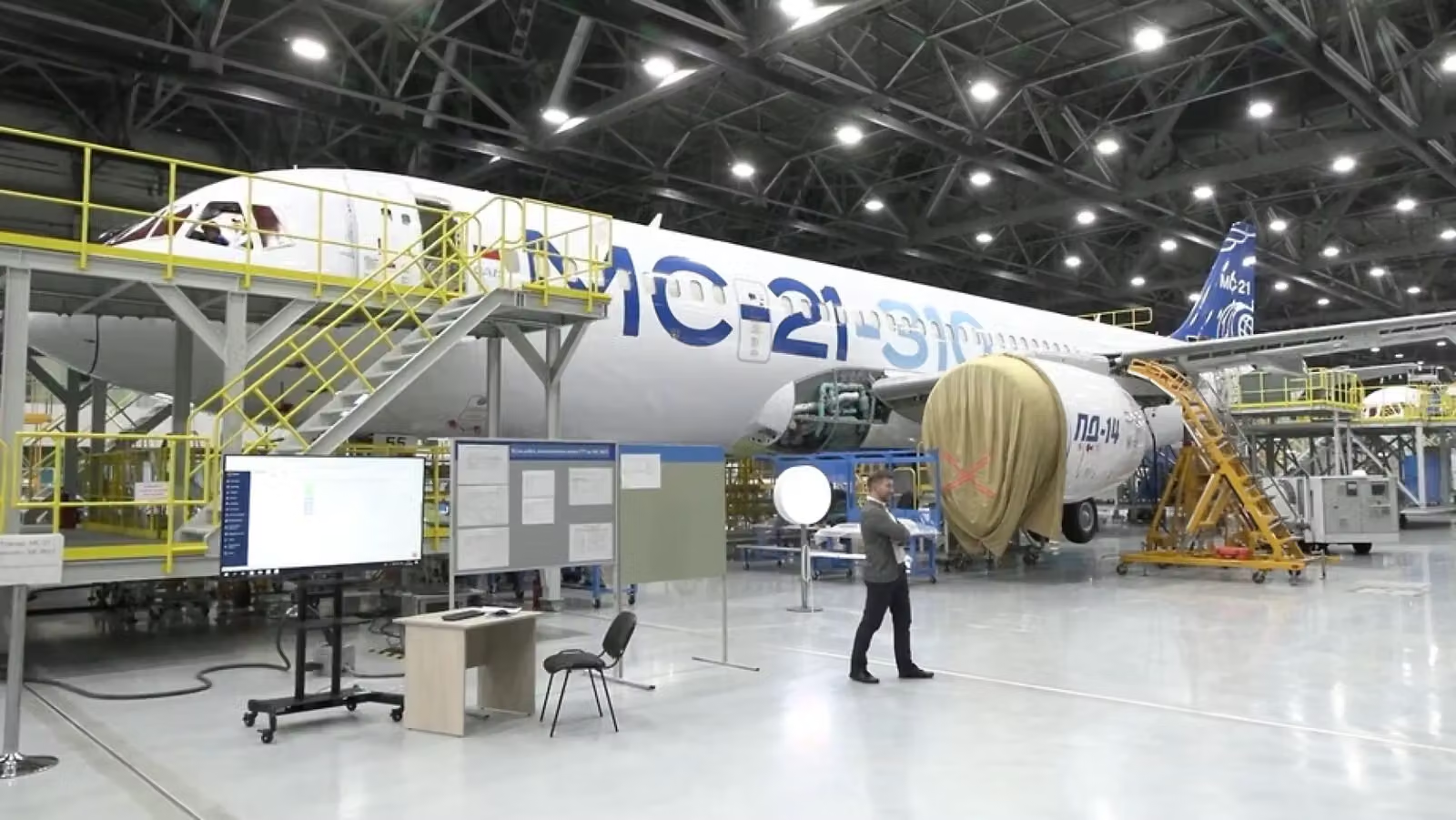
As of autumn 2025, the most significant projects, MC-21, SJ-100, and Il-114, are in thefinal stage of certification and production preparation. No major investments are required here anymore.
UAC can finance many aspects through military contracts and other components of the state defense order (SDO). And external revenue has not been canceled. These are very large sums. Therefore, the budgetary part could be partially cut.
Current deliveries are financed by the State Transport Leasing Company (GTLK), as well as other leasing companies. Accordingly,subsidizing loans for the purchase of MC-21 remains. This means that aircraft deliveries remain within the plan.
Cutting funding does not mean killing the industry
As for the state order itself, it does not imply high profitability, but much more is included in the expenses than was actually used.
This includes related purchases, the payroll of unused personnel, utility payments, and other things that allow relieving the burden on the enterprise.
Also, the Rostec state corporation, which oversees the aircraft industry enterprises, may receive a property contribution to reimburse the costs of paying coupons on bonds in 2026 - 10.4 billion rubles, in 2027 - 4.3 billion rubles, in 2028 - 10.5 billion rubles.
In general, there are many pockets. No one has canceled the plans. Cutting any budget items does not equal killing the aviation industry as a whole. Workshops have been built and equipped, aircraft have been partially built, and they were built with already allocated funding. Nothing new has been invented yet.
Against this background, it became known that in 2026, the Cabinet willallocate 54.47 billion rubles for applied research, experimental design, and scientific research in the interests of the Russian aviation industry.
Earlier,www1.ru reported that the TV7-117ST-01 engine for the Il-114-300 will be able to operate even in the Arctic.
Read more materials:
Never miss our newsAdd this site to your preferred sources to see us more oftenAdd on Google