Translated with AI from the Russian original.
Researchers from the Kola Science Centre of the Russian Academy of Sciences and the branch of the Murmansk Arctic University in Apatity have proposed a mathematical solution for selecting a strategy for studying and developing ore deposits. The approach is based on geometallurgical modeling, which links the geological characteristics of the ore to its behavior in technological enrichment processes. The ultimate goal is to assign each cell of a three-dimensional digital model of the deposit a prediction of how this ore should be processed. Traditional geological models only answer the questions "where" and "what composition". The new methodology adds "how to process". The developed algorithm automatically assesses the complexity of the object and selects one of four strategies for filling the model with data. Calculations have shown that for most complex real deposits, the S2 strategy provides the optimal price-quality ratio.
Natural Type of Ore vs. Technological Type: The Price of the Question
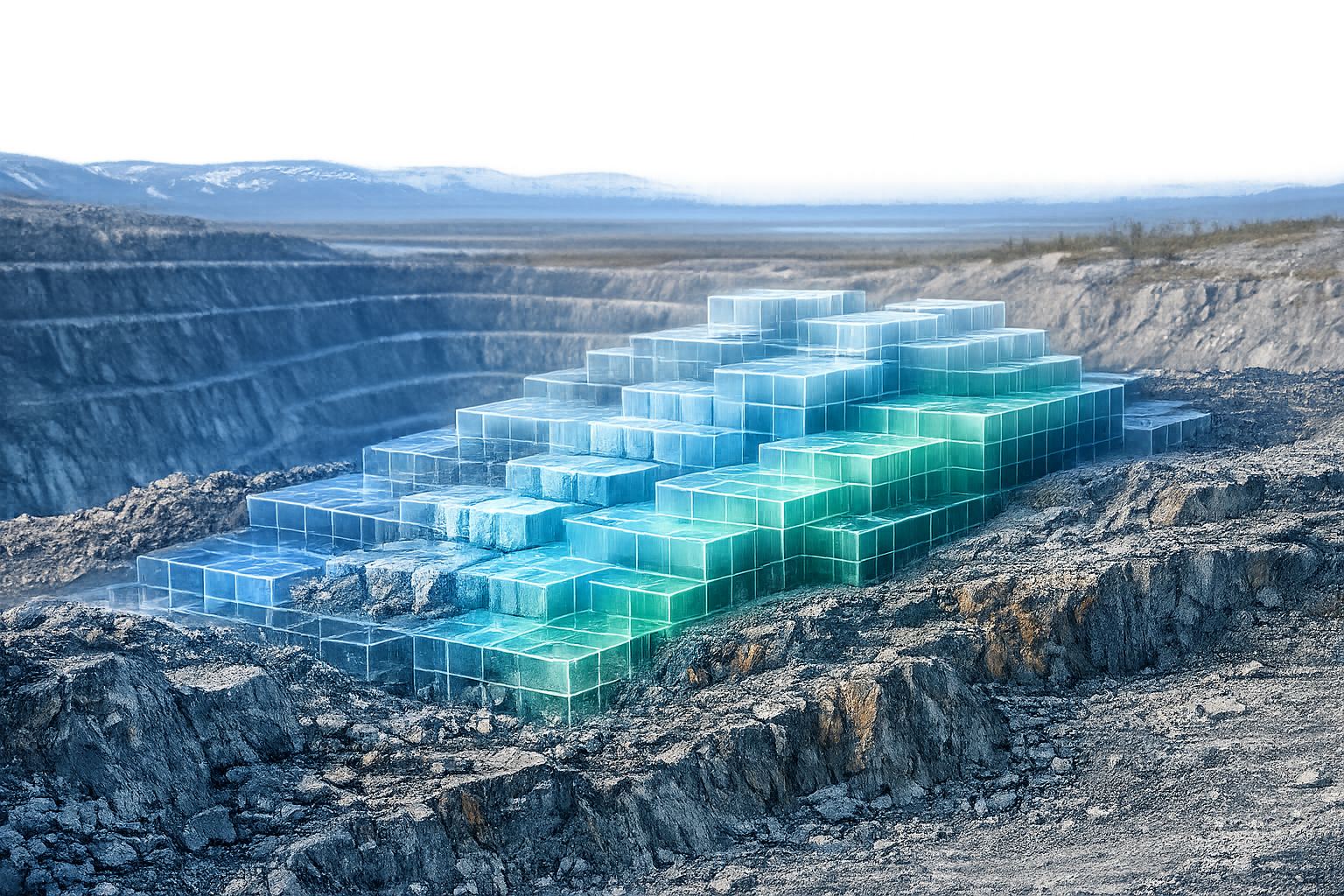
The authors clearly distinguish between two concepts. The natural type of ore is determined based on routine geochemical testing (costing about 1,000 rubles per sample) and expert assessments by geologists. The technological type of ore is obtained as a result of technological testing — it indicates a specific processing method, but the cost of one sample reaches 650,000 rubles. Geologists are forced to seek a compromise between data accuracy and costs.
Four Strategies for Filling the Model
Scientists have proposed considering the deposit as an information system. The algorithm selects one of four strategies:
- S0 — direct measurement (maximum accuracy, maximum cost);
- S1 — interpolation;
- S2 — proxy modeling;
- S3 — complete indirect assessment (minimum cost, minimum accuracy).
The implementation of this approach allows companies to move from the question "How much data can we afford?" to the question "Which strategy will give the maximum profit?". This reduces technological risks and makes the development of deposits more predictable
Calculations have shown that for most complex real deposits, the S2 strategy (proxy modeling) provides the best price-quality ratio.
Where Else is Proxy Modeling Applicable
Scientists point out that their methodology can be adapted to solve similar problems in other areas related to spatial modeling of the properties of natural environments with limited data:
- hydrogeology;
- oil and gas engineering;
- environmental monitoring.
For mining companies, the implementation of the algorithm means a transition from the intuitive selection of drilling and sampling points to a formalized optimization of information costs. Savings are achieved by replacing expensive technological samples (650,000 rubles) with a combination of cheap routine testing (1,000 rubles) and proxy modeling. The accuracy of the forecast remains sufficient for decision-making. The possibility of adaptation to other industries expands the potential market for the methodology: from groundwater management to pollution monitoring.
Read also on the topic:
- AI-powered search for hidden diamond deposits implemented at Alrosa
- Geological exploration is not needed: Russia has enough rare earth metal resources — 28.5 million tons
- Russia's rare earth metal reserves will last for centuries: exploration of scarce resources is intensifying
Never miss our newsAdd this site to your preferred sources to see us more oftenAdd on Google

















