Today, March 19, a magnetic storm is hitting Earth, which could be the most powerful in the last two months. According to current estimates, geomagnetic disturbances began in the morning hours and will last about six days — until March 24.
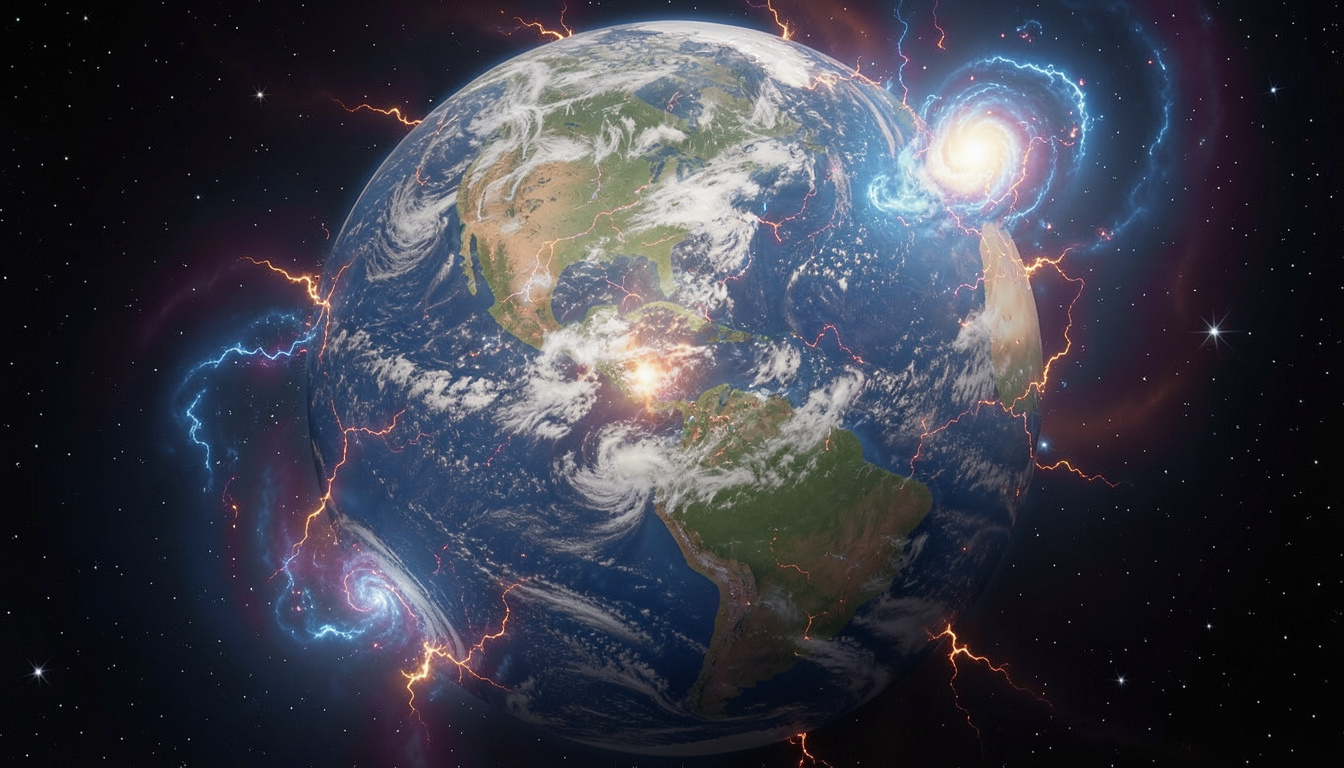
The event was caused by a combination of several factors. First, at the beginning of the week, several plasma ejections occurred on the Sun at once. Second, coronal holes formed on the side of the Sun facing Earth — areas with an open magnetic field through which the solar wind escapes into space at an increased speed. The superposition of these processes amplified the impact on the planet's magnetosphere.
The forecast has been revised several times over the past day, and each time towards tightening. Initially, moderate disturbances were expected, but as data from solar observatories became available, the estimates were adjusted: the storm may reach a level comparable to the event in mid-January, when G4 category disturbances were recorded.
The most intense phase will occur between March 19 and 21: it is on these days that two large plasma clouds will successively approach Earth. After the 21st, a decline in activity is expected, but a weak "tail" from the influence of coronal holes will remain until March 24.
With the current intensity of the storm, auroras can theoretically drop to latitudes of 50–55 degrees. This means that residents of the central regions of Russia, northern Europe, and parts of North America will have a chance to observe the phenomenon, provided there is a clear sky and no urban light pollution.
Read more on the topic:
Never miss our newsAdd this site to your preferred sources to see us more oftenAdd on Google















![Growth Point: After 5G Launch, Mobile Internet in Russia Accelerated by 20%","subtitle":"TelecomDaily recorded an upload speed increase of 19.7%, and download speed of almost 14%","announce":""}[]}],](https://media.ixbt.site/fit-in/320x/ixbt-data/1727896/ai-image-nvgq0a0v5cjnyxwoc8xpelva.webp)