The newest portable drone kinetic interception system "Yolka" is capable of recognizing targets invisible to the human eye thanks to artificial intelligence technologies. This was stated by a military serviceman of the air defense forces with the call sign Morok.
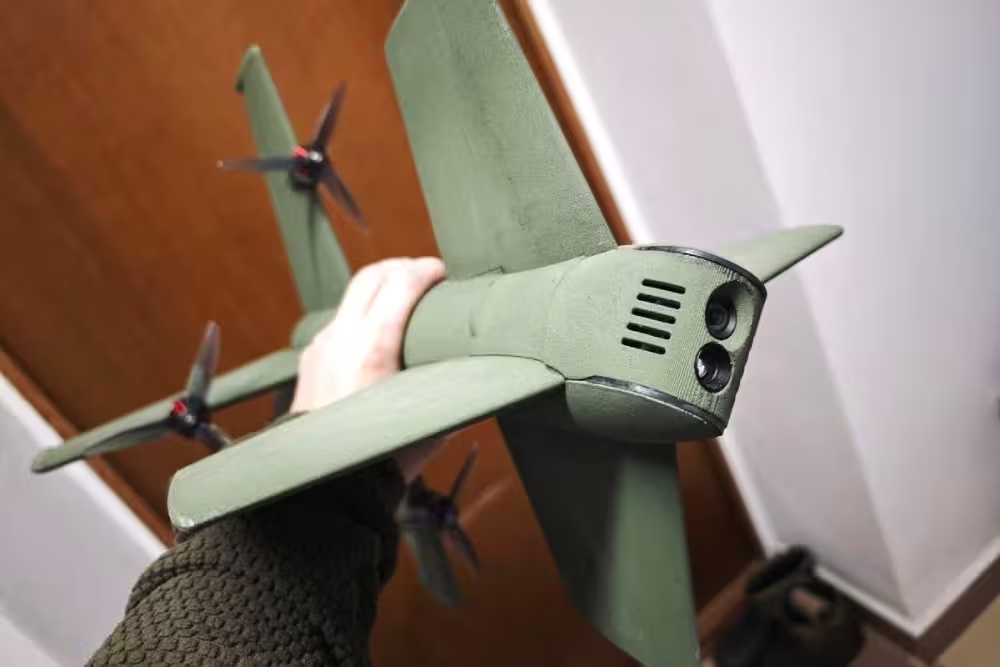
After launch, "Yolka" independently chooses the most optimal route to hit the target. It works both in pursuit and on the flank, as well as on an oncoming course.
"Yolka" surpasses fire damage and damage by buckshot, the operating range of the product is 3 km. What the human eye does not see, "Yolka" will see.
"Yolka" does not have a warhead and hits the target with a kinetic strike. The drone interceptor is designed to engage a wide range of targets — from reconnaissance drones to heavy strike drones of the aircraft type. The weight of "Yolka" is 1.3 kg, the range of capture and destruction is up to 3 km.
The interceptor accelerates to 230 km/h, while electronic warfare equipment does not see it and cannot jam it — there is no control channel.
Read more materials on the topic:
- "I'm coming for you": the use of the anti-drone "Yolka" was shown on video for the first time
- "Yolka", "Tarantul-Pticelov" and "Kinzhal": Army Recognition is following the development of Russian drone interceptors
- New mobile anti-drone Chinese radar complexes have appeared in the Russian army
Never miss our newsAdd this site to your preferred sources to see us more oftenAdd on Google

















