Russian researchers from the Institute of Chemistry of High-Purity Substances of the Russian Academy of Sciences and Perm Polytechnic University have developed a new type of glass-crystalline material for infrared optics based on chalcogenide glasses. According to the Ministry of Education and Science, it is 2.5 times stronger than zinc selenide, and its resistance to cracking is one and a half times higher than that of ordinary chalcogenide glasses.
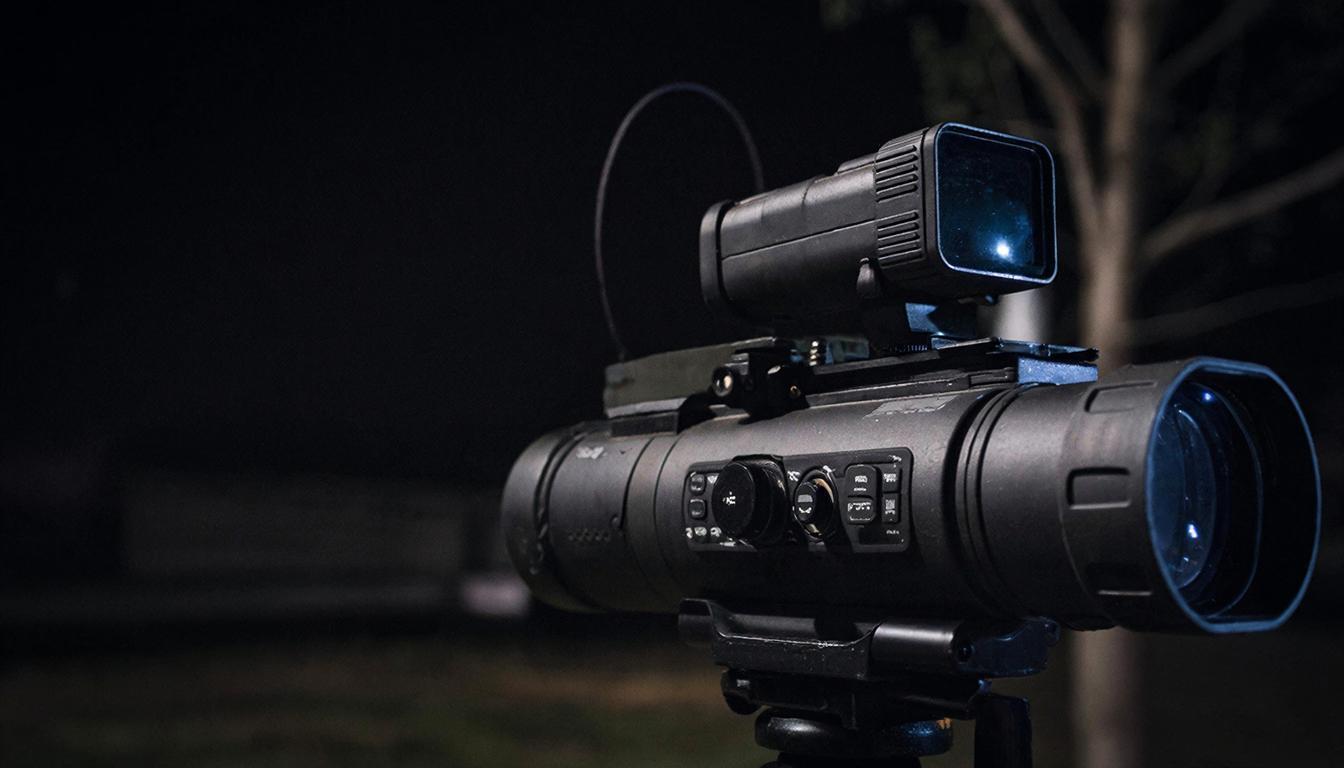
In the era of the development of thermal imaging systems, night vision devices and space monitoring, there is an acute task of creating durable and long-lasting materials for infrared optics. In simple terms, these are lenses and glasses that "see" heat. ‹...› The problem is that such lenses are now made of zinc selenide and germanium. These materials transmit heat rays well, but are very fragile. In extreme conditions - from vibrations, sudden temperature changes or even from ordinary dust that scratches the surface - the optics become cloudy and fail.
Scientists proposed using chalcogenide glasses, the structure of which can be improved by growing microscopic crystals inside. Previously, it was believed that a large number of crystals makes the material opaque to thermal radiation. Perm researchers found a balance by adding cesium iodide to the composition.
According to Maxim Bulatov, Associate Professor at PNRPU, the new material turned out to be 2.5 times harder than zinc selenide, the main material for infrared optics. Its resistance to cracking is one and a half times higher than that of ordinary chalcogenide glasses. At the same time, the material has a 20–25% reduced coefficient of thermal expansion, which reduces the likelihood of cracking during temperature changes.
The development opens the way to creating lenses that are resistant to vibrations, thermal loads and abrasive wear. This will increase the reliability of thermal imaging systems in rescue operations, increase the life of satellite equipment and ensure stable operation of night vision devices in extreme conditions.
Read more materials on the topic:
- From glass and aluminum: a new coating to increase engine efficiency and reduce fuel consumption was developed at SUSU
- UAC explained why the MS-21 glasses were made 8 times stronger than usual
- The company "PZSP" has launched the production of tempered fire-resistant glass "Termolain"
Never miss our newsAdd this site to your preferred sources to see us more oftenAdd on Google

















