Translated with AI from the Russian original.
A space observatory for studying exoplanets, being created by Lomonosov Moscow State University in cooperation with various partners, will begin operating in geostationary orbit at an altitude of about 36 thousand km from Earth. This will ensure more accurate observational data. This was reported by Aleksandr Belinsky, Deputy Director for Research and Strategic Development of the P. K. Sternberg State Astronomical Institute of Moscow State University.
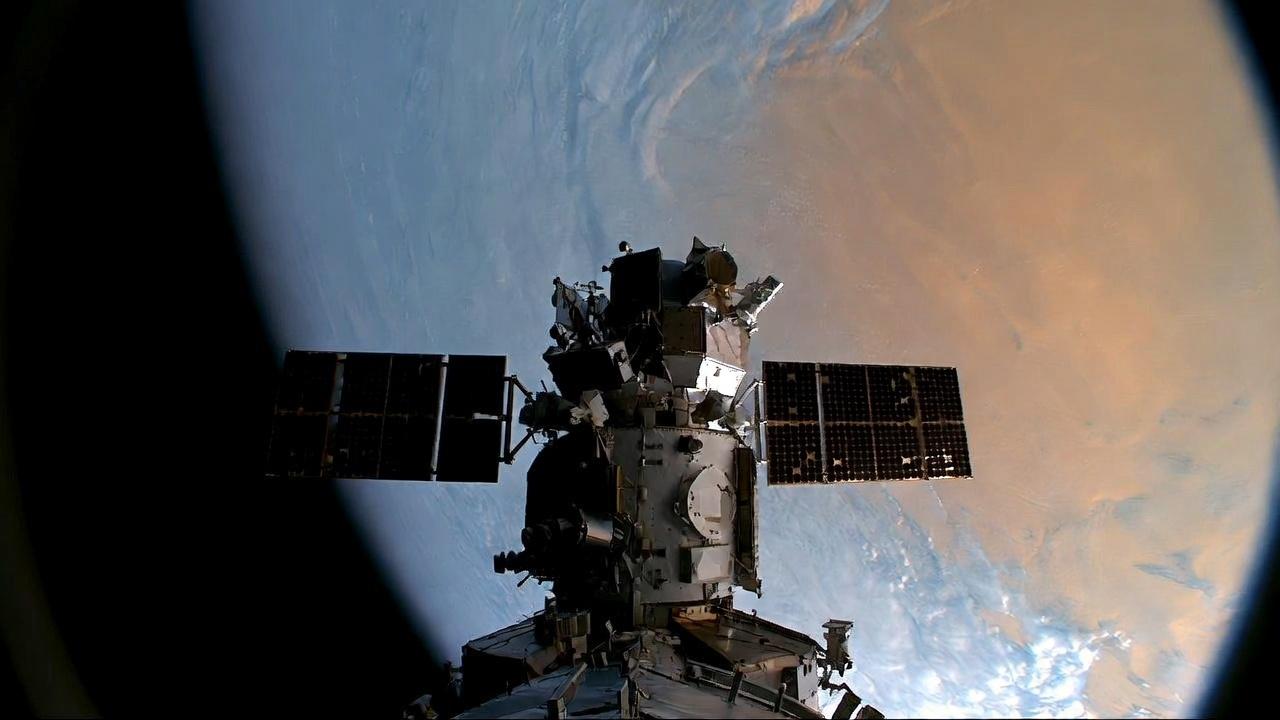
In addition to a telescope for the systematic observation of exoplanets, this platform will host sensors for studying space weather. High orbits make it possible to avoid data distortions caused by the scattering of light by Earth's atmosphere and its thermal radiation, and when detecting cosmic particles, the influence of Earth's radiation belts.
Exoplanets are located outside our Solar System; they orbit other stars. To date, scientists have confirmed the existence of more than six thousand such objects. It is assumed that some of them may be habitable.
Among the project's partners are several Russian organizations, as well as Sultan Qaboos University (Oman) and the Association of Arab Universities. Preparations for the observatory's launch are preliminarily expected to be completed by 2030. The project is comparable in scale to international cooperation within the framework of the International Space Station (ISS).
Read more materials on the topic:
- To search for life outside the Solar System: a new telescope is being developed at Moscow State University
- At the Crimean Observatory, software development has begun for the discovery of exoplanets
- They will be launched from Baikonur: the first modules of ROS are being moved to the Kazakh cosmodrome
Never miss our newsAdd this site to your preferred sources to see us more oftenAdd on Google

















