A new problem has been added to the many problems of small aviation in Russia — «flying desks» are gradually disappearing in Russia — training aircraft for flight schools. This was reported to «Pervyi Technicheskiy» by Oleg Smirnov, Honored Pilot of the USSR, member of the Public Council of Rostransnadzor.
According to him, there is simply nothing to train cadets on.
There is an emphasis on Western equipment purchased by the Ministry of Transport, which is working out its resource and becoming scrap. There are no spare parts, no components, no technical literature. And there is nothing to fly with cadets. This is the picture that emerges.
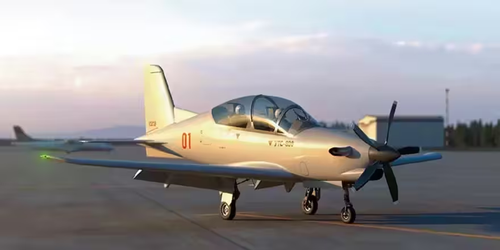
It should be noted that the Ural Civil Aviation Plant (UZGA) is currently continuing the program of flight tests of the UTS-800 turboprop aircraft.
The Ministry of Industry and Trade and UZGA reported on the stability and controllability of the aircraft, as well as the low cost of flight hours. However, now the experimental machine seems to be equipped with an American General Electric H80 engine. It will be replaced by the domestic VK-800, which is still being brought to the required state.
Read more materials on the topic:
- «Flying Desk» — UTS-800 aircraft confirmed controllability characteristics
- UTS-800 received a unique ground movement system
- «Flying Desk» UTS-800 will accelerate the transition of combat pilots to MiG-29 fighters
Never miss our newsAdd this site to your preferred sources to see us more oftenAdd on Google

















