The Russian Federation is developing the world's first artificial intelligence-based information system designed to accelerate the design of polymer composite materials. The platform will allow engineers without specialized experience in composites to develop high-strength and lightweight structures, in particular, for unmanned aerial vehicles (UAVs).
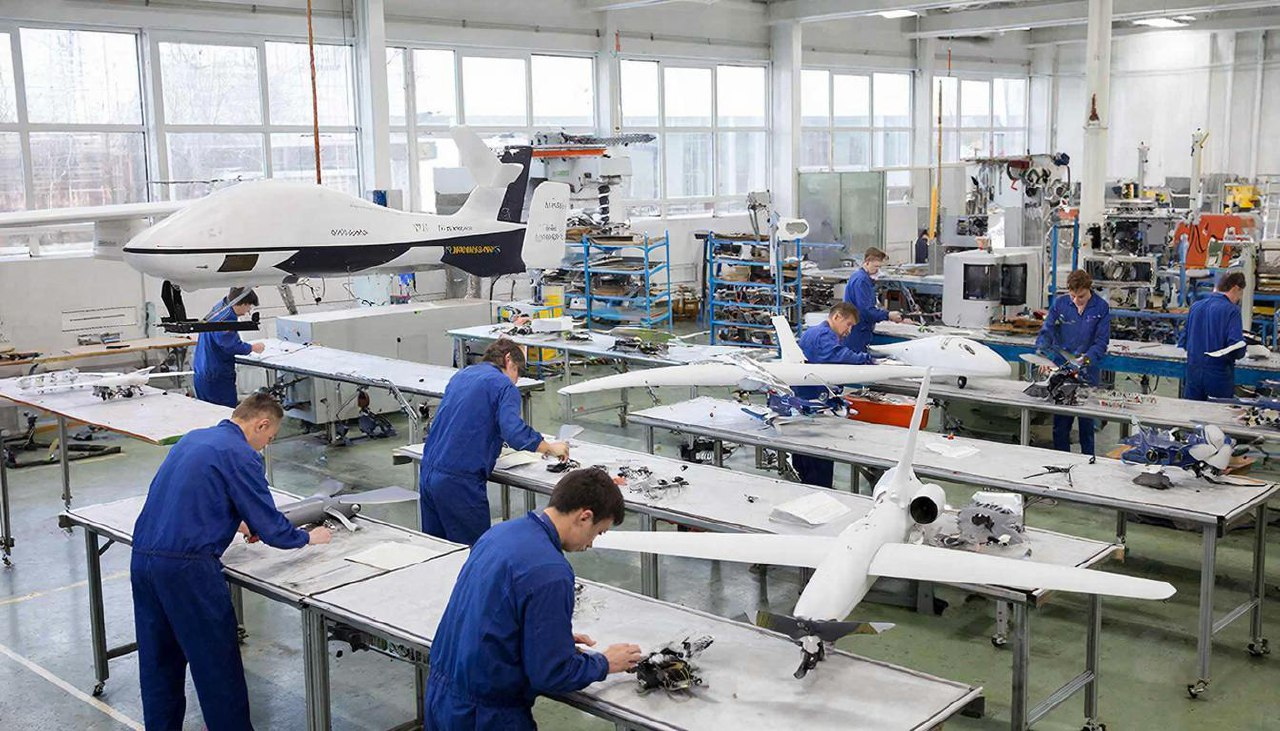
The development is being carried out by the NTI Center "Digital Materials Science: New Materials and Substances" at Bauman Moscow State Technical University. The system digitally selects optimal composite materials for specific operating conditions, models their behavior under loads, and assesses the strength and durability of future products.
According to the creators' estimates, the platform's implementation will reduce the design time for composite parts by 30–40%, and the costs of experimental and field tests by approximately 20%. The technology will be particularly in demand for creating UAV bodies and power elements, where minimal weight and maximum strength are required.
The project's scientific director, head of the structural materials laboratory at the NTI Center, and Doctor of Chemical Sciences, Ivan Storozhuk, noted that the system takes into account more than 40 material parameters, including anisotropy, which ensures high accuracy in predicting the behavior of structures under real operating conditions.
Read more materials:
- The newest laminar flow air intake for the PD-14 engine was developed by Russian engineers at VASO
- The instability of geopolymer foams has been eliminated — scientists from KNITU-KAI presented a solution for aircraft construction
- Did the ISS crew urgently move to the Zvezda module? Officially: the geomagnetic storm did not disrupt the station's operation
Never miss our newsAdd this site to your preferred sources to see us more oftenAdd on Google






![Growth Point: After 5G Launch, Mobile Internet in Russia Accelerated by 20%","subtitle":"TelecomDaily recorded an upload speed increase of 19.7%, and download speed of almost 14%","announce":""}[]}],](https://media.ixbt.site/fit-in/320x/ixbt-data/1727896/ai-image-nvgq0a0v5cjnyxwoc8xpelva.webp)