Translated with AI from the Russian original.
Russian engineers have developed an overwing air intake that increases the efficiency and gas-dynamic stability of the powerplant of supersonic civil aircraft. The invention has already been registered in the FIPS patent database.
The new design is located above the wing and is equipped with a droplet-shaped inlet adapted to the shape of the fuselage, and a dihedral braking surface with smooth mating of the planes.
This makes it possible to reduce the influence of the thick boundary layer that builds up on the aircraft surface during supersonic flight and to avoid flow separation inside the air intake, the project authors are confident.
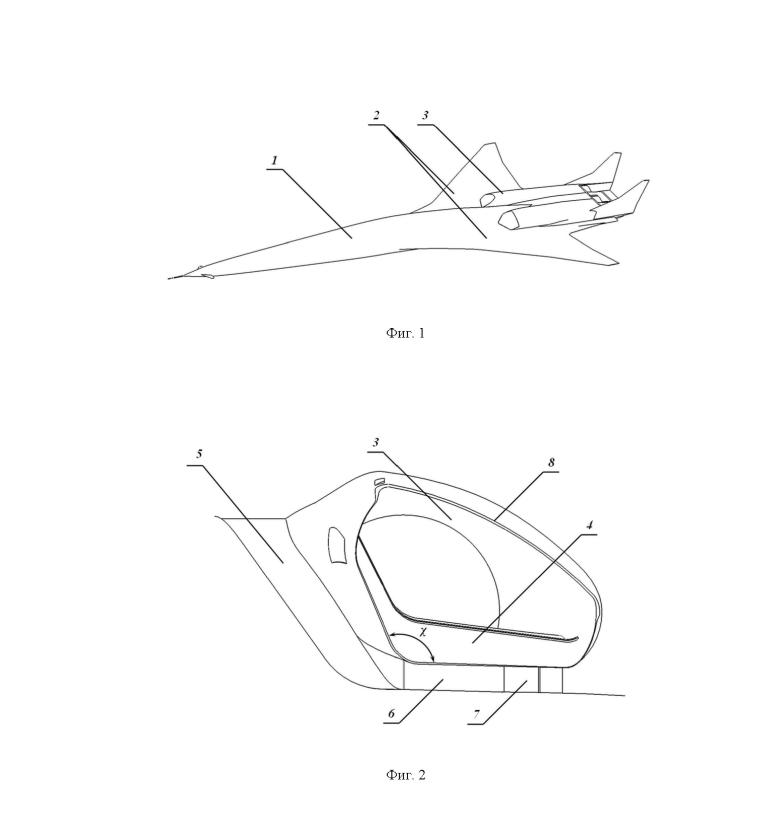
A special feature of the development is a boundary-layer control system that includes transverse slots, a cavity under the panel, and openings for diverting air into the external flow. The upper part of the air-intake cowl is cut back to optimize operation at cruising speed, which prevents turbulence and increases the stability of air supply to the engine.
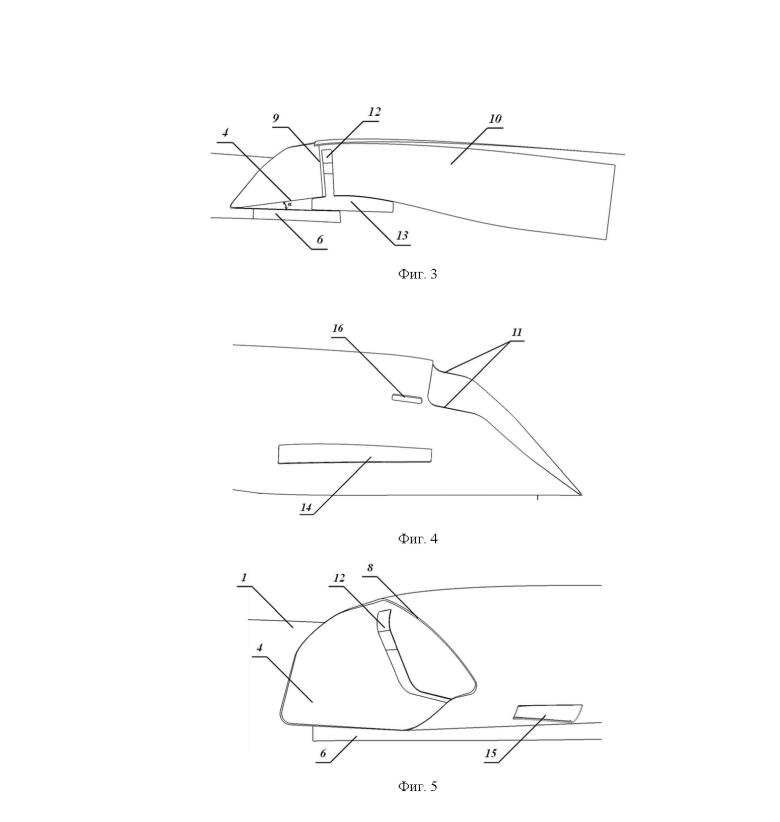
With the help of such a configuration, low flow non-uniformity at the engine inlet is ensured, while total-pressure indicators are maintained at the level of classical supersonic layouts with underwing or underfuselage air-intake placement.
Tests of the model in wind tunnels confirmed the high efficiency and gas-dynamic stability of the powerplant.
Earlier, Andrei Kozlov, Director General of the P. I. Baranov Central Institute of Aviation Motors (CIAM), predicted that the first supersonic aircraft in Russia may appear no earlier than the 2040s.
Read more materials on the topic:
- A new armored recovery vehicle based on the gas-turbine T-80 with a video surveillance system was developed in Russia
- A unique helicopter without a tail boom and gearbox was devised in Russia
- The latest air intake with laminar flow for the PD-14 engine was developed by VASO Russian engineers
Never miss our newsAdd this site to your preferred sources to see us more oftenAdd on Google

















