Translated with AI from the Russian original.
The largest Russian truck manufacturer, KamAZ, presented new models of the Moskvich brand at a meeting of the board of directors in Naberezhnye Chelny. This was reported in the manufacturer's press service.
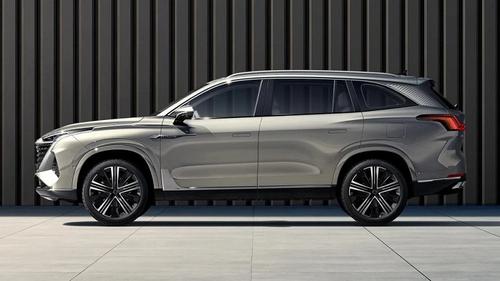
The manufacturer presented four models of the Moskvich automobile plant - Moskvich 3, Moskvich 8, Moskvich M70 and Moskvich M90.
Moskvich M90 is the new flagship of the brand. This is a seven-seater crossover that attracts attention with its precise design and accurate settings.
The car was developed taking into account Russian operating conditions and is equipped with an all-wheel drive system. The Moskvich M90 is based on the MG RX9 crossover (known in some markets as the MG QS).
Cars have been assembled on the basis of Chinese company JAC's technology since the end of 2022. Currently, the plant (formerly owned by Renault) has produced the Moskvich 3 and the electric Moskvich 3e. The Moskvich 6 liftback also became a new project, its production started in the fall of 2023. At the end of 2024, it is planned to launch the assembly of the mid-size crossover Moskvich 8.
Earlierwww1.ru reported that a new SKALA mining dump truck wasdeveloped at PJSC KamAZ.
Read more materials on the topic:
- Production of brake mechanisms for disc brakes localized in Naberezhnye Chelny
- With a 560-horsepower engine: a batch of new serial KAMAZ-54901 tractors rolled off the assembly line
- KAMAZ has been upgraded again: a St. Petersburg dealer presented the 54901 tractor in the Ultra version
Never miss our newsAdd this site to your preferred sources to see us more oftenAdd on Google

















