Specialists from the A.N. Frumkin Institute of Physical Chemistry and Electrochemistry (IPCE) of the Russian Academy of Sciences have synthesized indium tetraarylporphyrinate (III), a new complex compound capable of accelerating the conversion of sulfides to sulfoxides under the action of blue light. This was reported by the press service of the Ministry of Education and Science of Russia.
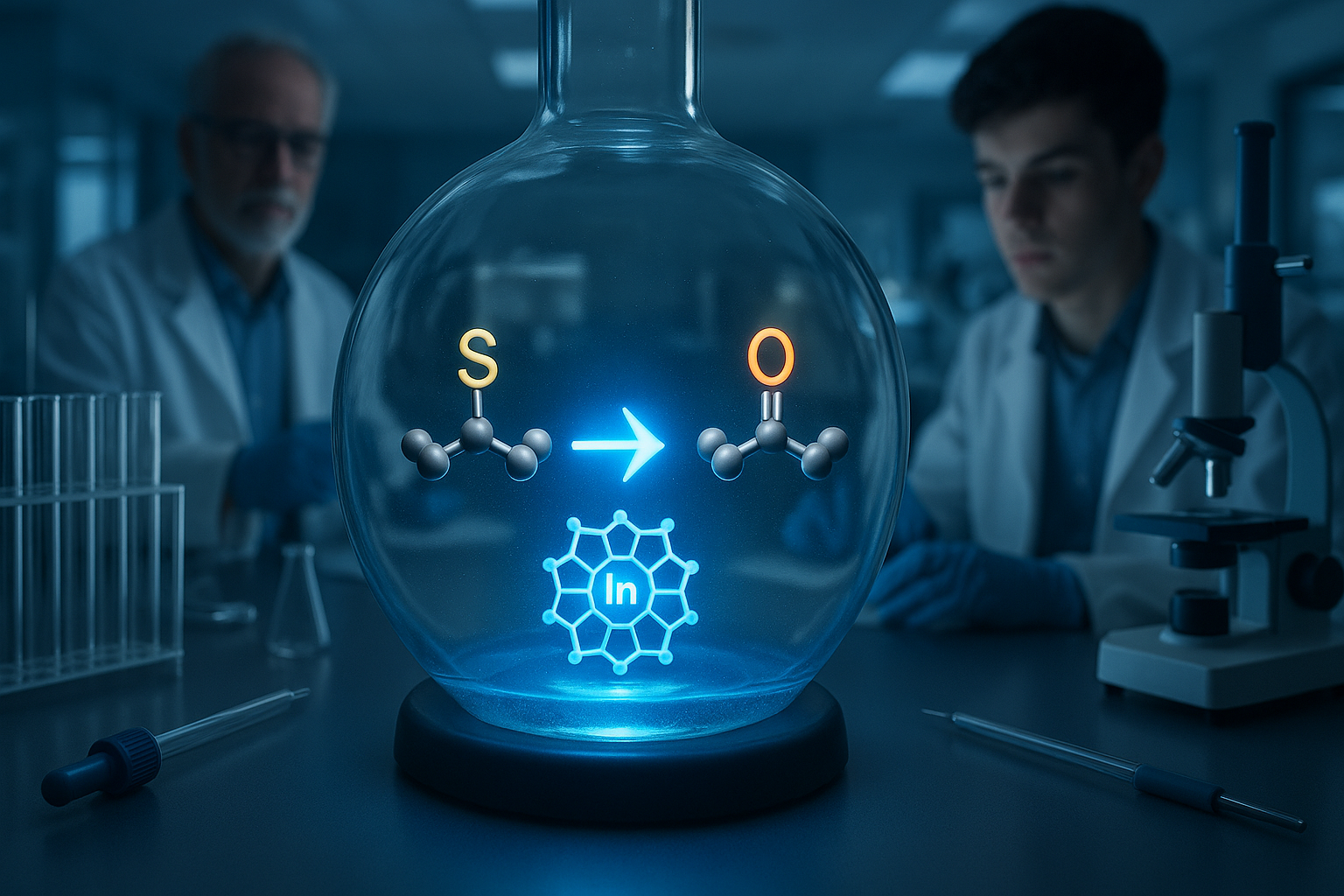
Experiments have shown that when irradiated with blue light, the catalyst completely converts sulfides to sulfoxides in just 1.5 hours, with only five catalyst molecules required per 10,000 substrate molecules.
The new substance is as effective as traditional catalysts and is highly selective and photostable.
Sulfoxides are in demand in petrochemistry, in the extraction of precious metals, and are also part of biologically active compounds, including drugs. The creation of a domestic photocatalyst opens up prospects for the accelerated and more efficient production of such compounds for scientific and industrial purposes.
Read more materials on the topic:
- Inexpensive catalyst for water electrolysis, close in efficiency to platinum, developed by Russian and foreign chemists
- Terahertz radiation helped Russian scientists find a way to speed up data transfer
- Russian scientists have found a cheap way to generate fuel from water
Never miss our newsAdd this site to your preferred sources to see us more oftenAdd on Google

















