As part of certification flight tests approved by the Russian Aviation Register, control flights were performed on the updated Ansat helicopter model to assess resistance to the effects of ground resonance. At the controls of the aircraft was a 1st class test pilot, Head of the Flight Test Complex of the Russian Aviation Register, Nikolai Grigoriev.
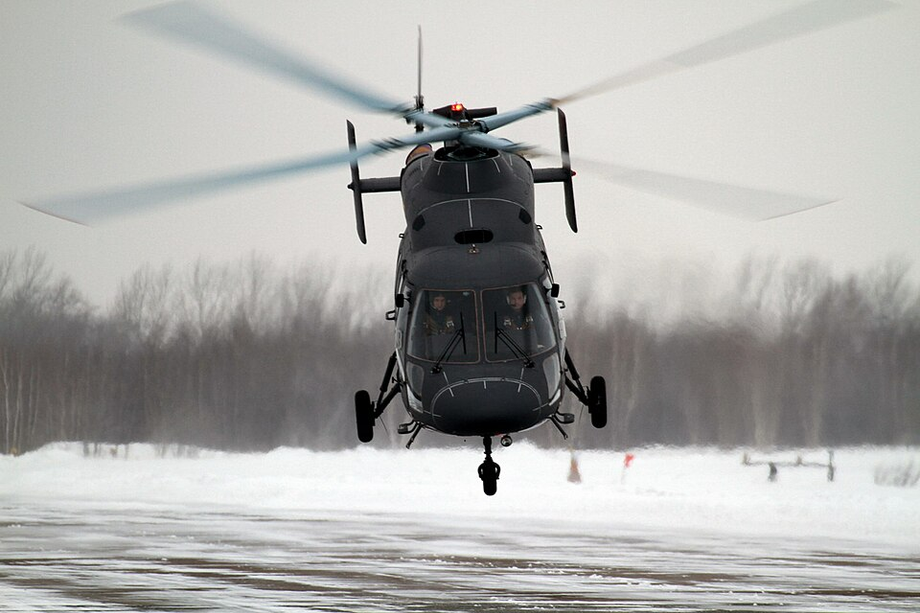
The purpose of the tests is to confirm the safety of the helicopter's operation in all flight modes, including the critical phases of takeoff and landing. Following the completed flights, experts gave a positive assessment of the dynamic characteristics of the Ansat, confirming the absence of signs of ground resonance - a potentially dangerous phenomenon that can lead to the destruction of the rotor system upon contact with the surface.
The test results will be an important step in completing the certification of the modernized version of the helicopter and further expanding its operational capabilities.
Read more materials on the topic:
- Housings, rings and rocker arms for aircraft engines of Mi-171A3 and Ansat-M helicopters became 20% lighter, and development times were three times shorter
- New versions of Ansat and Ka-32A11M helicopters finally made it to Dubai Airshow 2025
- The VK-605V engine for Ansat surpassed the Canadian analogue in efficiency
Now on home

Start of deliveries scheduled for 2027

Over 51,000 new motorcycles were sold in Russia in 2025

The car will take at least a year to assemble

The application's audience has reached 20 million users

The model will be included in the list of cars for taxis, price - from 2.25 million rubles

All parking lots of the "Administrator of the Moscow Parking Space" are connected to the service

The cars will be supplied to the Moscow Transport Service Directorate
Deliveries to India may begin in 2028
The technology provides automated search for all types of defects in power units
The plane flew 500 km, accelerating to 425 km/h

The plant stated that the information about the termination of purchases for models 6 and 8 is not true
Scientists are using the "Ekran-M" installation