Component tests for Russia's first high-speed railway (HSR) Moscow - St. Petersburg continue at the Experimental Ring of the Railway Transport Research Institute (ER VNIIRZhT). This was reported in the press service of the company "Russian Railways" (RZD).
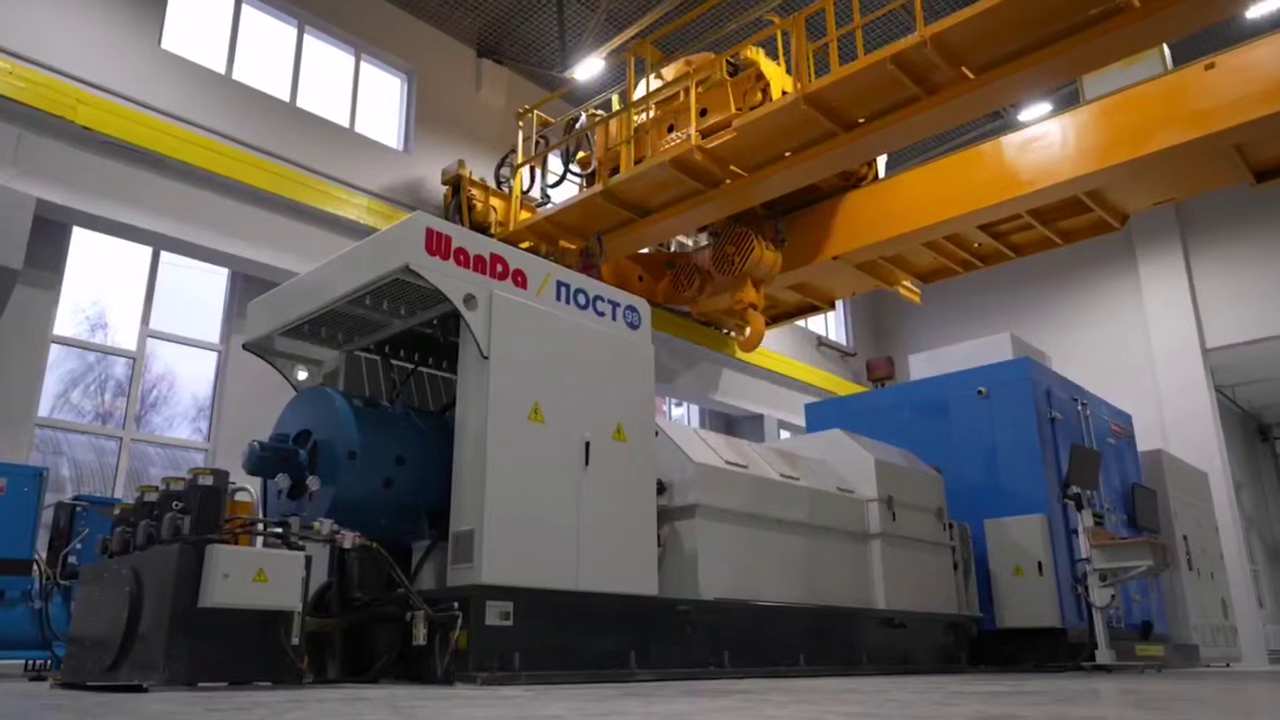
The tests are carried out on a unique inertial braking stand of Russian design. It is designed for testing the train's braking system while simulating speeds up to 450 km/h.
At the same time, the stand can create a wind load of up to 30 m/s, change the ambient temperature from -40°C to +50°C, regulate humidity from 30% to 98%, and simulate precipitation in the form of snow or rain.
An electric motor drives steel discs with a total weight of up to 11 tons, creating a load simulation characteristic of a speed of 400 km/h. Testing the braking system requires three consecutive braking actions, during which the brake discs and pads heat up to a temperature of 500-800°C. This allows you to check its efficiency and reliability.
Specialists also tested a slab of ballastless track bed for the future HSR turnout.
The studies allow us to simulate the operation of the reinforced concrete sub-rail base in the worst (critical) operating conditions.
Earlierwww1.ru reported on the start of testing of the CS-400 contact network for high-speed trains.
Read more materials on the topic:
- HSR project is gaining momentum: testing of the Russian high-speed train has begun
- Construction of the first section of the HSR for train testing will soon begin in the Moscow region
- Closer to the goal: the first train cars for the HSR will begin to be assembled in 2026
Never miss our newsAdd this site to your preferred sources to see us more oftenAdd on Google

















