Translated with AI from the Russian original.
Researchers from the Samara State Technical University (Samara Polytech) have developed a modeling method that allows predicting the structure of not-yet-existing metal compounds - intermetallics - compounds based on two or more metals with increased strength and resistance to temperatures. The proposed approach will simplify the development of new materials for the aerospace industry and automotive engineering.
We have proposed an approach that will accelerate the development of new materials for various industries. It will allow us to accurately model the structure of a compound with the desired properties, select a suitable topological template, and only then carry out synthesis, which requires time and resources.
Iron, copper, aluminum, and other pure metals have a relatively simple structure: their atoms are tightly packed in highly symmetrical crystal lattices. At the same time, mixing several metals creates complex configurations at the atomic level; modeling such systems is complicated by the fact that current methods do not take into account all aspects of the network of atomic interactions.
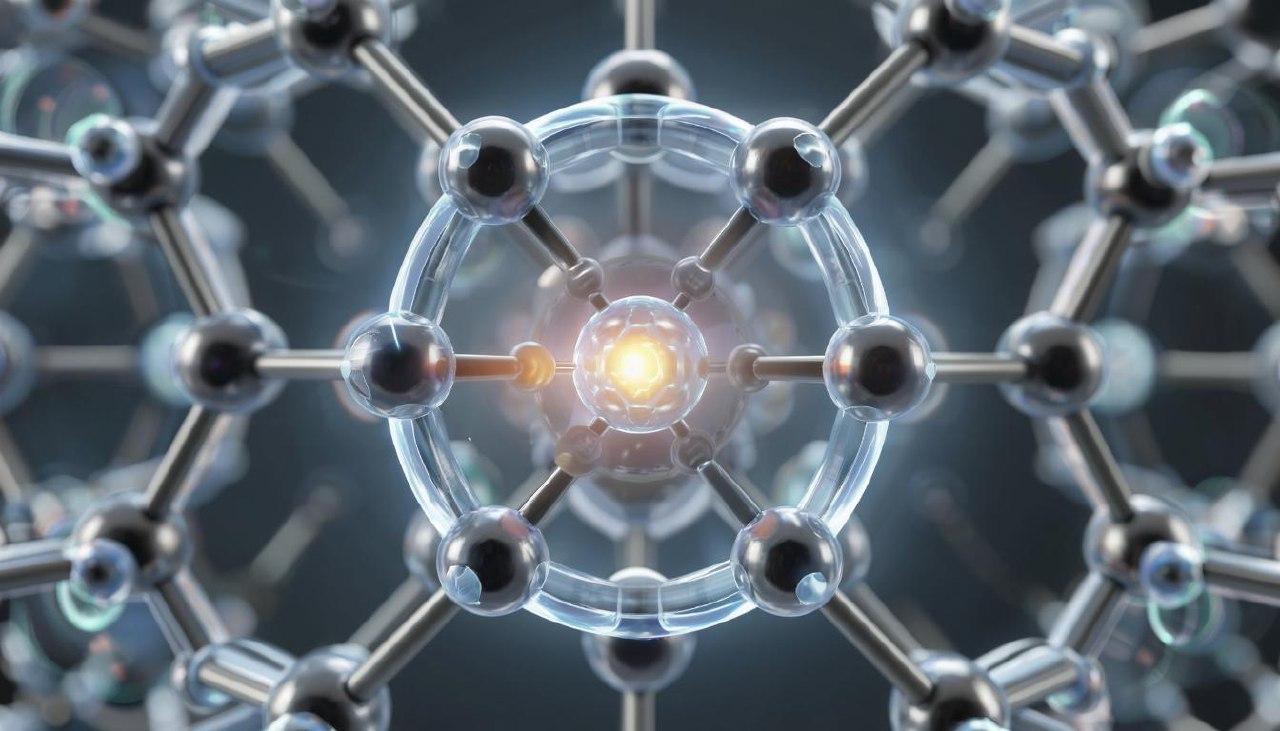
To solve this problem, researchers from Samara Polytech have developed a new approach to conducting such calculations - the crystal structure of metals is considered as a three-dimensional grid, at the nodes of which there are atoms connected by conditional straight lines. This network can be considered as a set of simpler intersecting subnets with fewer nodes, some of which can be removed if necessary.
The researchers suggested that atoms of another metal can be embedded in these voids, preserving the features of the simpler lattice of the original metal when calculating the properties of intermetallics. Subsequent calculations using the three most common types of crystal lattices confirmed the validity of this hypothesis, which allowed scientists to reproduce the architecture of many known materials used in industry.
In particular, materials scientists were able to accurately calculate the properties of intermetallics based on titanium and chromium, cerium and cadmium, rhodium and vanadium, and also find 90 different architectures of such substances, only 16 of which underlie already known compounds of several metals. Subsequent theoretical and practical study of the remaining seven dozen structures will help discover many new intermetallics.
Read more materials on the topic:
- Unique technology of 3D printing with metal in a gaseous state developed in Novosibirsk
- Siberian scientists have created environmentally friendly sorbents for extracting rare earth elements
- Probe for detecting mercury ions in water developed by scientists from Russia
Never miss our newsAdd this site to your preferred sources to see us more oftenAdd on Google

















