Scientists at the Research Institute of Mechanics of Moscow State University have developed a method that allows for more accurate calculation of thermal processes in supersonic flows. This discovery could radically improve the efficiency and reliability of future gas turbine engines and power plants.
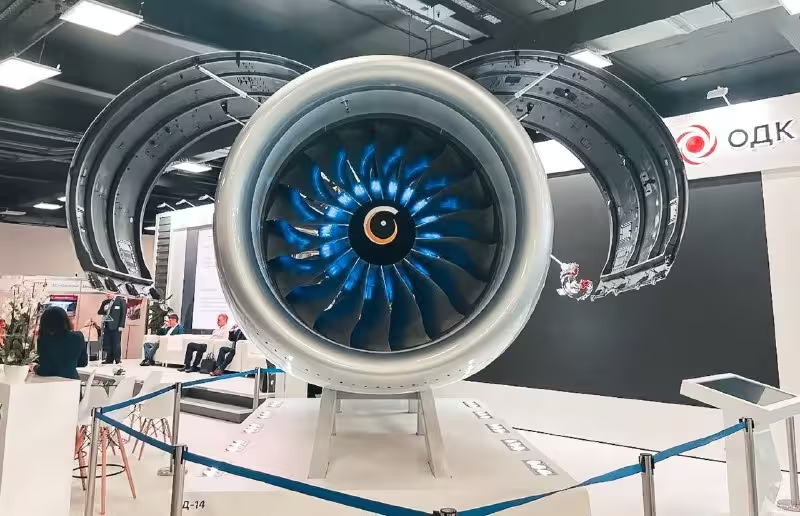
The main feature of the new method is the ability to predict in more detail how parts inside the engine heat up and cool down as hot gas passes through them.
Previously, such calculations were based on simplified models that did not take into account the influence of flow compressibility, pressure gradients, and boundary layer behavior.
Now, engineers will be able to take into account key parameters, which is especially important when designing digital twins and test prototypes, where the accuracy of the simulation directly affects the reliability of the real machine.
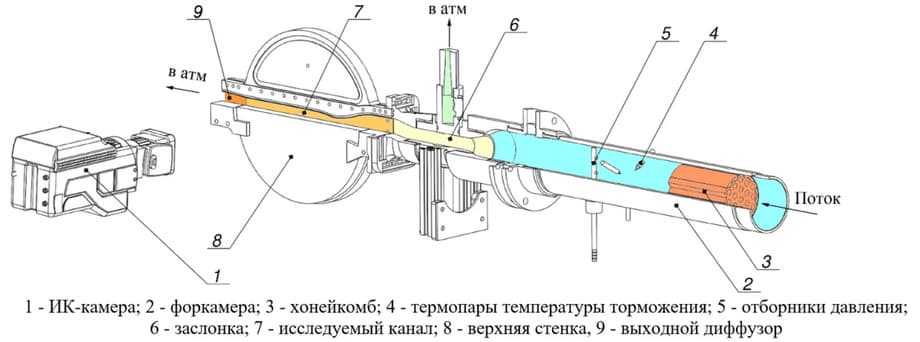
The work was carried out on the AR-3 supersonic stand under the guidance of senior researcher Nikolai Kiselev. The researchers used infrared thermography and numerical modeling using the Navier-Stokes equations to determine how thermal processes change at different speeds and pressures-from subsonic to hypersonic regimes.
Earlierwww1.ru reported that the legendary Tu-134 will receive an unexpected purpose in the Moscow region.
Read also:
Now on home

Start of deliveries scheduled for 2027

Over 51,000 new motorcycles were sold in Russia in 2025

The car will take at least a year to assemble

The application's audience has reached 20 million users

The model will be included in the list of cars for taxis, price - from 2.25 million rubles

All parking lots of the "Administrator of the Moscow Parking Space" are connected to the service

The cars will be supplied to the Moscow Transport Service Directorate
Deliveries to India may begin in 2028
The technology provides automated search for all types of defects in power units

The plane flew 500 km, accelerating to 425 km/h

The plant stated that the information about the termination of purchases for models 6 and 8 is not true
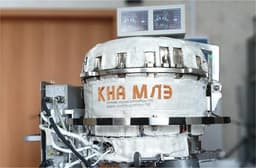
Scientists are using the "Ekran-M" installation
Articles
-
Russian An-124 "Ruslan" Stuck in Canada for 4 Years and Accrues Millions in Fines
26 Jan 2026
-
Coaxial Propellers: How Counter-Rotation Increases Turboprop Engine Efficiency
25 Jan 2026
-
Kazan Aviation Plant Breaks Old System: Tu-214 to be Assembled Like Cars
25 Jan 2026
-
How Engineers and Technicians Are Paid Today in the Russian Aviation Industry: An Overview with Figures
24 Jan 2026