Scientists from Perm National Research Polytechnic University (PNRPU) have created a revolutionary "smart skin" coating that can automatically detect the appearance of ice on the fuselage and remove it.
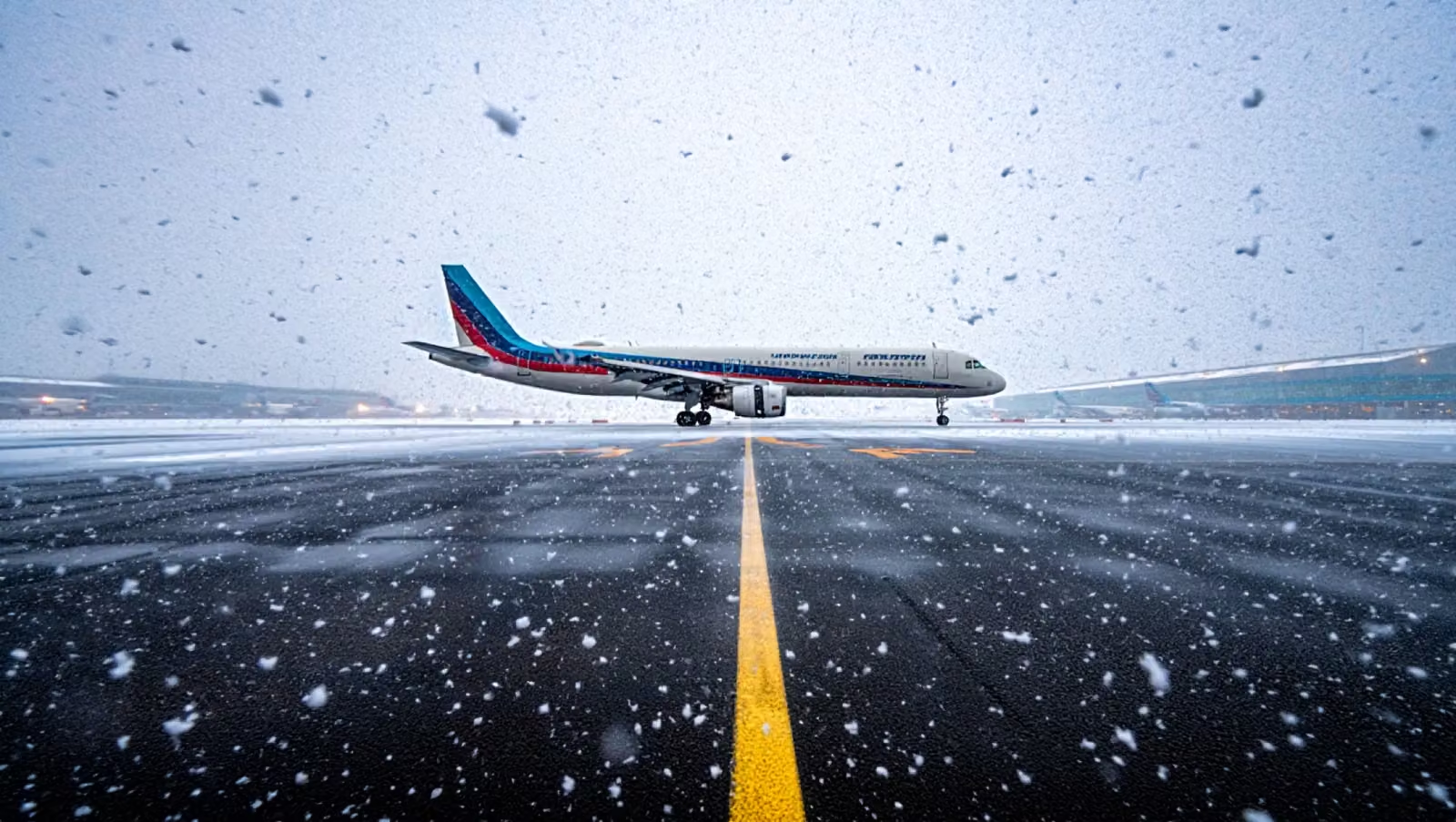
The most dangerous temperature range is from 0 to minus 10 degrees. It is under these conditions that "glassy" ice forms on airplanes - transparent, strong, and practically invisible. The technology is based on an active vibrating component (piezoelectric), that is, a layer with a special electrode arrangement structure that creates powerful vibrations to shed the ice cover.
Supplying heated air from engines or electric heaters does not guarantee stable operation and requires a lot of resources. Modern systems use piezoelectric elements that vibrate when current is applied, destroying ice from 1 to 4 mm thick. However, many of them use simple electrodes, which are not very effective.
The new technology replaces the traditional arrangement of electrodes with two interacting subsystems, which are "combs" with pin electrodes. This ensures uniform distribution of the electric field and effective ice destruction.
At the same time, a feature of the design is the built-in self-diagnosis: in cleaning mode, the current reaches a maximum, and after the ice is shed, it drops to a minimum. It is the intelligence that is the key advantage of this technology - the system is able to independently determine the moment ice appears, activate the cleaning process, and turn off after it is completed. This happens without additional sensors and saves a lot of energy.
The complete cleaning cycle - from ice detection to its removal - takes from a few seconds to a minute, depending on the area and thickness of the icing. The combined mechanical and thermal effect increases the system's efficiency by 30% compared to traditional methods, and energy consumption is reduced by 70-90%.
A patent has already been issued for the invention.
Earlier,www1.ru reported that Rostecdeveloped flexible cells for the fuselage fairing or wing leading edge of an aircraft.
Read more materials on the topic:
- Simplified aircraft assembly: AR technology for aircraft builders patented in Buryatia
- A new alloy for future aircraft was created by scientists from Russia
- MAI has created a technology to protect aircraft skin from icing
Never miss our newsAdd this site to your preferred sources to see us more oftenAdd on Google

















