Translated with AI from the Russian original.
Nornickel, together with NUST MISIS, has developed and demonstrated scaled prototypes of the first semi-transparent solar panels in Russia designed for use in glass facades and roofs of buildings. This was reported in the company's press service.
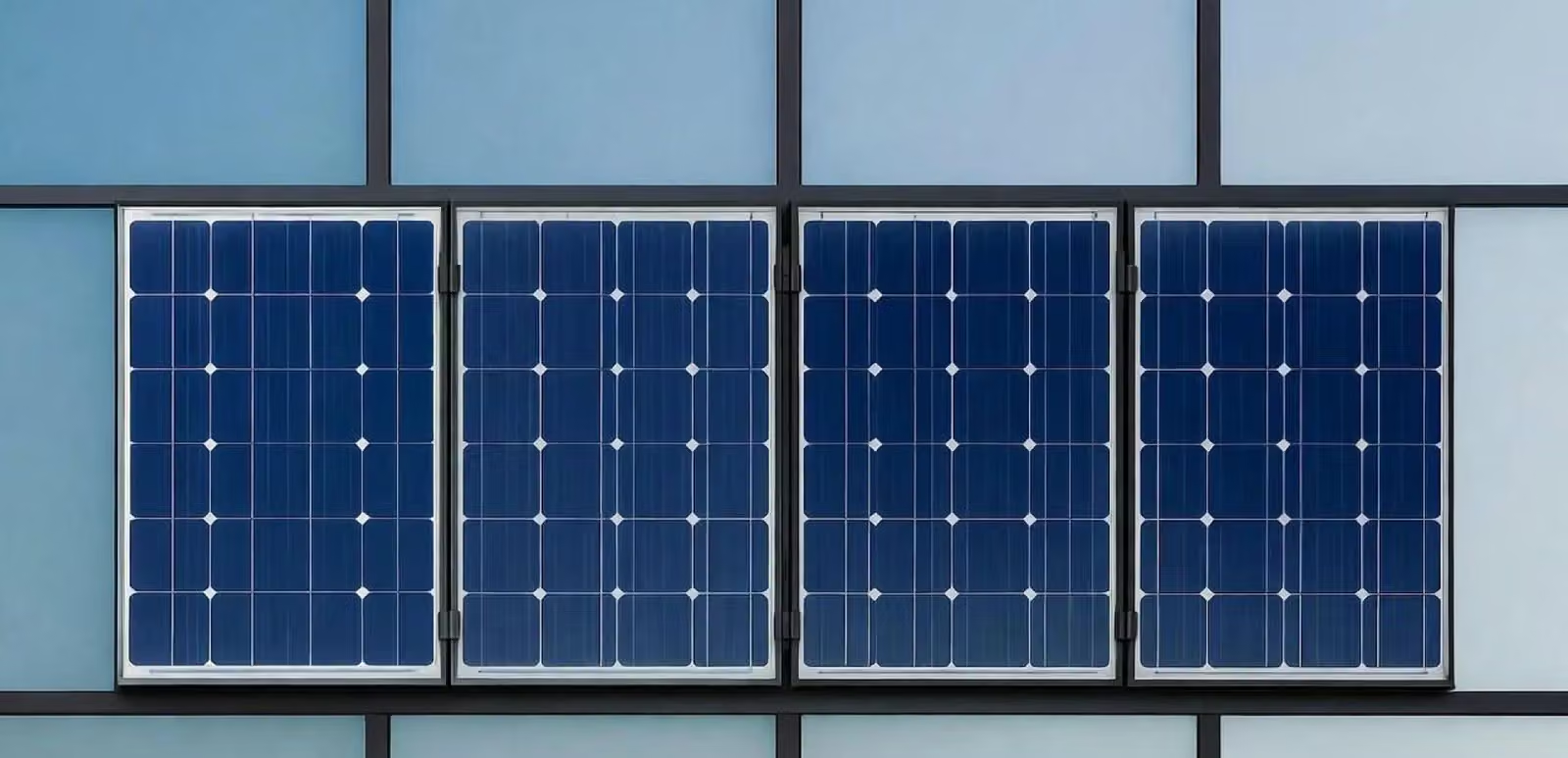
In the near future, it is planned to test the modules for durability and reliability. The new Building Integrated Photovoltaics (BIPV) technology makes it possible to turn architectural elements into sources of electricity. Semi-transparent panels in building facades provide electricity generation, allow daylight to enter the premises and protect against overheating by reflecting thermal radiation.
The new generation panels demonstrate an optimal combination of transparency and efficiency. According to calculations, each square meter of such a surface is capable of generating up to 150 watts of electricity while maintaining transparency above 30%.
The development is based on hybrid perovskite films less than a micron thick. They are applied by printing. The main achievement is the abandonment of opaque metal contacts in favor of multilayer transparent electrodes. This became possible thanks to the addition of palladium, which ensures durability and resistance to oxidation.
In solar panels, palladium is applied in a nanolayer to the electrodes, and this is enough to increase reliability, protect elements from oxidation and extend service life without a noticeable impact on cost. This makes the technology competitive not only in the laboratory, but also in real operating conditions.
Earlier,www1.ru reported that Russian scientists from the Russian Academy of Sciencesimproved perovskite batteries.
Read more materials on the topic:
- Ultra-thin and flexible: new solar batteries developed in St. Petersburg
- Russian solar batteries "Arktika-M" tested
- Universal solar batteries for the Arctic and space are being created in Russia
Never miss our newsAdd this site to your preferred sources to see us more oftenAdd on Google

















