The company "Voronezhselmash", part of the "Koblik Group", with the participation of the federal Industrial Development Fund (IDF), has begun producing new models of grain cleaning and grain drying equipment. The total production capacity has increased by 1.5 times to 200 units per year. Investments in modernization exceeded 700 million rubles, of which 350 million rubles were provided by the IDF in the form of a concessional loan.
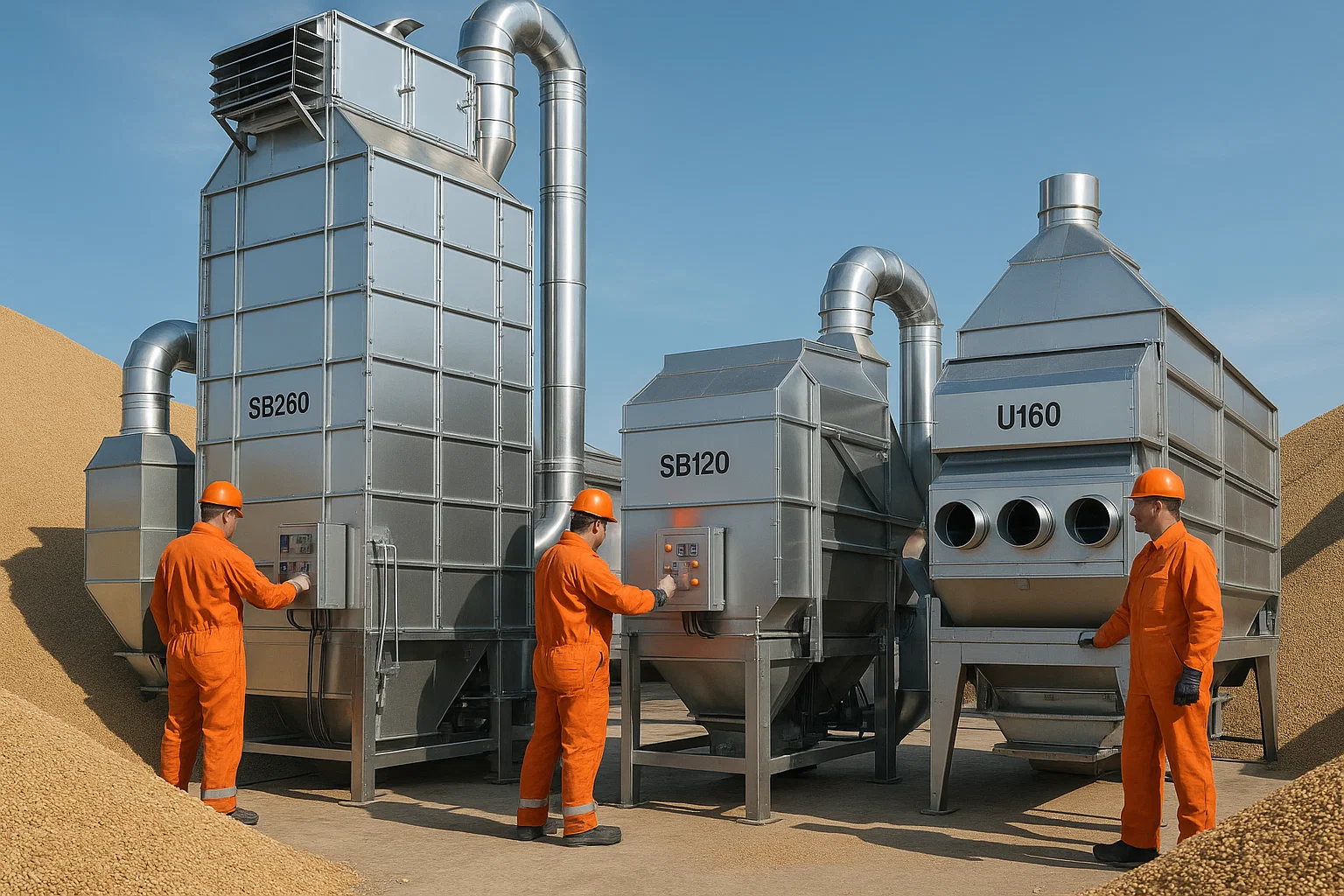
The new equipment includes the SDS250 grain dryer, which processes up to 250 tons of coated seeds per hour, reducing moisture to a level suitable for sowing. This improves seed germination and protects them from diseases and pests. In addition, the production of two separators has been launched: SB120 for preliminary and primary cleaning of crops (up to 120 tons per hour) from large impurities and U160 for secondary cleaning (up to 160 tons per hour) from small and light contaminants. The equipment is designed for cereals, legumes, cereals, industrial and oil crops.
Grain cleaning equipment separates waste, calibrates grain for seed material or food purposes, and sends non-standard grain to feed. Grain dryers bring the moisture content of grain, sunflower seeds and soybeans to normal, preventing self-heating, caking and mold. Technological lines are adapted to the climate of the region and the type of crop according to individual orders.
The modernization of production became possible against the background of the departure of some foreign manufacturers of elevator equipment, which opened up opportunities for domestic companies. According to Anna Mantrova, General Director of UK Koblik Group LLC, the new machines have no analogues in Russia and are produced mainly from domestic components with localization of more than 90%. In the future, this will reduce dependence on imports, where foreign manufacturers occupy up to 20% of the market.
Read more materials on the topic:
- Siberian scientists will send strawberry seeds to find out how space affects its growth
- "Rosel" presented an accurate and efficient agricultural drone with AI
- A sensor station for analyzing plant growth was created in Cheboksary
Never miss our newsAdd this site to your preferred sources to see us more oftenAdd on Google















![Growth Point: After 5G Launch, Mobile Internet in Russia Accelerated by 20%","subtitle":"TelecomDaily recorded an upload speed increase of 19.7%, and download speed of almost 14%","announce":""}[]}],](https://media.ixbt.site/fit-in/320x/ixbt-data/1727896/ai-image-nvgq0a0v5cjnyxwoc8xpelva.webp)