The Ishimbai plant of the Uralvagonzavod Concern (part of the Rostec State Corporation) has successfully modernized the Ural NEXT heavy-duty cross-country truck for the needs of the Russian army, installing anti-drone and anti-fragmentation protection systems on it.
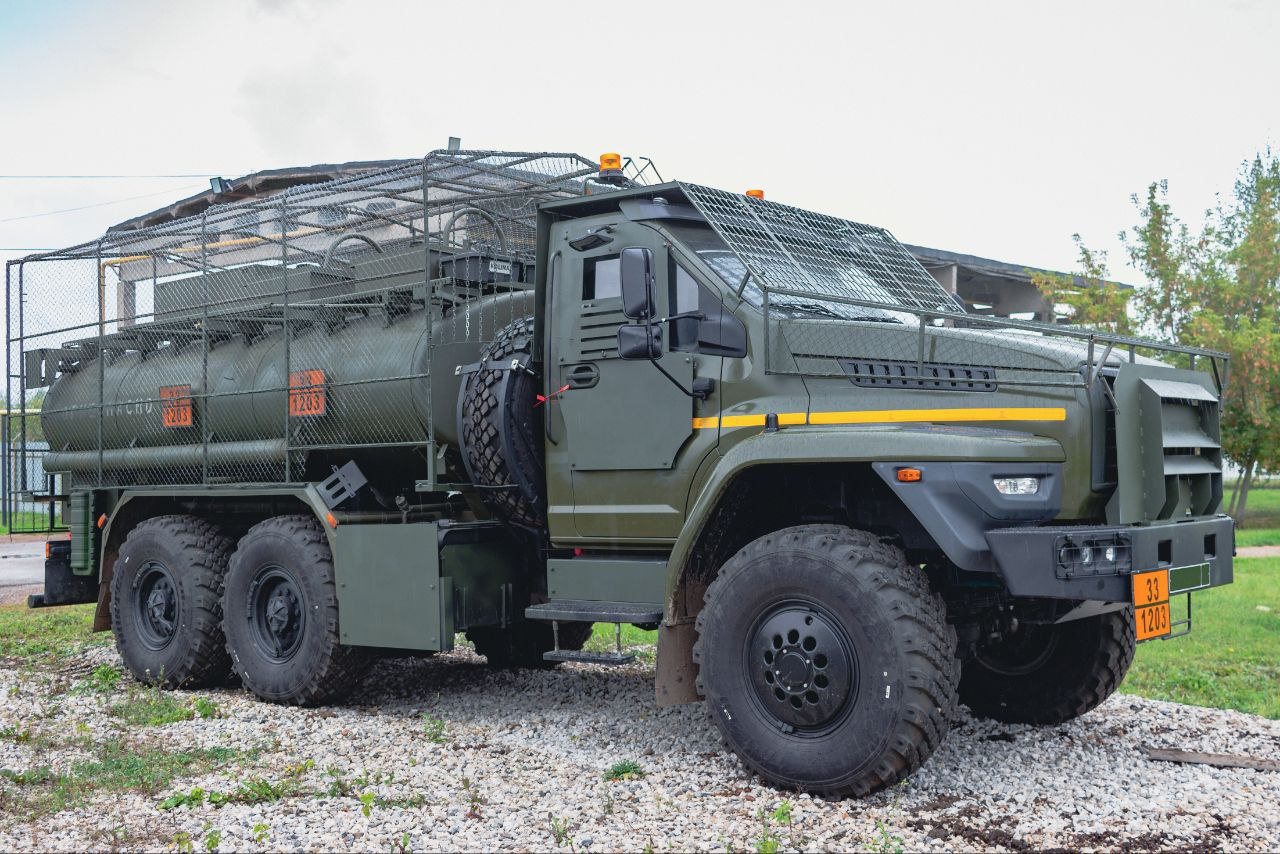
The Ural NEXT civilian heavy-duty vehicle was converted by factory workers for the needs of the Ministry of Defense of the Russian Federation. Now this vehicle, originally created for peaceful transportation, can successfully cope with the task of transporting fuel directly to the line of combat contact.
Anti-fragmentation protection has become a necessary element of combat vehicles. The widespread use of drones, light weapons, and artillery makes even modern tanks and infantry fighting vehicles vulnerable to fragments. New technologies, such as multi-layer composite armor materials and active shields, help to significantly reduce the effects of fragment hits, which increases the survivability of crews and increases the chances of successful completion of combat missions.
Earlierwww1.ru reported that India plans to buy 140 fifth-generation Su-57 fighters from Russia.
Read more materials:
- Press for processing castings of serial and promising PD-14 and PD-8 engines launched at the Ufa enterprise UEC-UMPO
- End of the legend: the official farewell ceremony for the last MiG-21UPG Bison fighters took place in India
- An-24 in the crosshairs: Rostransnadzor has tightened control over the airworthiness of the aircraft
Now on home

Start of deliveries scheduled for 2027

Over 51,000 new motorcycles were sold in Russia in 2025

The car will take at least a year to assemble

The application's audience has reached 20 million users

The model will be included in the list of cars for taxis, price - from 2.25 million rubles

All parking lots of the "Administrator of the Moscow Parking Space" are connected to the service

The cars will be supplied to the Moscow Transport Service Directorate

Deliveries to India may begin in 2028

The technology provides automated search for all types of defects in power units

The plane flew 500 km, accelerating to 425 km/h

The plant stated that the information about the termination of purchases for models 6 and 8 is not true

Scientists are using the "Ekran-M" installation