Russian scientists have officially presented serial ultra-low temperature cryostats, which in terms of key characteristics are not inferior to foreign analogues used for cooling superconducting quantum computers. These developments are already used in the Snowdrop quantum processor installed at the Bauman Moscow State Technical University, said Ilya Rodionov, director of the Quantum Park of the university.
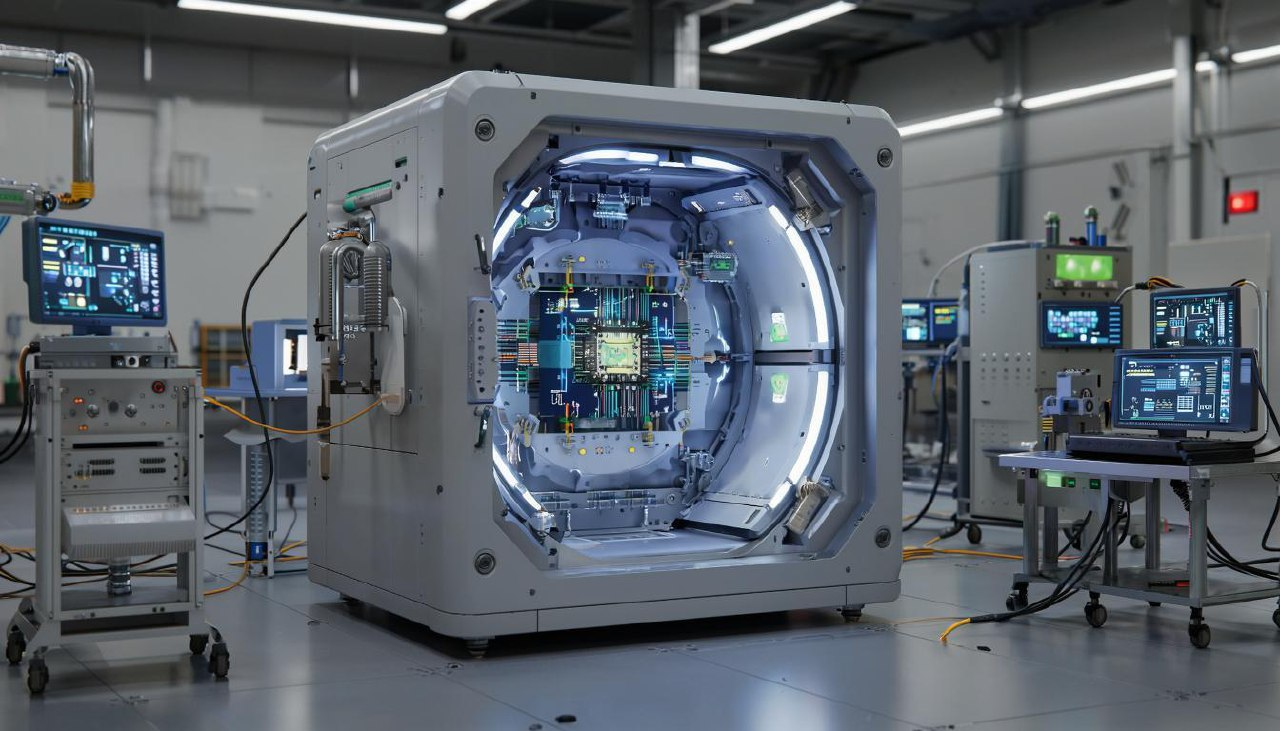
Cryostats stopped being sold to Russia a long time ago, back in 2018, and we had a need to create analogues necessary for the further development of quantum and photon technologies in Russia. In cooperation with VNIIA named after Dukhov and industrial partners, we managed to solve this problem in the shortest possible time, in just three years
The researcher emphasized that Russian scientists began developing cryostats in August 2022, and by the end of the same year, the first prototype was created. A year ago, domestic physicists reached a level comparable to or even exceeding the capabilities of two leading foreign installations - the British ICE Oxford 1k and the Finnish Bluefors 400. These foreign cryostats are used to cool components of quantum computers and other devices to temperatures of tenths of a Kelvin and up to several tens of millikelvins, and Russian developments are now able to compete with them.
A key achievement was the creation and successful testing of cryostats, providing stable cooling of the Snowdrop-4Q quantum processor (MSTU). This processor, based on four floating qubit-transmons, was tested as part of the beta version of the MSTU cloud quantum platform. The results showed stable and reliable operation of both the cooling system and the quantum computing system for several weeks.
Read more on the topic:
Hemostatic agent made from modified cellulose and surgical glue created by scientists in Russia
Substances for neutralizing automobile exhaust gases developed by Novosibirsk scientists
Hydrocyclone with self-cleaning system developed by scientists from Nizhny Novgorod
Never miss our newsAdd this site to your preferred sources to see us more oftenAdd on Google

















