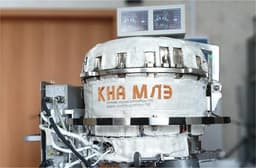
The alchemical transformation of mercury into gold at nuclear power plants could become a solution to the problem of gold depletion. This was stated to journalists at the Pavlik gold mining company in Magadan. According to nuclear scientists, it is necessary to overcome technological difficulties in order to reduce the cost of the process.
Previously, the American startup Marathon Fusion stated that it had found a way to turn mercury into gold. The Americans propose introducing a mercury isotope into the nuclear reactor zone and using high-energy neutrons to convert it into mercury-197. The unstable isotope decays in 64 hours, forming gold-197, the only stable isotope of gold. According to Marathon Fusion's forecasts, thermonuclear power plants will be able to produce up to 5 tons of gold per year per 1 GW of electricity generation.
Specialists from the Pavlik company agree with the theoretical possibility of such a transformation, but emphasize that it is currently too expensive. In the future, when gold reserves are depleted and isotope enrichment technologies become cheaper, this method may be implemented.
Nevertheless, a number of problems need to be overcome for the mass production of gold in this way. Firstly, the content of the target isotope mercury-196 in nature is very low - only 0.15%. The remaining isotopes, when irradiated with neutrons, will also capture them and turn into other products, which complicates the separation process.
Gold miners are considering the possibility of enriching mercury-196, but this is an expensive process. At the moment, gold mining using traditional methods remains more economically feasible.
In addition, even if it is possible to obtain a pure isotope of mercury-196, the question remains of controlling the transformation process. It is necessary to ensure that all mercury is actually converted into gold. There are analytical methods, such as mass spectrometry, that can record the state of individual atoms, but their use in this case will require significant time costs.
Thus, although the idea of turning mercury into gold looks promising, in practice it faces serious challenges.
Read more on the topic:
Rosatom State Corporation has begun pilot industrial operation of nuclear fuel with minor actinides
The world's first land-based small nuclear power plant is being built in Yakutia