Scientists from the AIRI Institute of Artificial Intelligence, MTUCI, Sber, and VeinCV have developed a new technology that protects voice biometrics from unauthorized collection and analysis on the Internet. The method is intended for those who publish voice content in the public domain - from teachers and speakers to bloggers and streaming platforms. The development is already available in open access.
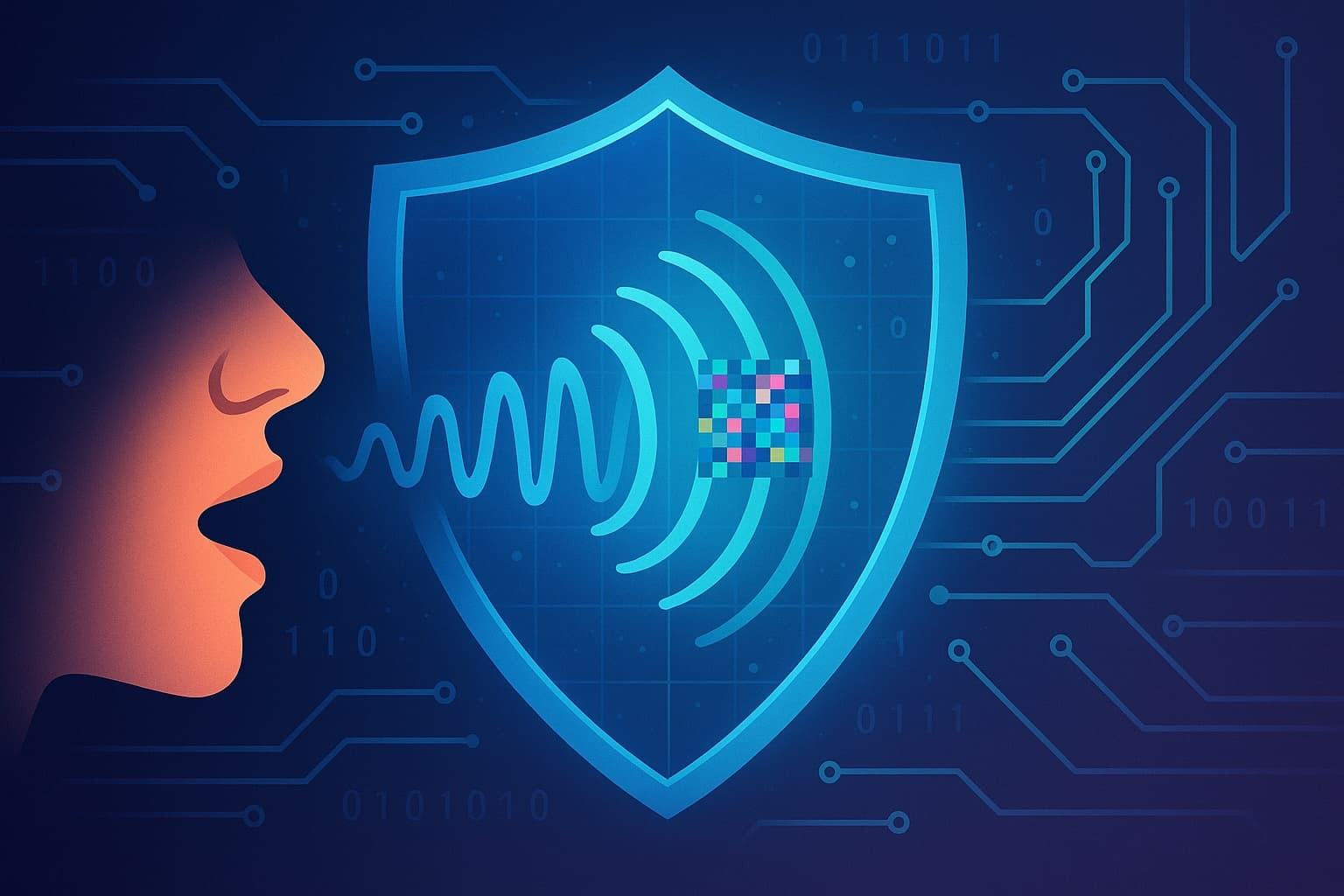
The technology is based on the use of universal adversarial patches (UAP) embedded directly into the audio file. These digital labels mask the voice from identification algorithms without disrupting the meaning of what is said and without impairing the intelligibility of speech for listeners. This protects the voice from profiling, creating deepfakes, and attacks using voice biometrics, while maintaining the suitability of the recording for transcription, translation, and other tasks not related to identity determination.
The main goal of the project is to enhance the protection of users' digital footprint, primarily voice identity.
The development was a response to the shortcomings of existing methods of voice "anonymization" - most of them either significantly distort the sound or do not work well with recordings of various lengths. The new algorithm uses mathematical approaches previously used in the field of visual analysis and provides a balance between effective protection and maintaining sound quality.
The technology has been successfully tested on the popular VoxCeleb2 dataset, which contains the voices of celebrities, and has shown that it can protect audio data no worse than existing methods, while providing high sound quality. Researchers hope that their solution will help online platforms and users improve the security of audio content and reduce the risk of personal biometrics leaks.
Read more materials on the topic:
Access control system based on biometric data developed at MSPPU
Highly effective method for detecting data-stealing viruses created by PNRPU researchers
"So they don't steal again tomorrow": Russians urged to protect personal data even after a leak











