Translated with AI from the Russian original.
Russian researchers from IPMS RAS, NUST MISIS, N.N. Blokhin National Medical Research Center of Oncology, LPI RAS, IOG RAS, Belgorod State University, and the Liaoning Academy of Materials have presented an improved biodegradable alloy based on iron and manganese, which dissolves in the body twice as fast compared to its counterparts. The key factor in accelerated degradation was the addition of silicon and the use of high pressure during material processing - up to 60 thousand atmospheres.
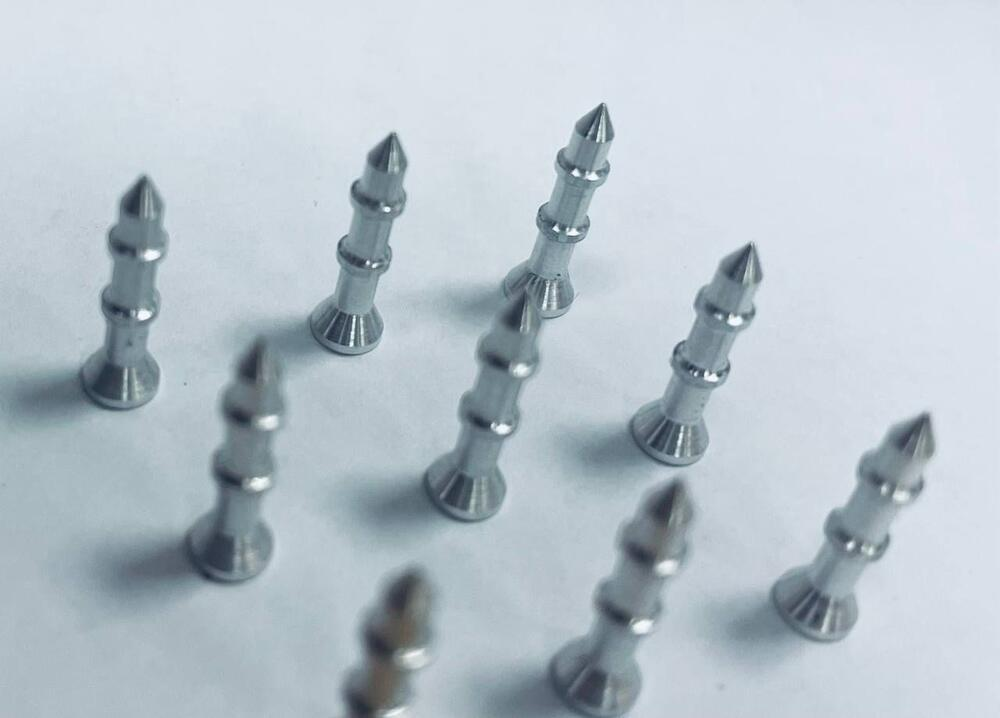
Experiments have shown that silicon promotes martensitic transformation - a rearrangement of the crystal lattice in which atoms are displaced by distances smaller than interatomic distances. This accelerates the corrosion of the alloy in a biological environment, reducing its dissolution time to 1-2 years.
The authors of the study plan to scale up the development to obtain prototypes of products and conduct clinical trials on animals and humans. Such material is particularly in demand in orthopedics, oncology, and veterinary medicine, where temporary implants should support tissues only during the recovery phase. Details of the study are published in the journal Crystals.
Read more materials on the topic:
Mesh Implants Invented at Sechenov University Reduce the Risk of Complications After Gynecological Surgeries
Never miss our newsAdd this site to your preferred sources to see us more oftenAdd on Google

















