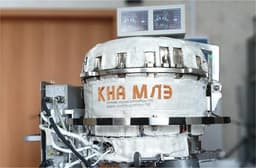
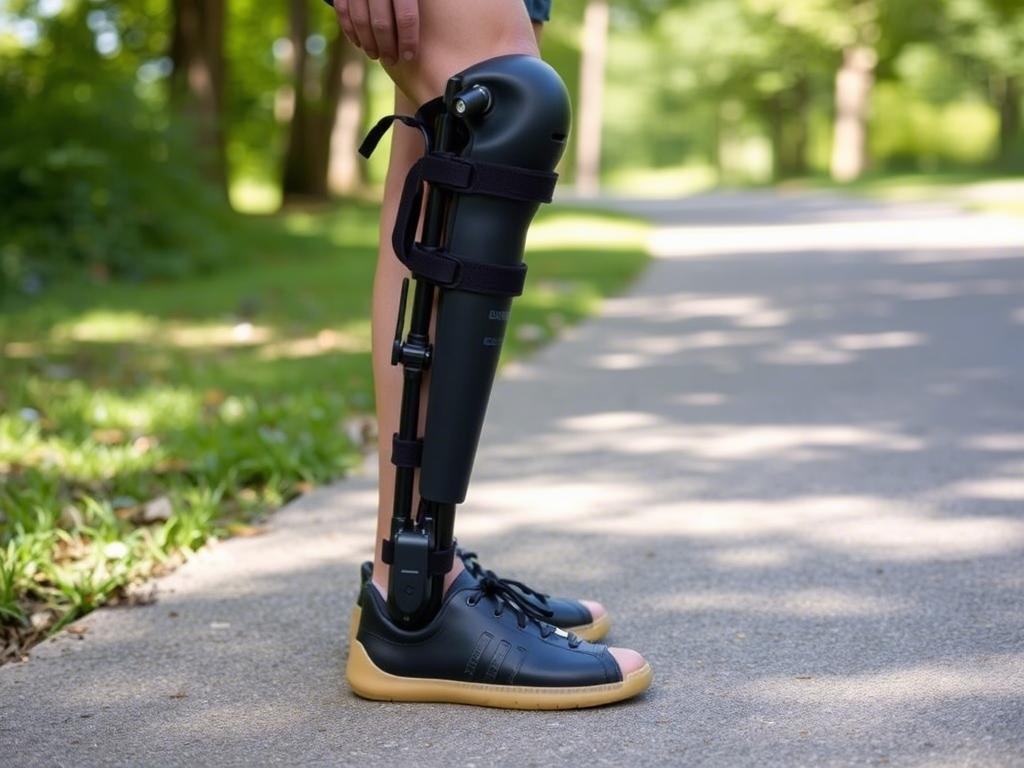
At the Advanced Engineering School of the Moscow Aviation Institute, a new technology is being created for liners in orthoses and prostheses for the lower extremities. These liners will adapt to the load, which will allow you to stand, walk, and run longer, the university's press service reported.
To manufacture our liner, we use the topological optimization method, which allows us to provide different levels of rigidity in different places. During printing, the object being manufactured is in a container with a special gel that has a density and viscosity that prevents the structure from changing its position.
Printing is carried out with liquid materials, which then harden. This solution has many advantages: it reduces the amount of waste, makes it possible to create more complex and natural forms, and also increases production efficiency: complex objects can be printed in one cycle.
The process begins with scanning the limb using a smartphone camera. A three-dimensional model is created based on many images. Then, using this model and X-rays, the program builds a map of tissue rigidity. Based on the data, the geometry of the liner with the desired rigidity distribution is developed. The finished liner is printed on a 3D printer.
To create a safe and biocompatible material, a two-component silicone with a platinum catalyst is used. As part of the project, a prototype has already been created, which has proven the effectiveness of the method. To improve the quality of the product, the developers plan to use a new 3D printer - RLP. This technology allows you to print solid structures without supports and minimal post-processing.
Now prostheses and orthoses are made individually, according to casts, with multi-stage fitting. For convenience, a soft pad is placed in the prosthesis - a thin layer of material similar to foam rubber, up to 1.5 mm thick. But it does not provide uniform load distribution during movement.
The National Medical Research Center for Traumatology and Orthopedics named after N. N. Priorov became interested in the development. Scientists emphasize that this technology can be used not only to create liners for prostheses and orthoses, but also for orthopedic insoles, liners in car seats, vibration-absorbing materials, and other products that need to be adapted to a specific person or task.
Earlier, researchers from RTU MIREA created a new generation orthosis for the rehabilitation of patients with impaired hand mobility after radial nerve injuries and stroke. Unlike conventional models, which only limit movement, this device actively stimulates the restoration of motor skills.
Read more on the topic:
Artificial intelligence is being introduced into Russian medicine at an incredible speed - Murashko
Russian scientists have developed a prosthesis capable of imitating tactile sensations
Masking pads for leg prostheses have been developed in St. Petersburg