The National Automobile Union sent a letter to Mikhail Mishustin requesting the update of outdated traffic violation cameras. According to the union, about 30% of cameras in Russia cannot cope with the tasks: they do not record whether the driver is wearing a seatbelt, using a phone, or whether the motorcyclist has a helmet. This hinders the implementation of the Ministry of Finance's plan to increase fines from 6.4 to 52.8 billion rubles - the old equipment is simply not able to ensure such collectability.
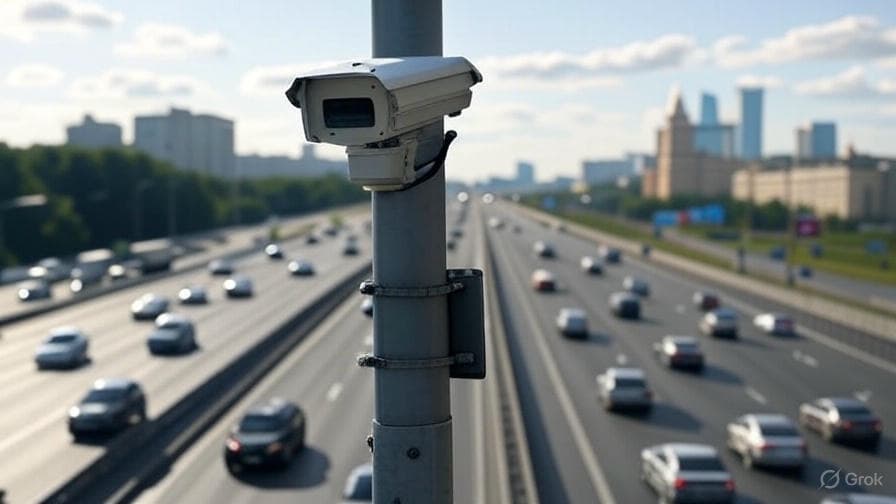
The letter emphasizes that half of these cameras have been operating for five to seven years, and the other half for more than seven. At the same time, often some violations are recorded, while similar ones are not, which causes distrust and irritation among drivers. It is also indicated that since January, the amount of fines for speeding has increased, the discount system has changed, but without modernization of the cameras, the effect of these measures will be limited.
The Automobile Union proposes to conduct an audit of all complexes, prohibit the extension of contracts for cameras older than six years, and conclude new agreements only for modern equipment, including concession models that do not require costs from regional budgets.
Experts stated that outdated cameras do not support modern algorithms and cannot process video streams in real time. It is impossible to replace only the software - a complete replacement of the complexes is required. Cameras are often placed in unsuitable places and serve more to replenish the budget than to improve safety. In addition, up to 30% of fines may be erroneous due to technical limitations of old cameras.
The main difficulty of replacement is the lack of a regulatory framework for writing off outdated, but formally functional devices. Modern cameras are more expensive: 2-5 million rubles versus 600-900 thousand for old ones. Their mass introduction is hampered by the high cost and dependence on imported components that have fallen under sanctions.
Most cameras only record speeding. Modern complexes are capable of recognizing dozens of types of violations, using AI and processing data in real time, but regions cannot massively implement them due to limited funding.
Read more on the topic:
Now on home

Start of deliveries scheduled for 2027

Over 51,000 new motorcycles were sold in Russia in 2025

The car will take at least a year to assemble

The application's audience has reached 20 million users

The model will be included in the list of cars for taxis, price - from 2.25 million rubles

All parking lots of the "Administrator of the Moscow Parking Space" are connected to the service

The cars will be supplied to the Moscow Transport Service Directorate
Deliveries to India may begin in 2028

The technology provides automated search for all types of defects in power units

The plane flew 500 km, accelerating to 425 km/h

The plant stated that the information about the termination of purchases for models 6 and 8 is not true

Scientists are using the "Ekran-M" installation