A program for computer analysis of welding seams in industrial production has been developed at Petrozavodsk State University (PetrSU). This was announced by Alexey Marakhtanov, Director of the Center for Artificial Intelligence at PetrSU.

The new system recognizes product defects.
We created this development by order of our partners, industrial enterprises, they have a need to control the quality of welded joints, as well as surfacing. And, of course, the use of computer vision technology allows you to better and faster find defects and correct them in a timely manner.
The computer model is based on neural networks and is part of a hardware and software complex. It includes a camera and a computing device that displays information in real time.
The development can also be used as assistance for novice welders.
Beginners can safely try their hand, practice on trial products, then the system will scan the results and check their work, highlighting defects. The system also has reference information, which contains a list of defects that can be found.
Earlierwww1.ru reported that the Saturn welding robot for the construction of submarines is beingtested in Russia.
Read materials on the topic:
Rosatom masters laser welding using a collaborative robot
A new Russian installation for electron beam welding of large gas turbine engines has been launched
Spot welding for Russian aircraft engines: unique equipment will appear at PC Salyut
Now on home

Start of deliveries scheduled for 2027

Over 51,000 new motorcycles were sold in Russia in 2025

The car will take at least a year to assemble

The application's audience has reached 20 million users

The model will be included in the list of cars for taxis, price - from 2.25 million rubles

All parking lots of the "Administrator of the Moscow Parking Space" are connected to the service

The cars will be supplied to the Moscow Transport Service Directorate
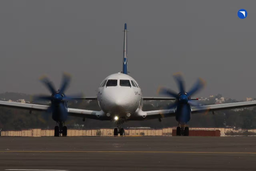
Deliveries to India may begin in 2028
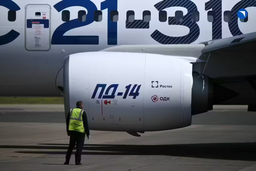
The technology provides automated search for all types of defects in power units
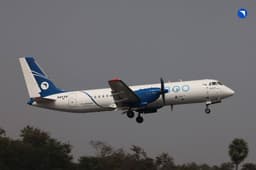
The plane flew 500 km, accelerating to 425 km/h

The plant stated that the information about the termination of purchases for models 6 and 8 is not true
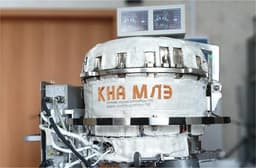
Scientists are using the "Ekran-M" installation