Mathematical models for protecting aircraft from icing have been developed at the Moscow Institute of Physics and Technology (MIPT), as reported by the University's Center for Scientific Communication.

The mathematical models developed by scientists will be used in solving the problems of aircraft icing and friction reduction. This will allow for a correct and informed choice of material for hydrophobic coating, and will also minimize the risk of accidents and flight costs.
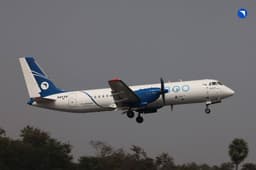
One of the biggest threats to aircraft and unmanned aerial vehicles is ice buildup on the surface of their wings and fuselage. These formations increase the weight of the aircraft, worsen its aerodynamic characteristics, and disrupt the operation of sensors. Such buildup often occurs as a result of an aircraft colliding with supercooled water droplets, against which various water-repellent coatings are applied to structural elements.
Scientists have studied the interaction of water with hydrophobic materials. Based on the data obtained, a set of mathematical models was created.
The development allows calculating the dynamic characteristics of hydrophobic coatings and the nature of their interaction with water, as well as predicting changes in their properties depending on various conditions.
Earlier, www1.ru reported that plasma and laser technologies for aircraft repair were created in Novosibirsk.
Read more on the topic:
UEC-Kuznetsov Launches New Test Bench for Gas Turbine Engines