Translated with AI from the Russian original.
The Russian army has received the first 50 ground-based robotic complexes (GRTK) "Courier". They can mine the territory, fire at the enemy and conduct evacuation.
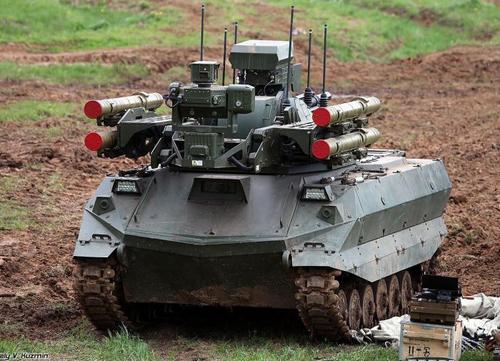
The developer of the GRTK "Courier", Mikhail, noted that the robot was developed so that Russian soldiers could operate at a safe distance from the enemy's means of destruction and not expose themselves to danger.
The robotic complex is capable of firing from several types of weapons, evacuating the wounded from the battlefield, as well as conducting combat, laying mines, thereby facilitating the performance of combat tasks for military personnel and saving their lives. Another 20 of these products will be transferred to the soldiers in the near future.
The robotic complex is equipped with a multifunctional combat module with the possibility of installing an AGS-17 grenade launcher, NSVT or PKT machine guns, a drop system for installing minefields, a generator for an additional power source and a module in the form of a front roller for demining.
Earlier www1.ru reported that in Russia production will be increased of Kub kamikaze drones. They have proven themselves well on the front line.
Read materials on the topic:
The Russian army received a batch of modernized Rakushka-M armored personnel carriers with electronic warfare systems
The shipborne Pantsir-M will intercept up to 10 Storm Shadow missiles per minute thanks to the latest PFAR radar 1RS3
Formidable and powerful: a rare modification of the T-90A with an Essa sight based on Catherine-FC was spotted at Uralvagonzavod
Never miss our newsAdd this site to your preferred sources to see us more oftenAdd on Google

















