Translated with AI from the Russian original.
The Ruselectronics holding of Rostec State Corporation has completed the development of traveling wave tubes (TWTs) for the first fully domestic communication satellite, Express-AMU4. These tubes are a crucial component of ultra-high frequency (UHF) power amplifiers used in the onboard radio transmitting equipment of satellites. The launch of the new satellite is scheduled for the end of 2026, and it will provide communication services in Latin America, Africa, and the Middle East.
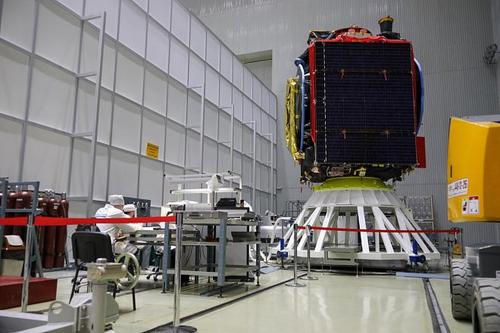
TWTs are key elements of all communication spacecraft, capable of amplifying the power of UHF signals. Four types of TWTs have been developed for Express-AMU4, including two for the Ku-band and two for the C-band. These devices are entirely made from domestic components, without the use of imported parts, and are produced using a unique Russian technology that is an object of intellectual property.
Representatives of Ruselectronics noted that the new traveling wave tubes are technically on par with the best foreign counterparts. They can be used in radio transmitting systems of spacecraft for various purposes, such as remote sensing satellites, meteorological satellites, devices for monitoring and protecting the environment, as well as for navigation and scientific research.
The Express-AMU4 communication satellite will be the first Russian spacecraft with a fully domestic instrument composition. Its developer is JSC "RESHETNEV", which is part of Roscosmos State Corporation. The satellite is expected to be commissioned in March 2027 after its launch in December 2026.
Read more on the topic:
The first Russian import-substituted satellite "Express-AMU4" received new parts
It became known what "RESHETNEV" will show at the first International Aviation and Space Exhibition Egypt International Airshow
Time for retirement: eight Russian satellites in orbit need replacement
Never miss our newsAdd this site to your preferred sources to see us more oftenAdd on Google

















