Scientists from "GK Rosatom" have started producing custom titanium implants for maxillofacial surgery on a 3D printer. In the future, they plan to mass-produce implants with a biocompatible coating for traumatology and orthopedics, as well as grow organs from living cells using a bioprinter.
The laboratory was opened a year ago at the scientific and production center of medical devices of the Troitsk Institute for Innovation and Fusion Research (TRINITI). During this time, they have mastered the full cycle of production of individual titanium implants, which have already been installed in five patients. The first of these implants was installed in the fall of 2023.
Two 3D printers for the laboratory were produced by TsNIITMASH. Printing is carried out from pure titanium and titanium alloy.
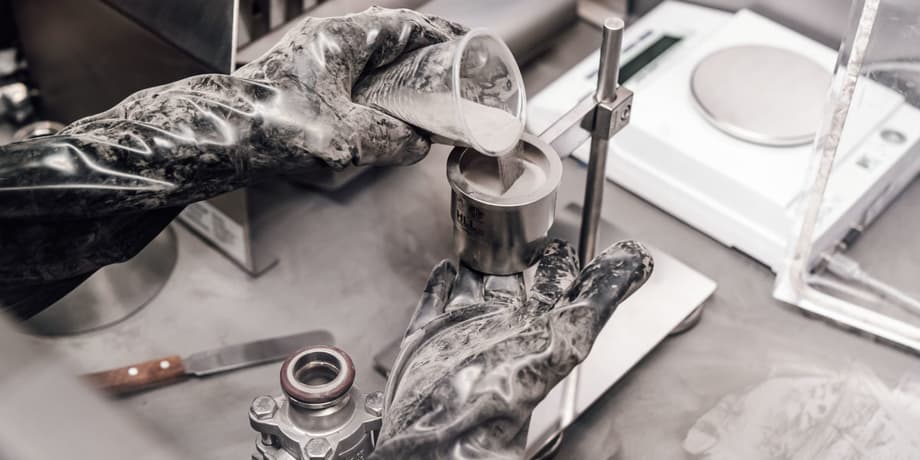
An individual implant is produced in seven days. The process includes modeling and design, printing, heat treatment, post-processing, quality control, sterilization and packaging. The production is almost waste-free, since the powder remaining after printing is collected, dried and sieved for reuse.
TRINITI scientists are developing implants with a two-layer biocompatible coating to prevent rejection and improve osseointegration. The superficial bioresorbable layer stimulates the process of mineralization and fusion of the implant with the bone, and the remaining layer supports further bone growth. The coating uses silicon and magnesium, which contribute to faster bone formation.
Read related materials:
Rostec showed how 3D printing of aircraft engine parts works
Blood vessels, stomach, intestines: cosmonauts on the ISS will begin printing human organs
3D Printing for Nuclear Power Plants: Rosatom is changing its approach to production
Now on home

Start of deliveries scheduled for 2027

Over 51,000 new motorcycles were sold in Russia in 2025

The car will take at least a year to assemble

The application's audience has reached 20 million users

The model will be included in the list of cars for taxis, price - from 2.25 million rubles

All parking lots of the "Administrator of the Moscow Parking Space" are connected to the service

The cars will be supplied to the Moscow Transport Service Directorate

Deliveries to India may begin in 2028

The technology provides automated search for all types of defects in power units

The plane flew 500 km, accelerating to 425 km/h

The plant stated that the information about the termination of purchases for models 6 and 8 is not true

Scientists are using the "Ekran-M" installation