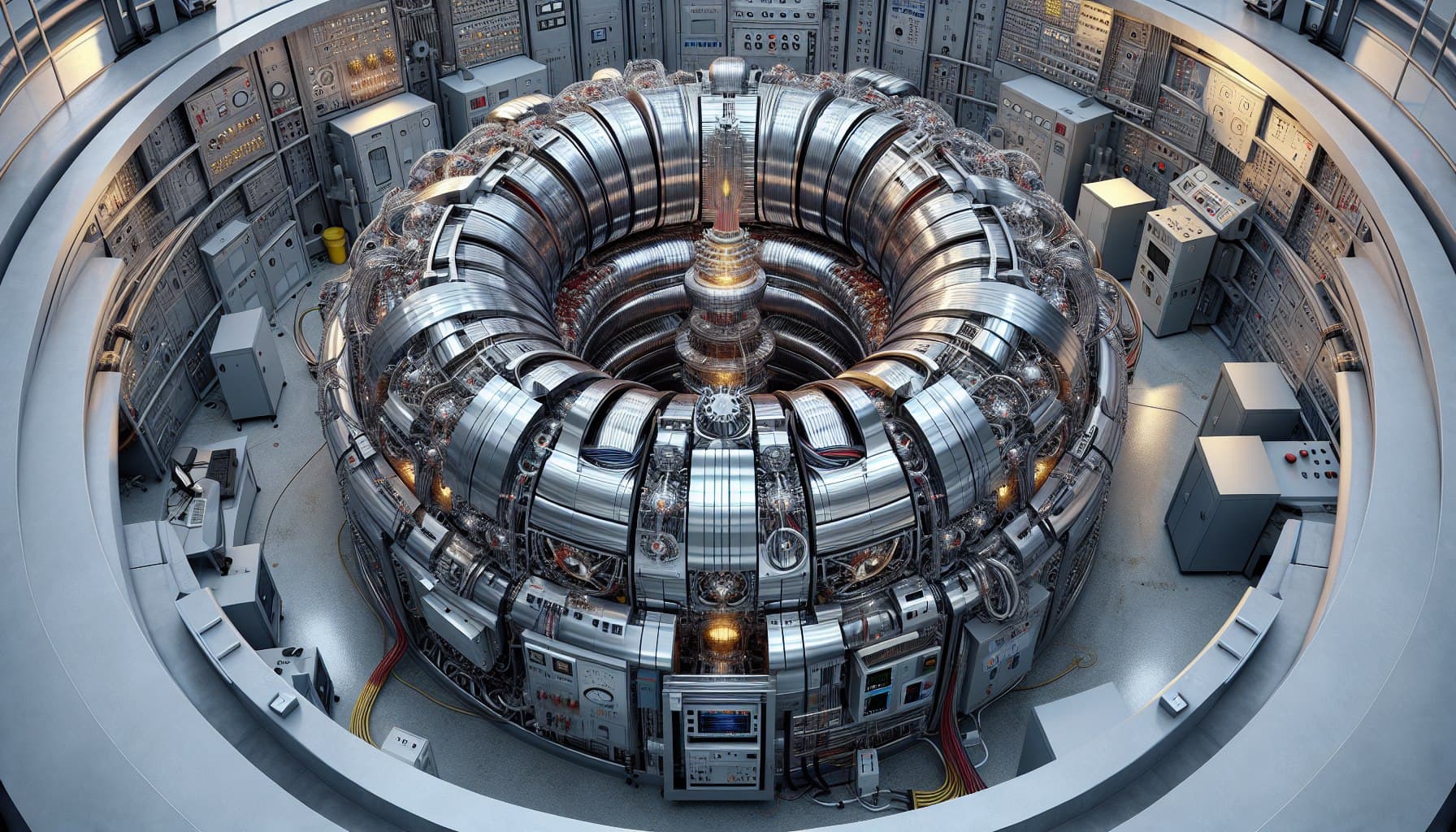
The International Thermonuclear Experimental Reactor (ITER), in the creation of which Russia is also participating, will not be launched in 2025, even symbolically. This was announced by ITER Director-General Pietro Barabaschi during an online press conference related to the fate of this unique project. Scientific work at ITER is being postponed from 2025 to 2034.
The previous ITER development strategy was developed in 2016, and it has long been unsustainable due to the pandemic and technical difficulties encountered in the implementation of the project. We have prepared a new strategy, in which we abandoned the trial launch of the reactor in 2025, and postponed the start of the deuterium-tritium phase from 2035 to 2039.
According to him, changes in the plans for the construction and operation of the reactor will make the project more attractive for the implementation of subsequent plans for the construction of commercial thermonuclear reactors. The new ITER development strategy includes:
- changing the composition of ITER components. In particular, it is proposed to create a special system for the complete testing of toroidal magnets before their installation in the reactor, and to switch from beryllium to tungsten for the manufacture of the first wall of the reactor;
- cancellation of the first trial run of the installation. The reason given was the fact that the reactor was planned to be launched for a very short time and achieve a relatively low plasma current. This could entail serious risks for ITER equipment and did not provide useful data for science;
- postponement of the start of scientific work from 2025 to 2034;
- postponement of the date of reaching full magnetic energy from 2033 to 2036;
- postponement from 2035 to 2039 of the start of the deuterium-tritium phase, in other words, the full operation of the thermonuclear reactor.
It is worth noting that the development and manufacture ofpanels for the first wall of the reactor made of beryllium for ITER were carried out at Rosatom. Under the agreement with the International ITER Organization, it was necessary to develop and manufacture 179 protective products that have virtually no world analogues.
Earlier, "The First Technical" talked about the ITER project and how it is useful for Russia. You can read about ithere.
Read materials on the topic:
Russia will launch more than 150 industries in the chemical industry by 2030
The first Russian high-precision superconducting quantum processor has been launched