As noted in the Moscow Planetarium, in mid-July, all conditions will be in place for observations.
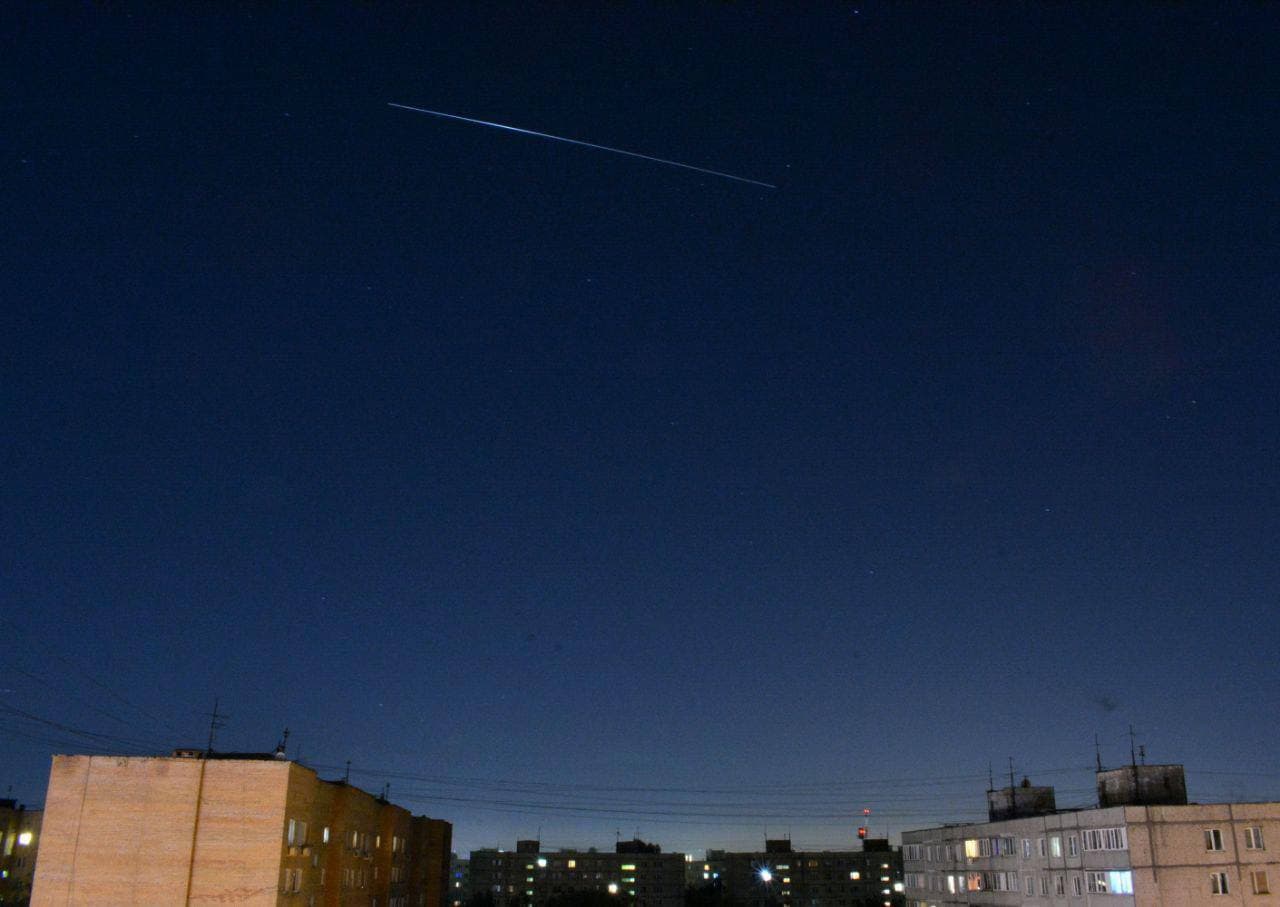
On July 11 in the evening, from 23:18 to 23:25, you can see how a bright celestial body (ISS) quickly flies over the southern horizon of Moscow. The ISS will fly in the southern part of the sky from west to east. In order not to miss this spectacle, it is necessary to prepare for observation in advance, find an open southern horizon and orient yourself to the cardinal directions. The ISS flyby takes only 3-7 minutes, but it is impossible not to see it in a clear sky. The brightness of the ISS (about -3m) in July is greater than the brightness of Jupiter.
It is noted that ISS flybys occur approximately every hour and a half. For example, the next flyby after 23:18 on July 11 can be seen in an hour and a half on July 12 from 00:55 to 01:01, approximately in the same area of the sky.
The exact time and parameters of the ISS flybys over Moscow from July 12 to 22 can be found here.
Earlier in early June, Muscovites, like other residents of Russia, could see a "parade of planets", which occurs once every twenty years. Then Venus, Jupiter, Mercury, Uranus, Mars, Neptune, and Saturn with the waning Moon lined up close to each other near the Sun.
Read materials on the topic:
Russian pico-satellite for the first time in history showed the possibility of hosting from orbit