Translated with AI from the Russian original.
Oleg Kononenko, commander of the Roscosmos cosmonaut corps and part-time special correspondent for TASS news agency on the ISS, spent a total of exactly one thousand days in space at 00:00:20 Moscow time. He is the first person in the world to do so.
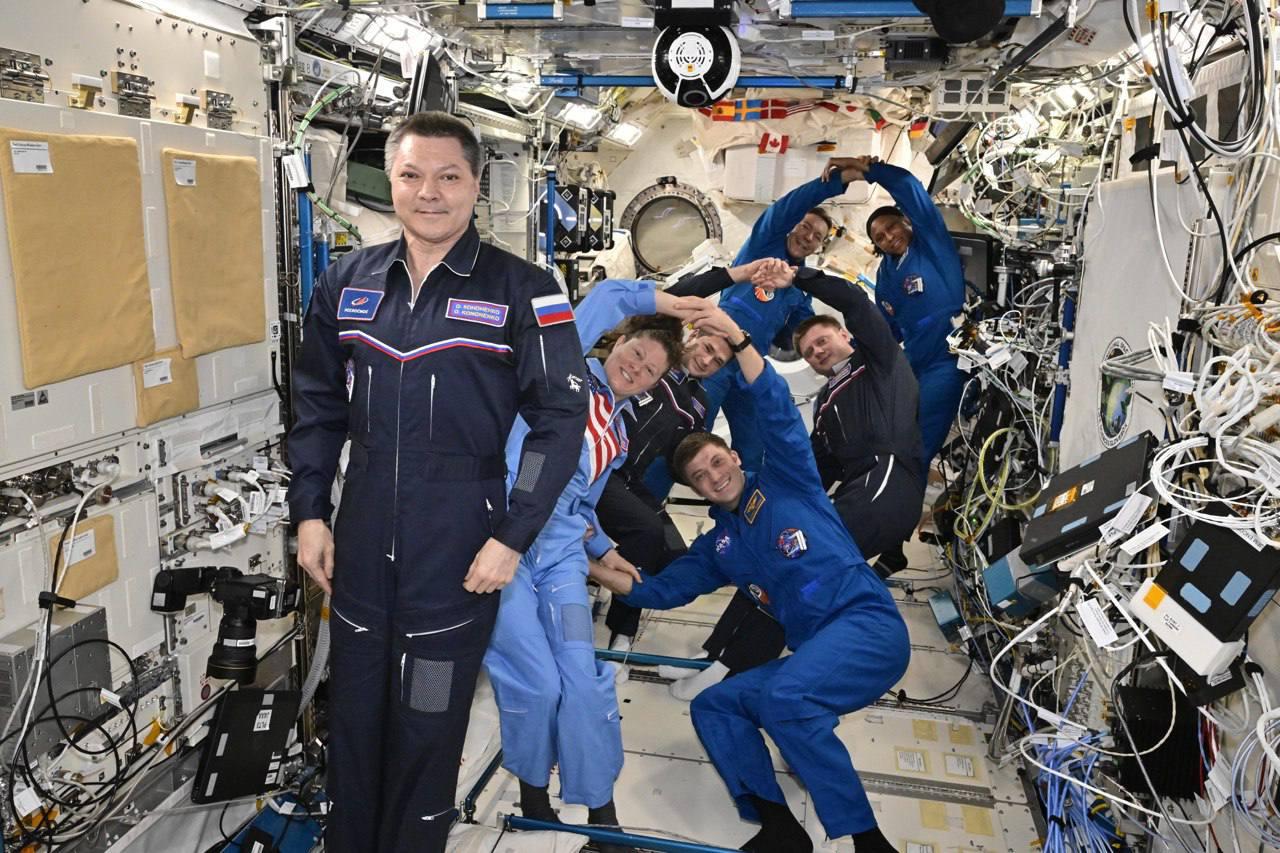
This spaceflight is Kononenko's fifth, having started on September 15, 2023. On February 4, 2024, he first became a world record holder for the total duration of spaceflights. On this day, at 11:30:08 Moscow time, Kononenko had spent a total of 879 days, 11 hours, 29 minutes, and 48 seconds in space.
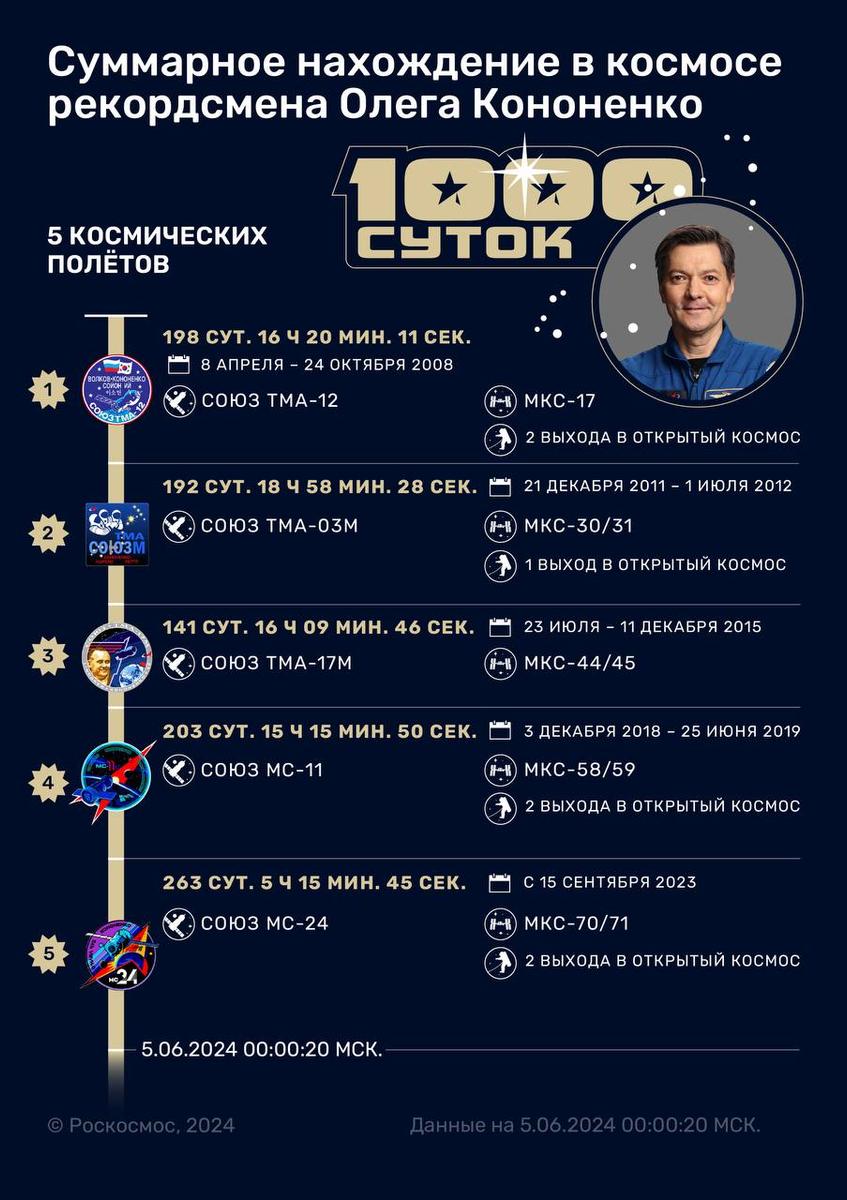
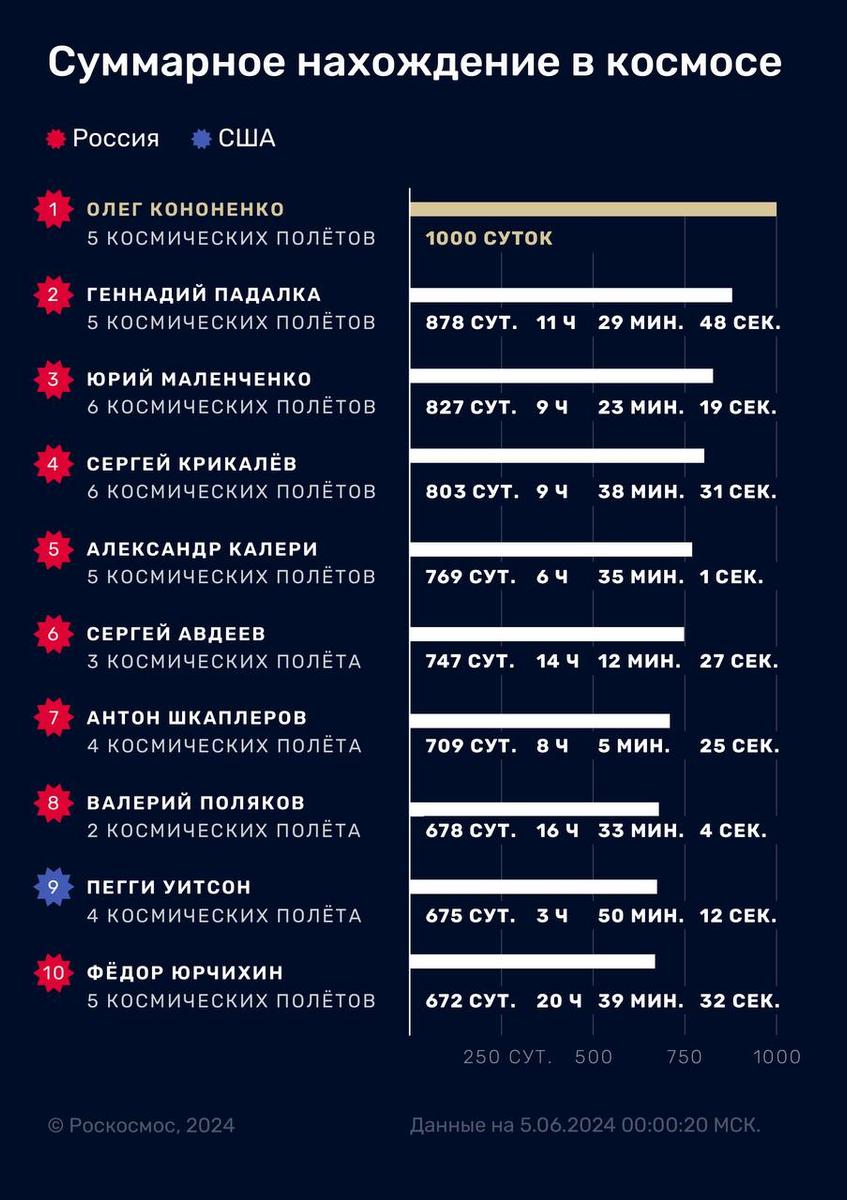
At that time, he surpassed his compatriot Gennady Padalka, who accumulated a total of 878 days, 11 hours, 29 minutes, and 48 seconds over five spaceflights. However, it will now be difficult to compete with Kononenko in modern space history. It is expected that upon completion of the year-long mission to the ISS, scheduled for September 23, 2024, his total flight time will be 1110 days.
Kononenko was contacted from Earth: the head of Roscosmos, Yuri Borisov, personally congratulated him via video link. Thus, Russia has definitively secured its leadership at the global level in terms of the total time spent by cosmonauts in space. Nine out of ten records in this area belong to Russia.
It is worth noting that the commander of the Roscosmos cosmonaut corps will soon be receiving other congratulations. Oleg Kononenko will celebrate his 60th birthday in space on June 21. In anticipation of this event, gifts were sent to him from Earth in the Progress MS-27 space truck.
Read more on this topic:
A Russian hyperspectrometer has arrived at the ISS: what is it and what will it do?
Russian space security system "Milky Way": what is known about it
Russian phantoms "Matryoshka-R" measured radiation in the organs of cosmonauts
New materials for Russian engines, turbines and storage devices created at RTU MIREA
Never miss our newsAdd this site to your preferred sources to see us more oftenAdd on Google

















