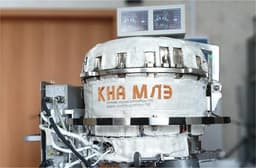
The Russian satellite "Arktika-M" № 2, launched into orbit in December 2023, is undergoing flight tests of its target equipment. The tasks of the satellites of this group include providing the Hydrometeorological Center with operational information on the state of the climate and environment in the Arctic zone, as well as retransmitting search and rescue signals.
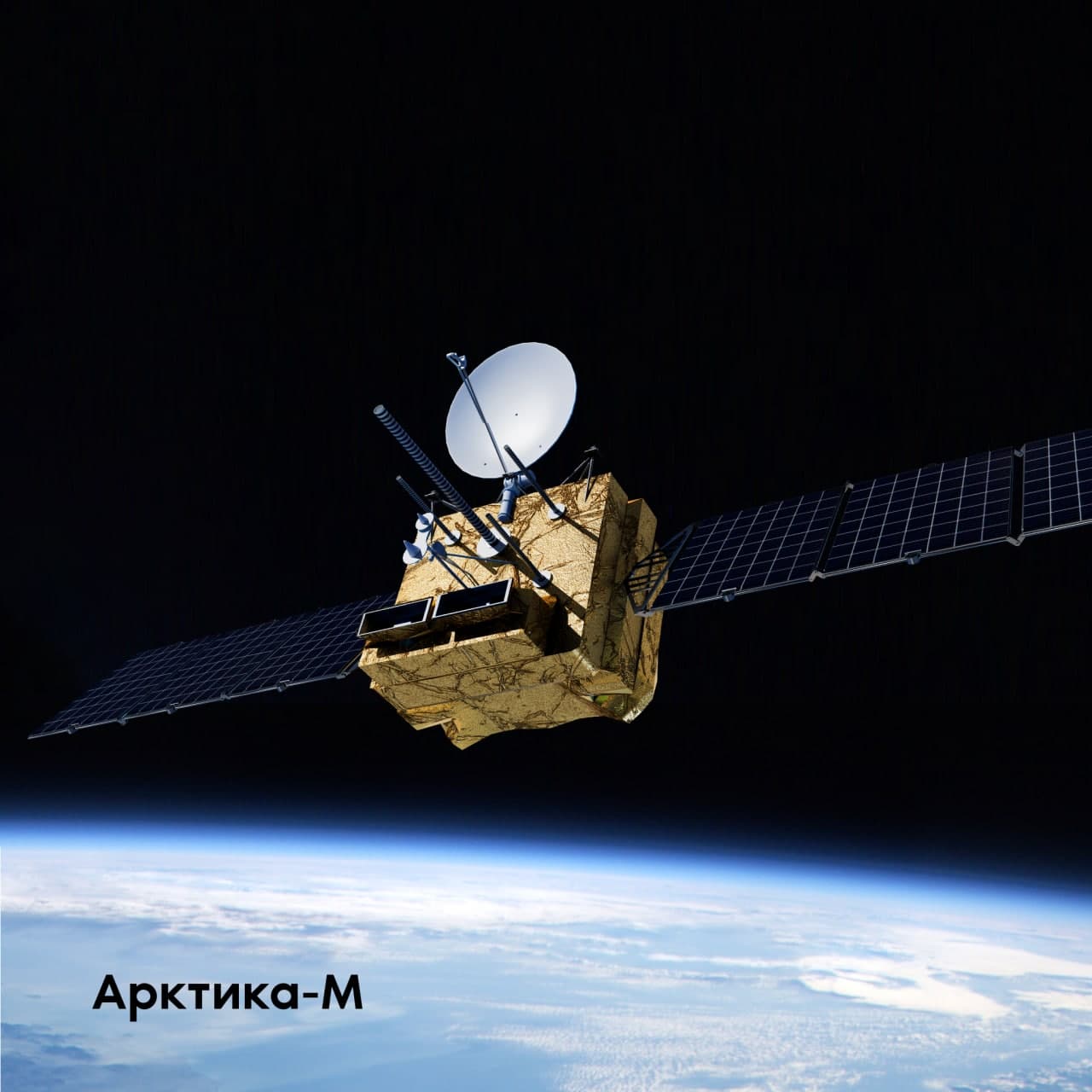
Orbital checks of almost all service systems of "Arktika-M" № 2, including power supply, have been completed. As on the first satellite of the "Arktika-M" series, it is equipped with solar batteries of Reshetnev's design.

The on-board power supply system is based on solar battery wings. Both wings of the "Arktika-M" satellite contain three panels each. Their production uses proven and effective technical solutions. They include lightweight and durable frames made of polymer composite materials, photocells based on three-cascade gallium arsenide, as well as mechanical devices.
The second satellite of the "Arktika-M" group received also new electronic components and devices with increased radiation resistance. Currently, only Russia has meteorological devices that operate in a highly elliptical orbit with an inclination of about 63 degrees, where enhanced protection of equipment from cosmic radiation and radiation is required.
The "daughter" of "Rosatom", the Moscow Design Bureau "Mars", which developed this reinforced on-board complex, is already working on similar on-board control complexes for the modernized "Arktik-M" (№ 3, 4, 5, 6). However, "Roscosmos" has already announced that it is thinking about replacing "Arktik-M" in the coming years.
"Arktika-MP" will allow to receive qualitatively new information about high-latitude Arctic regions of the Earth by increasing the number of spectral channels and improving the spatial resolution of the obtained images. The development of the device will begin in 2026.
Read materials on the topic:
It became known when Russia will launch the first "Marathons-IoT" for the Internet of Things
The new Russian satellite demonstrator "Skif-D" has begun to provide video communication