On December 4, 1990, the Soviet military transport aircraft An-124 "Ruslan" completed a round-the-world flight, which became one of the most ambitious and technically complex in the history of aviation. The route passed through both geographical poles — the North and South — and entered the Guinness Book of Records as the longest and most continuous non-stop flight in aviation history. In 72 hours and 16 minutes, the crew covered 50,005 kilometers, setting 7 world and 10 all-Union records.
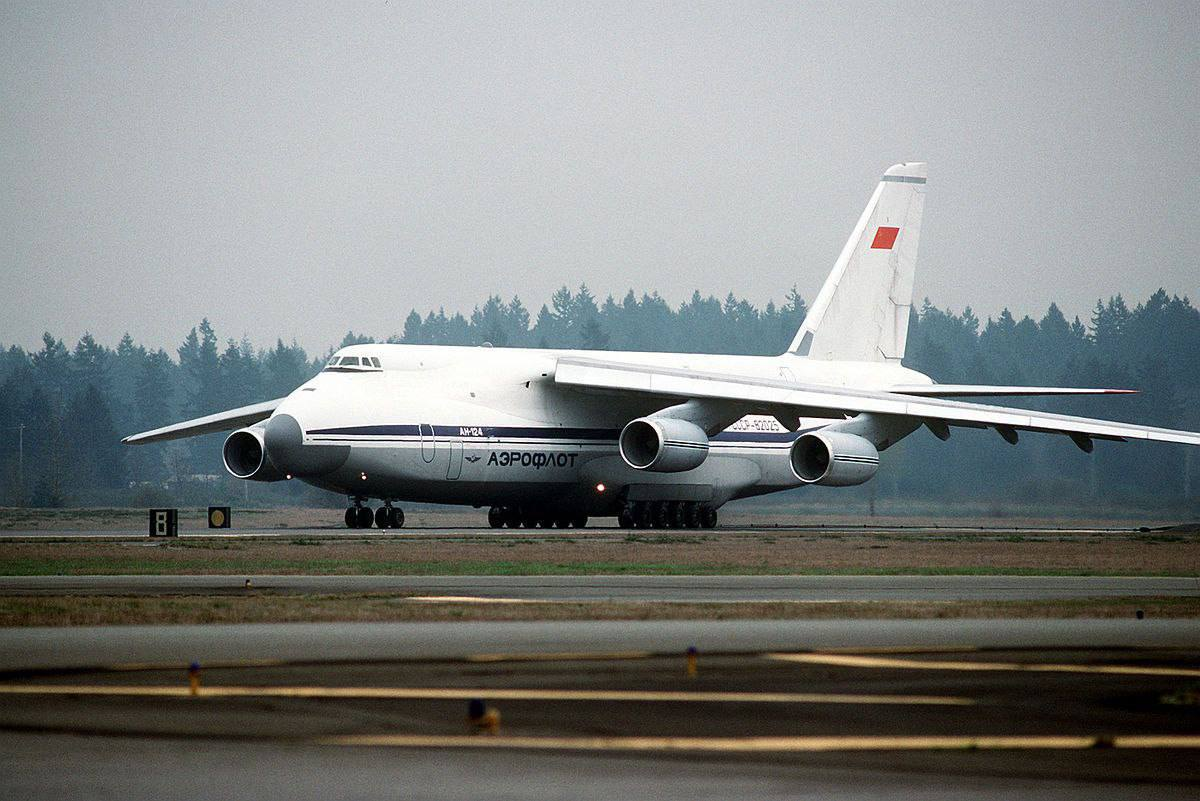
The flight was initiated by test pilots of the Valery Chkalov State Flight Test Center (GLITS). On the evening of December 1, 1990, the An-124 took off from Melbourne, Australia, and headed to Antarctica — the first stage of the historic route, designed to pass through the South Pole, then over South America, North America, the Arctic, and back to the starting point.
More than 90% of the route passed far from traditional air routes — over the featureless expanses of the Pacific, Atlantic, Indian and Southern Oceans. The remaining few percent fell on the icy desert of Antarctica, where there were no ground navigation aids, and magnetic anomalies distorted compass readings. Inertial systems, data from satellite networks, as well as backup astronomical orientation methods were used to provide navigation.
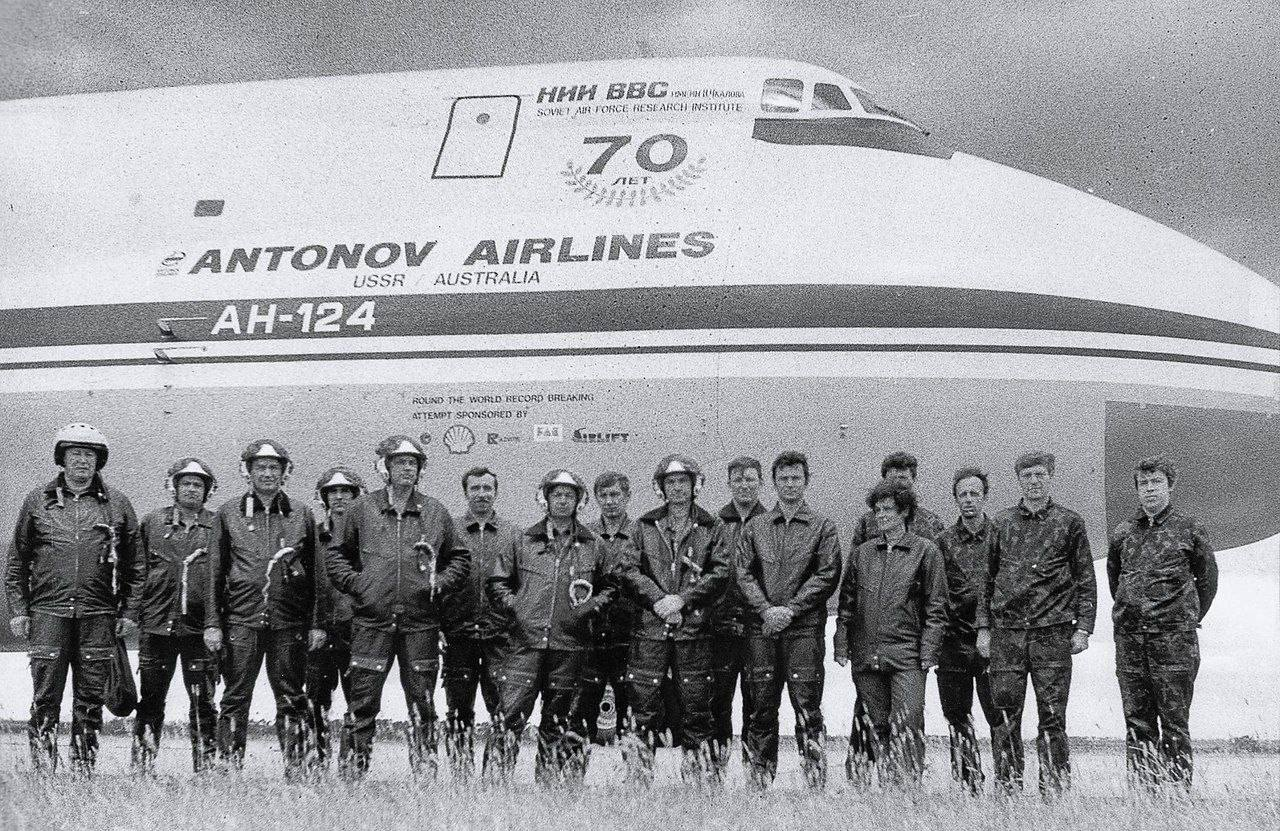
There were two interchangeable crews of six people on board, who alternated every eight hours to maintain high concentration and safety. There were also 24 passengers in the cabin — mainly engineers, representatives of the Ministry of Aviation Industry and journalists, who observed the progress of the mission.
Why the An-124?
An-124 "Ruslan" — the largest mass-produced transport aircraft in the world at the time — had a unique combination of range, payload and autonomy. Developed at the Antonov Design Bureau, it first took to the air in 1982 and has since been actively used for both military and civilian purposes.
Key characteristics of the participating aircraft:
- Engines: 4 × D-18T (turbofan, with a thrust of 23,430 kgf each)
- Maximum take-off weight: 405 tons
- Flight range (with maximum load): up to 4,500 km, without load — up to 15,000 km
- Cruising speed: 800–850 km/h
- Service ceiling: 12,000 m
- Fuel tank volume: about 210,000 liters (in the record flight — with additional tanks)
For the record flight, the aircraft was specially modified: additional fuel tanks were installed, life support and communication systems were strengthened, and navigation equipment was updated.
Flight in honor of Chkalov
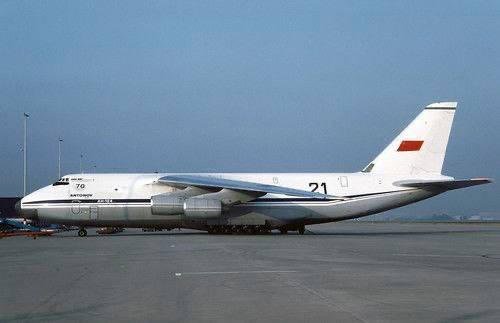
The record flight was timed to coincide with the 70th anniversary of the V. P. Chkalov State Flight Test Center — the main center for testing aviation equipment in the USSR. This emphasized not only the technical skill of Soviet aircraft designers and pilots, but also the desire to maintain continuity in the domestic aviation school, even during a period of systemic crisis in the state system.
Interesting facts:
- During the flight, the aircraft crossed the equator and both polar circles twice.
- The average flight speed was about 690 km/h, which is lower than the cruising speed — due to the need to save fuel.
- There was no cargo on board in the traditional sense — the entire "useful" weight was fuel, crew and equipment.
- The An-124 is still the world's largest mass-produced cargo aircraft in terms of payload, second only in size to the experimental An-225 "Mriya".
The flight of the An-124 "Ruslan" in December 1990 is not just a record recorded in the Guinness Book. This is a technical feat that required the synchronous work of engineers, pilots, meteorologists and logisticians.
Read more materials on the topic:
- Superjet-100 may become a bridge between Russia and India in civil aviation
- From repair to production: Belarus will develop its own civil aircraft by 2030
Never miss our newsAdd this site to your preferred sources to see us more oftenAdd on Google

















