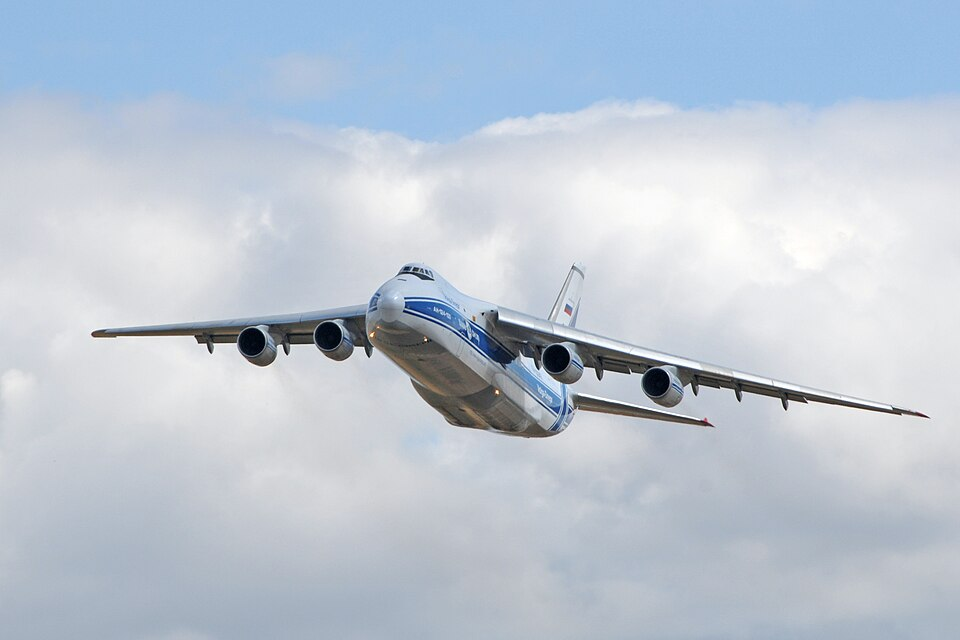
The legendary An-124 "Ruslan" is being replaced by a new generation of domestic super-heavy transport aircraft - the Il-100 "Elephant." This was announced on December 3 by the Governor of the Ulyanovsk Region, Alexei Russkikh, during a direct line with residents of the region, specifying thatproduction of the future aviation giant will be launched at the PJSC Aviastar-SP plant in Ulyanovsk.
First Steps
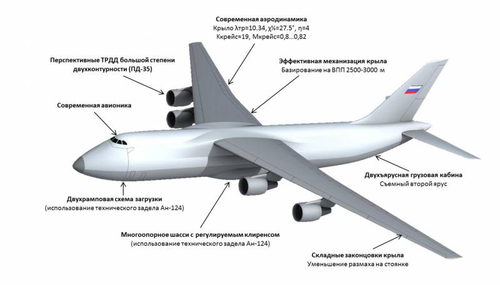
The first model of the Il-100 "Elephant" was presented to the public at the MAKS-2017 international air show. At that time, the project aroused great interest from both the military and civilian communities. The development is being carried out under the leadership of the Central Aerohydrodynamic Institute named after Professor N.E. Zhukovsky (TsAGI), which has been conducting R&D since the 2010s to create a heavy transport aircraft (TTS) to replace the An-124.
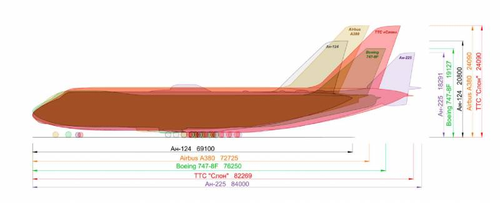
According to official TsAGI data, the "Elephant" will be able to carry from 150 to 180 tons of cargo over a distance of up to 7,000 km, developing a cruising speed of 850 km/h. For comparison: the An-124 has a maximum payload of 150 tons and a range of up to 4,500 km with such a load. Thus, the new Russian transport aircraft not only replaces the "Ruslan" - it reaches a new, advanced level in terms of key technical characteristics.
Construction
Despite its external similarity to the An-124 - in particular, the wide fuselage, nose cargo ramp, and four-engine configuration - the Il-100 is considered a fundamentally new machine. According to TsAGI specialists, modern composite materials, digital control systems, and energy-efficient new-generation engines were used in the design of the "Elephant."
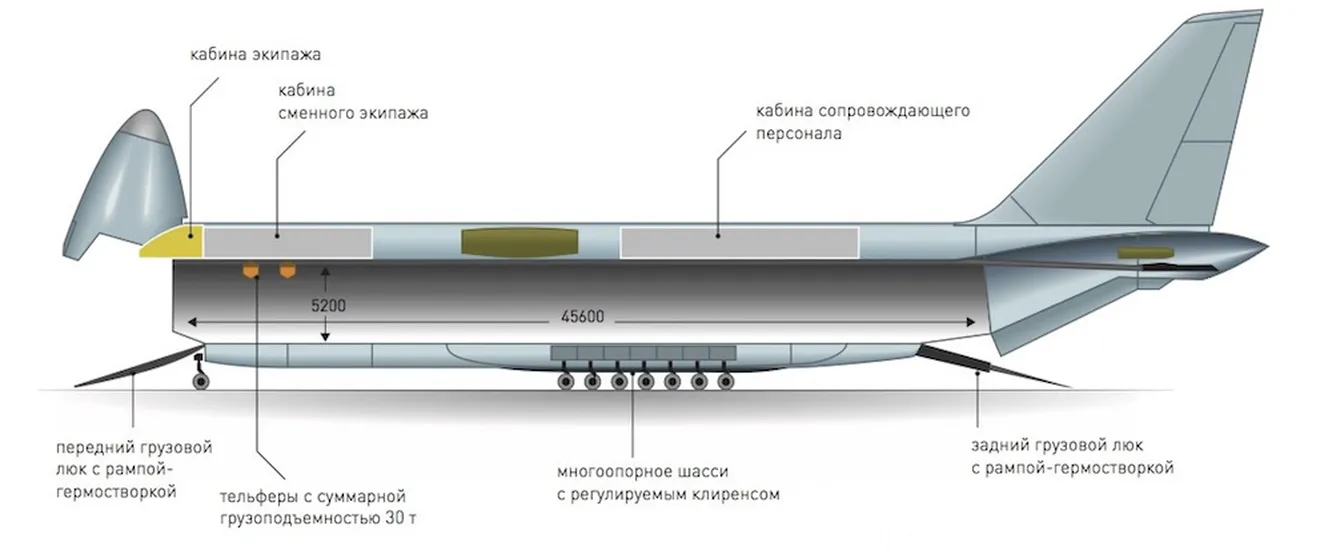
Special attention is paid to the cargo compartment: its volume and dimensions allow transporting oversized equipment, including rocket and space technology and modules of power plants, without dismantling. This makes the aircraft in demand in both the military and civilian sectors.
Production
PJSC "Aviastar" is one of the oldest aircraft factories in Russia, previously involved in the production of Tu-204, Tu-214, and components for the Il-96. The company is already preparing production facilities for the production of the "Elephant," including the reconstruction of assembly shops and personnel training.
Strategic Importance
Against the background of the reduction in the An-124 fleet (according to the Ministry of Defense of the Russian Federation, less than 10 units remained in service by 2024) and the cessation of their repair at the Aviant plant in Kyiv, the creation of the Il-100 acquires not only technical but also geopolitical significance. Russia seeks to ensure complete technological sovereignty in the field of strategic air transportation.
In addition, the "Elephant" can become an export product. According to Rostec analysts, the global market for heavy transport aircraft with a volume of over 100 tons is estimated at $25-30 billion by 2040.
Currently, the Il-100 is in the technical design phase. The first flight prototype is expected to enter production no earlier than 2028.
Read more materials on the topic:
- Superjet-100 Could Become a Bridge Between Russia and India in Civil Aviation
- Tatarstan Could Become a Center for the Production of Unmanned Helicopters Based on the Ka-226
- UZGA Has Expanded the Capabilities of the UTS-800 for Flights Above 6000 Meters
Never miss our newsAdd this site to your preferred sources to see us more oftenAdd on Google

















