Announcements of new Russian weapons - the Burevestnik missile and the Poseidon torpedo - have once again brought attention to compact nuclear reactors. According to experts, the reactors, which are likely to be installed on these systems, are based on fast neutron reactors and have characteristics that can be used not only in military but also in civil energy.
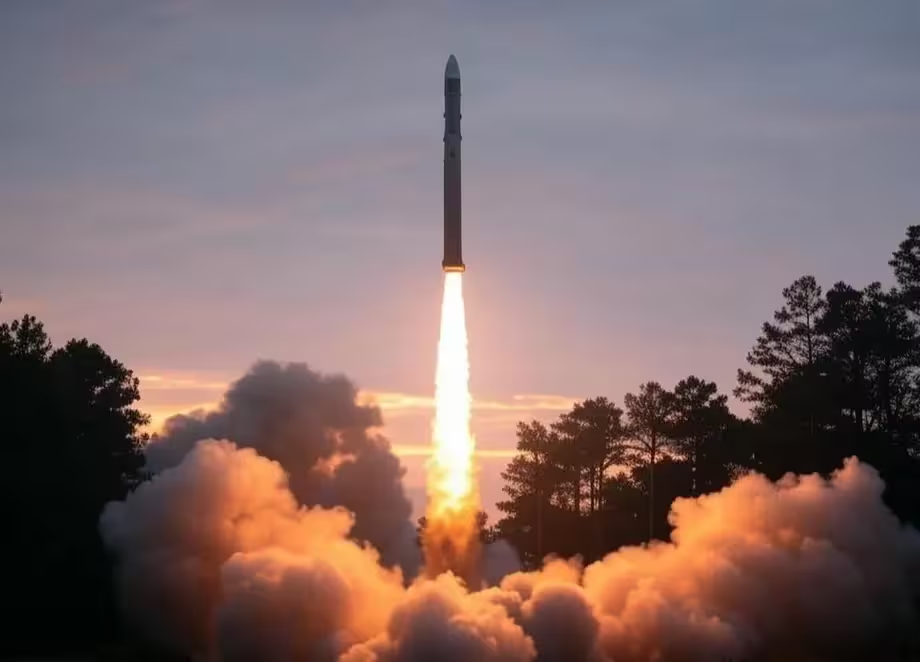
What are these installations and what is their fundamental feature
Burevestnik and Poseidon are weapon systems with nuclear power plants that provide an almost unlimited range. According to statements, their reactors are significantly smaller in size than submarine reactors: the Burevestnik's is ~1000 times smaller, and the Poseidon's is ~100 times smaller. Such compact capacities require different approaches to design: higher fuel enrichment, a different coolant, and possibly the use of fast neutron reactors.

Types of reactors
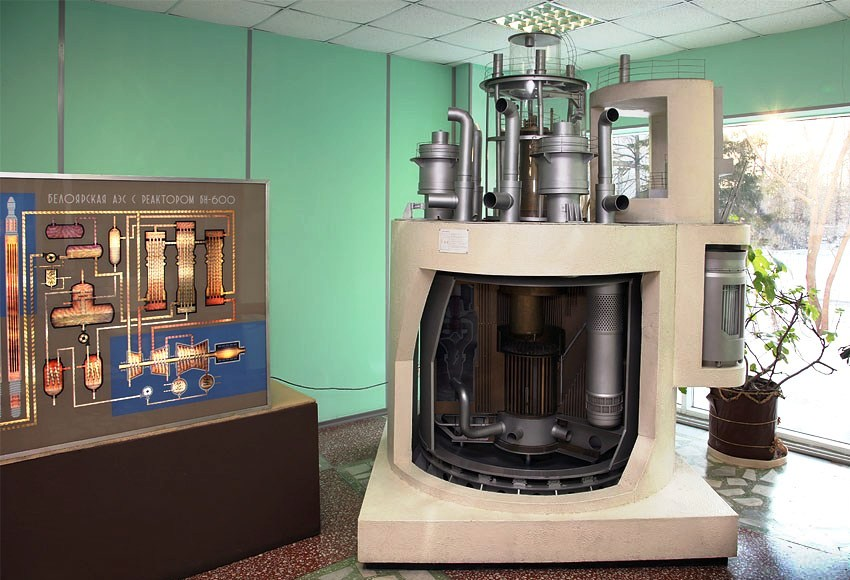
Fast neutron reactors do not use (or almost do not use) a moderator, keeping neutrons fast and requiring more highly enriched fuel or plutonium, which allows the core to be made more compact and increase its power. Unlike water-cooled systems, these installations often use metal coolants, such as sodium or lead-bismuth, which have a wide range of operating temperatures at atmospheric pressure and provide a simpler and lighter heat transfer system. At the same time, to improve safety, industrial fast reactors, such as BN-600 and BN-800, use multi-stage coolant circuits, separating the radioactive part from the steam part, which complicates the design but reduces risks.
Peaceful application
Such reactors can be used peacefully as compact energy sources in remote areas where autonomous power plants are needed. They can be used for desalination of sea water and heating of remote settlements, as well as installed on floating or underwater facilities to provide energy to research stations and platforms. In the future, such reactors can help in space, providing power for long-distance flights with strict safety measures. In addition, they are suitable for nuclear fuel reprocessing: they are capable of "afterburning" dangerous elements and reducing the amount of long-lived waste, as well as using recycled materials, reducing the need for mining new uranium.
Reactors similar to those potentially installed on the Burevestnik and Poseidon have properties that make them useful not only in the interests of the military, but also in peaceful industries.
Earlierwww1.ru reported thatthe Poseidon carrier, the Khabarovsk submarine, received a water-jet propulsion unit to reduce noise.
Read more materials:
- Russian Su-30SM and Su-35S fighters conquered the sky of China: the Russian Aerospace Forces aerobatic team performed at the air show in Nanchang
- Rosaviatsiya is accelerating the certification of Baikal and Osvey for regional aviation
- Military expert: Poseidon turns enemy naval bases into a vulnerable target
Now on home

Start of deliveries scheduled for 2027

Over 51,000 new motorcycles were sold in Russia in 2025

The car will take at least a year to assemble

The application's audience has reached 20 million users

The model will be included in the list of cars for taxis, price - from 2.25 million rubles

All parking lots of the "Administrator of the Moscow Parking Space" are connected to the service

The cars will be supplied to the Moscow Transport Service Directorate

Deliveries to India may begin in 2028

The technology provides automated search for all types of defects in power units

The plane flew 500 km, accelerating to 425 km/h

The plant stated that the information about the termination of purchases for models 6 and 8 is not true

Scientists are using the "Ekran-M" installation
Articles
-
Russian An-124 "Ruslan" Stuck in Canada for 4 Years and Accrues Millions in Fines
26 Jan 2026
-
Coaxial Propellers: How Counter-Rotation Increases Turboprop Engine Efficiency
25 Jan 2026
-
Kazan Aviation Plant Breaks Old System: Tu-214 to be Assembled Like Cars
25 Jan 2026
-
How Engineers and Technicians Are Paid Today in the Russian Aviation Industry: An Overview with Figures
24 Jan 2026