Beyond Sergei Bondarchuk's cult military drama lies a fascinating story that could be the plot for a separate film: burned villages, tons of explosives, a revolt against generals' memoirs, and the unexpected death of the main actor. In 2025, it will be fifty years since the release of "They Fought for Their Country" — a film in which every scene is imbued with front-line truth, and the filming process turned into a real struggle.

Plot
July 1942. On the approaches to Stalingrad, the bloodless, exhausted Soviet troops are engaged in heavy defensive battles, suffering huge losses. The film tells about the feat of ordinary soldiers, love for their native land, and the true price of victory.
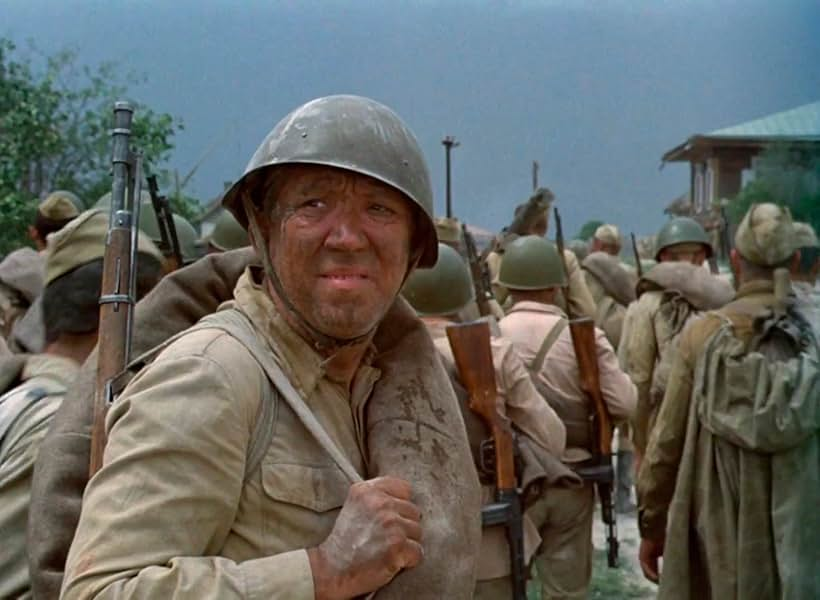
Soldiers, yesterday's peasants and workers, desperately hold back the enemy's onslaught with weapons in their hands, surpassing them in strength and technology. Trenches, scarred by explosions, become their home, and short respites between battles are a moment of rare calm, filled with memories of peaceful life, of relatives and friends left far behind.
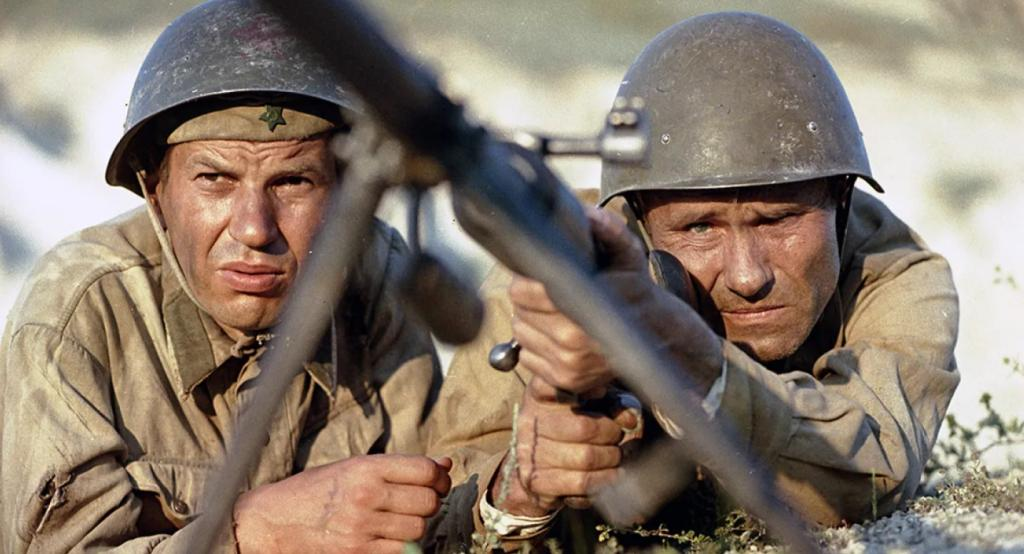
Amid the incessant roar of guns and the свист of bullets, the true characters of people are revealed. The simple-minded private Streltsov (Yuri Nikulin), the taciturn sergeant major Popchenko (Sergei Bondarchuk), the fearless lieutenant Golokhvastov (Vasily Shukshin) — each of them experiences the horrors of war in their own way, but they are all united by one thing — an unwavering belief in victory and a willingness to give their lives for their Motherland.
Filming process
At Sholokhov's insistence, the film was shot in the places of real battles. Before the group arrived, sappers cleared the fields of unexploded shells. In May 1974, a mass film battle unfolded near the village of Kletskaya, where mannequins with the faces of famous actors were used, creating the illusion of real victims.
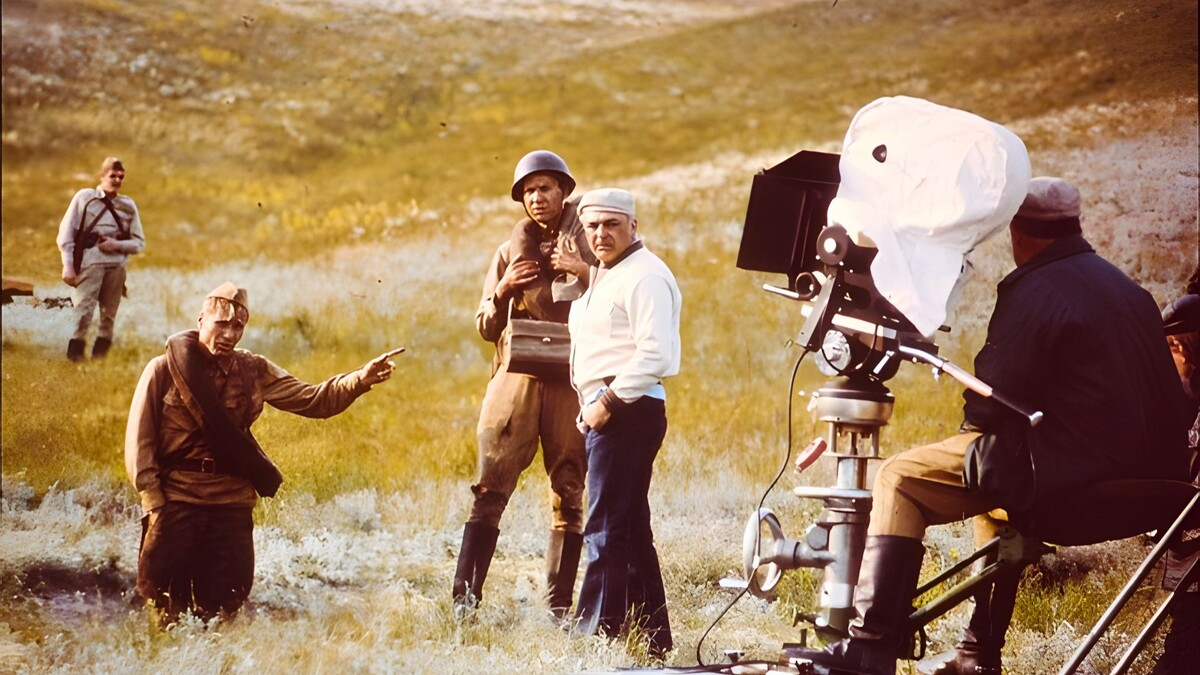
For one of the scenes, the Melologovsky farm was burned down, buying houses from local residents and building them new housing. They also burned a field of wheat, compensating the collective farm for the losses. The production designer was Felix Yasyukevich.
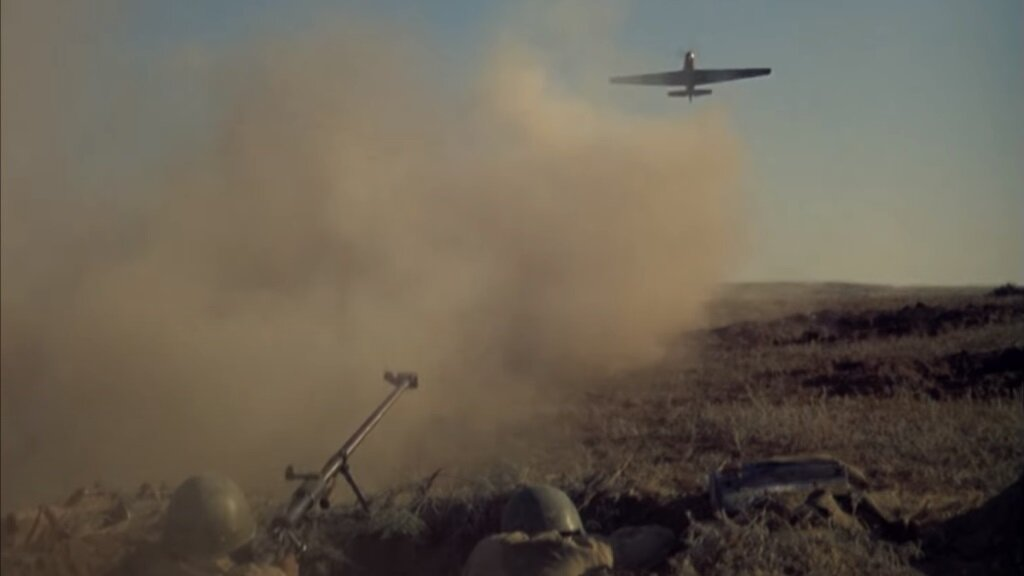
The complexity of filming scenes involving aviation was added by the fact that the nearest runway was at a considerable distance, due to which the planes could be in the frame for about seven minutes. After that, it was necessary to return for refueling. Since using military equipment is expensive and time-consuming, they tried to shoot with a minimum number of takes.
Technique
Director Sergei Bondarchuk not only conducted thorough training of the cast for a more convincing performance. He also paid special attention to the military equipment involved in the filming. After all, the film was planned to shoot large-scale and impressive battle scenes with the participation of airplanes and tanks.
Actually, due to the unprecedented scale of the future "battles," the filmmakers had to be cunning in the matter of equipping with tracked and winged vehicles: it turned out to be simply impossible to get the required number of tanks from the times of the Great Patriotic War — and even on the move.

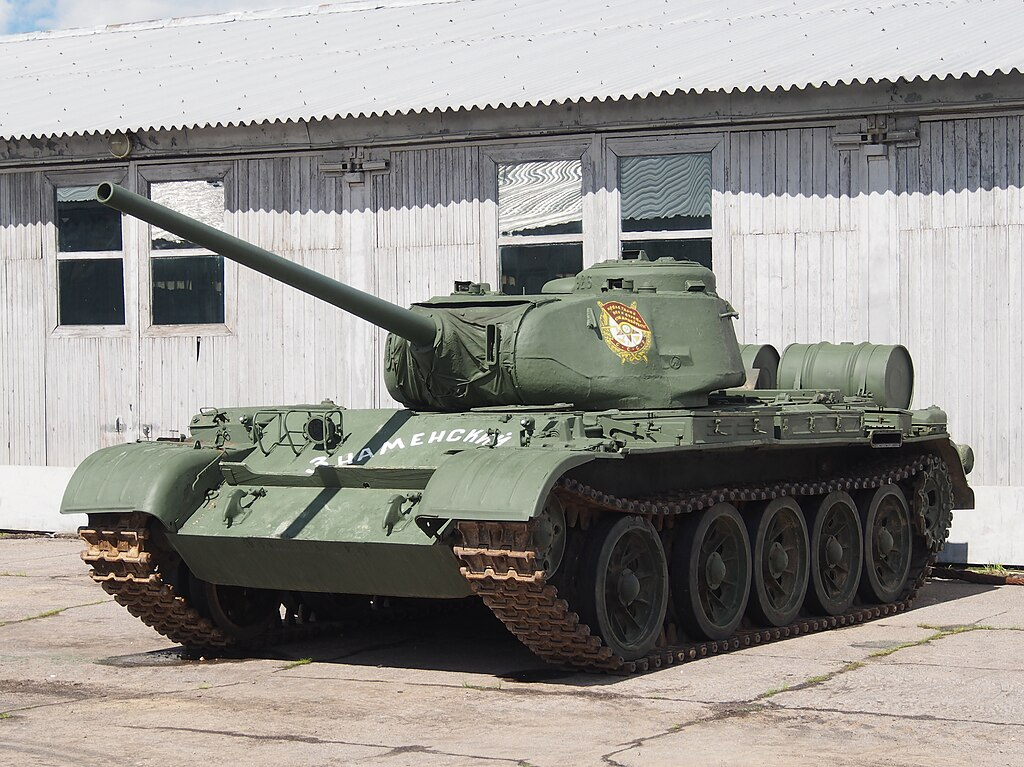
The creators of the film had to wriggle out. We had to forget about complete authenticity. So, instead of captured German "Tigers," Soviet T-44s were used "after a slight modification with a file." Outwardly, after such a disguise, they did not differ much from the originals, but the chassis with a different number of rollers gave out the substitution. And the same problem arose with the "messers." So instead of them, Czechoslovak L-29s were buzzing in the sky above the heroes of the picture.
Of course, with such scales, other difficulties arose with the equipment. Then the operator was almost "caressed" by a log stuck on the tank, then the mechanic-driver, who did not understand the command, would turn the wrong way, almost crushing the crowd. Even radios, which had to be used for coordination due to the gigantic size of the filming site, did not save from such force majeure.
About five tons of TNT were used in the work on the picture. Fortunately, the filmmakers managed to avoid serious accidents when working with this substance.
Main parameters of the T-44 tank: weight in combat gear 31.8 tons, crew four people, dimensions — hull length 6.07 m, total length with gun 7.65 m, width 3.18 m, height 2.41 m; armament includes an 85-mm ZIS-S-53 gun of the 1944 model and two 7.62-mm DTM machine guns; diesel engine V-44 with a power of 368 kW (500 hp); the speed on the highway reaches 60 km/h, on rough terrain 25–30 km/h; the cruising range on the highway is 200–250 km, on rough terrain 180–200 km; suspension is individual torsion, specific pressure on the ground is 0.83 kg/cm².
Technical characteristics of the Czechoslovak Aero L-29 Delfin aircraft: crew — 2 people, wingspan — 10.29 m, length — 10.81 m, height — 3.13 m, wing area — 19.8 m², empty weight — 2384 kg, fuel reserve — main 1030 l, equipped weight — 3280 kg, full take-off weight — 3632 kg, engine — 1×Motorlet M-701C 500, maximum thrust — 1×840 kgf (8.7 kN), maximum speed — at an altitude of 8000 m — 612 km/h, stall speed — 130 km/h, flight range — with 100% fuel — 710 km (1 hour 44 minutes), with two suspended tanks — 920 km (2 hours 15 minutes), practical ceiling — 10 900 m, take-off run length on a concrete strip — 600–650 m, armament — two bombs of caliber 50, 100 or a maximum of 120 kg on two external beam holders or two blocks of R57-4M with four S-5 missiles.

The film ends with a quote from Mikhail Sholokhov: "If love for the Motherland is stored in our hearts, and will be stored as long as these hearts beat, then we always carry hatred for enemies on the tips of bayonets"
Earlier, www1 recommended to watch a Russian documentary about a fascinating journey on icebreakers to the northern outskirts of the world — "To the Arctic".
Read also on the topic:
Now on home

Start of deliveries scheduled for 2027

Over 51,000 new motorcycles were sold in Russia in 2025

The car will take at least a year to assemble

The application's audience has reached 20 million users

The model will be included in the list of cars for taxis, price - from 2.25 million rubles

All parking lots of the "Administrator of the Moscow Parking Space" are connected to the service

The cars will be supplied to the Moscow Transport Service Directorate

Deliveries to India may begin in 2028

The technology provides automated search for all types of defects in power units

The plane flew 500 km, accelerating to 425 km/h

The plant stated that the information about the termination of purchases for models 6 and 8 is not true

Scientists are using the "Ekran-M" installation
Articles
-
Russian An-124 "Ruslan" Stuck in Canada for 4 Years and Accrues Millions in Fines
26 Jan 2026
-
Coaxial Propellers: How Counter-Rotation Increases Turboprop Engine Efficiency
25 Jan 2026
-
Kazan Aviation Plant Breaks Old System: Tu-214 to be Assembled Like Cars
25 Jan 2026
-
How Engineers and Technicians Are Paid Today in the Russian Aviation Industry: An Overview with Figures
24 Jan 2026