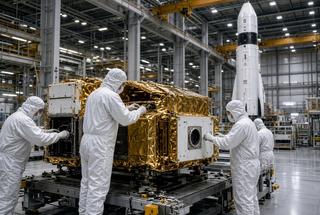
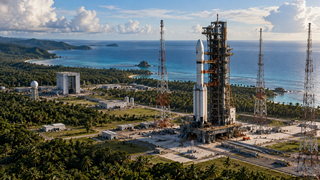
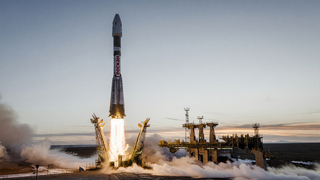
According to the head of Roscosmos, Dmitry Bakanov, which attracted the attention of American journalist and space reviewer for Ars Technica, Eric Berger, the first flight of the promising two-stage Russian medium-class rocket Soyuz-5 is expected by the end of this year.

Yes, we are planning the launch for December, everything is ready.
According to Berger, the Soyuz-5 is not a breakthrough development. Despite a decade of creation, it remains disposable, which distinguishes it from promising medium-class launch vehicles that are being developed with an emphasis on reusability.
According to the reviewer, the Soyuz-5 is an enlarged modification of the Zenit-2 rocket, which was produced at the Ukrainian Yuzhmash plant. The first and second stages of the Zenit were also produced there. However, the first stage engine, the extremely powerful RD-171, was developed and manufactured in Russia by NPO Energomash. The medium-lift rocket, which appeared in the 1980s and made many flights until the 2010s, became the last major Soviet development.
The key feature of the Soyuz-5 rocket is its RD-171MV engine. It represents the development of technologies originally created for the Soviet Energia program - the Buran space shuttle carrier. An earlier version, the RD-171, was used on Zenit rockets. The new modification completely abandoned Ukrainian components.
These engines, which use kerosene and liquid oxygen, have a thrust three times greater than the thrust of the main engine of the NASA space shuttle. This makes them the most powerful liquid rocket engines in the world.
Despite the fact that the Soyuz-5 will be able to put up to 17 tons into low Earth orbit, the main question is commercial success and the ability to attract foreign customers. The cost of launching a kilogram of payload into LEO for the Soyuz-5 is estimated at 300 thousand rubles. For comparison, the American competitor SpaceX with its partially reusable Falcon 9 rocket offers a similar service for 2939 US dollars, which at the current exchange rate is just over 230 thousand rubles.
Read more on the topic:
Future of space: Russia discusses space cooperation with other countries after the ISS
Baikal Takes Off: Developer Talks About Testing of New LMS-901 Aircraft
Never miss our newsAdd this site to your preferred sources to see us more oftenAdd on Google