In the Russian Empire, until the 19th century, warships were painted black. However, in 1895, the hero of the Japanese War, Vice Admiral Stepan Makarov, proposed using spherical paint (all shades of matte gray).
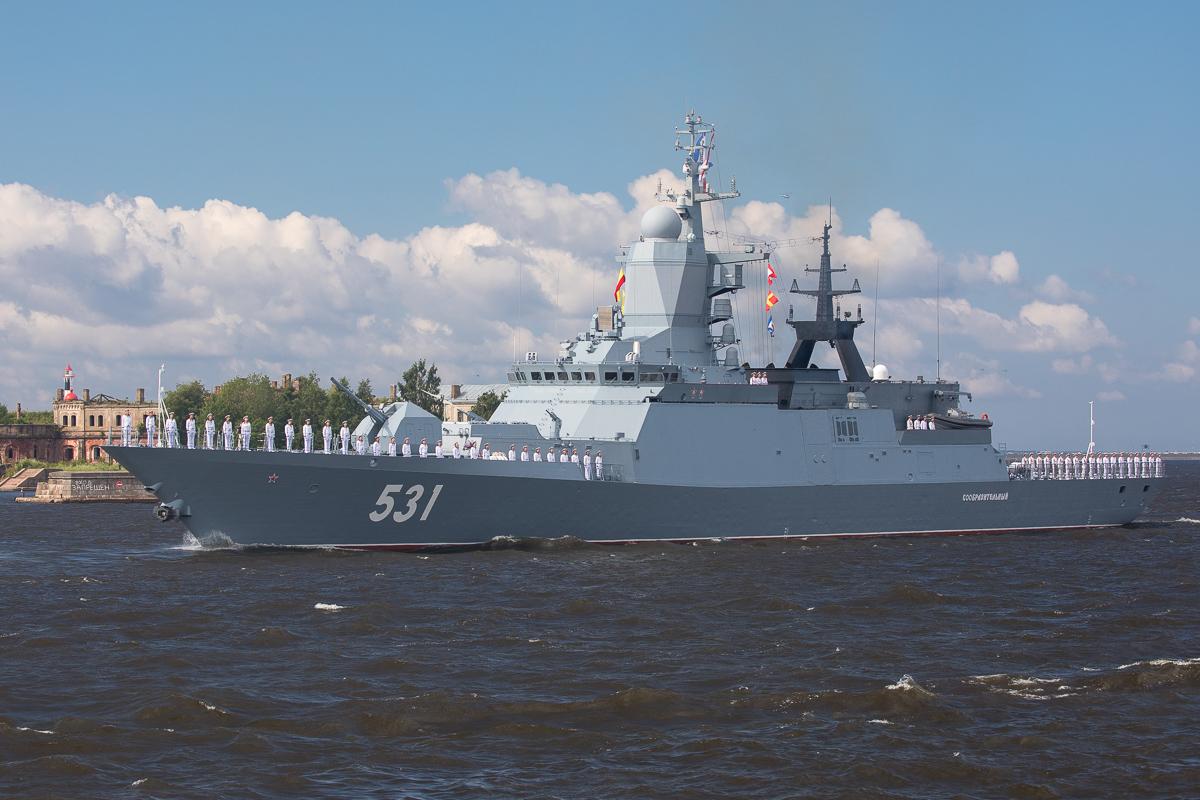
Experts from the Amur Shipbuilding Plant explain that the name of the paint is associated with the professional jargon of painters of the 18th-19th centuries - "shara". It was made from whitewash, chalk and soot. Perhaps the word goes back to the obsolete adjective "sharovy", which meant a gray-smoky shade.
Spherical paints are used to paint the above-water part of the ship's hull, as well as all superstructures, pipes and masts.
Painting a warship gray is necessary to camouflage it against the sea. Previously, there was an abundance of spherical paint: it was used to paint fences, coastal buildings, storage walls and auxiliary premises of the fleet.
Modern warships are painted in several stages. Masters use anti-corrosion, anti-fouling (protection against mollusks, algae) and special camouflage paints. For example, the above-water part of the vessel is painted in 3 layers: epoxy anti-corrosion primer, epoxy primer-enamel and a finishing polyurethane coating.
Read more on the topic:
Amur Shipbuilding Plant launched the fifth block of the Amurets pontoon dock onto the slipway
Amur Shipbuilding Plant assembled the fourth block of the Amurets pontoon dock
Never miss our newsAdd this site to your preferred sources to see us more oftenAdd on Google

















