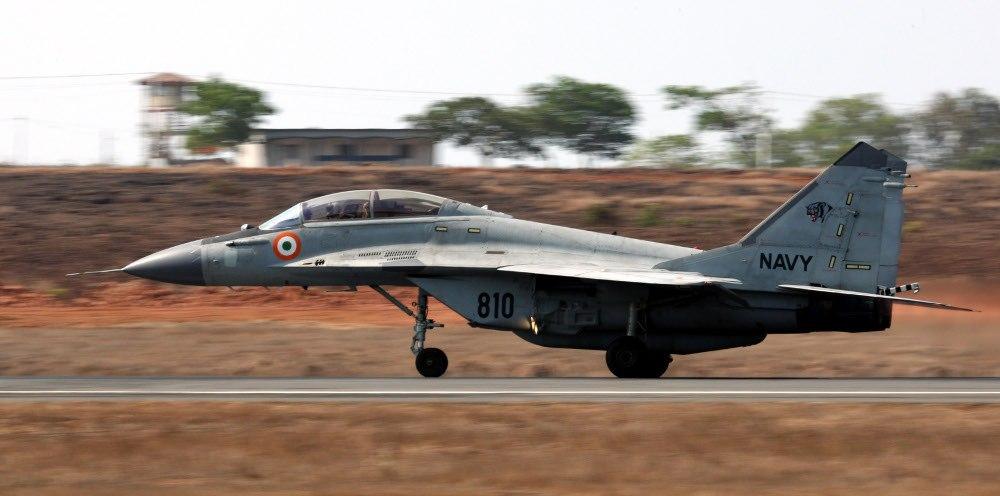
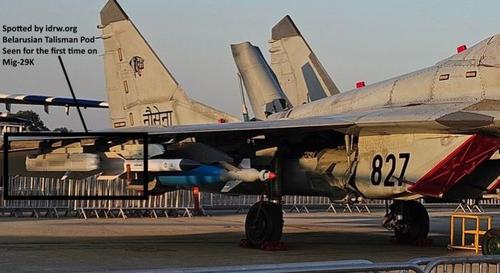
The Soviet carrier-based multirole fourth-generation MiG-29K fighter of the Indian Navy has been equipped with the Belarusian "Talisman" airborne defense system (ADS). A photo of the aircraft with a system for protection against air-to-air and surface-to-air missiles was taken at the Aero India 2025 exhibition.
"Talisman" ADS is a modern electronic warfare system that protects the aircraft from missiles with active/semi-active homing heads, with optoelectronic (infrared) guidance.
The Belarusian ADS can suppress signals transmitted to anti-aircraft missiles from ground control points. Its valuable characteristic is additional protection against friendly fire.
"Talisman" is placed in suspended containers on the underwing suspension points of the fighter.
The complex includes:
- radar warning equipment
- electronic countermeasures equipment
- barrier radar for detecting attacking missiles
Read also on the topic:
Outpaced the F-35 and J-20 in speed: Russian Su-57 fighter soared into the sky in 12 seconds
Following the Iranian path: it became known how to establish mass production of the S-70 "Okhotnik"
Never miss our newsAdd this site to your preferred sources to see us more oftenAdd on Google

















