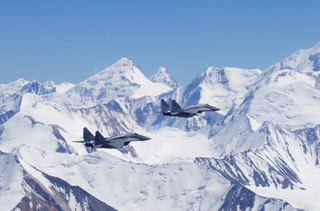
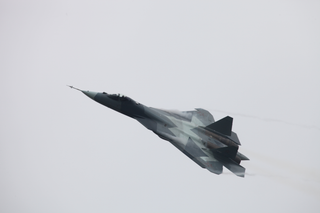
There are conflicting reports about the fate of the MiG-35 fighter. Some claim that it will be adopted, others talk about its export, and some consider the project hopeless. Let's figure out what this machine is and whether it has a future.
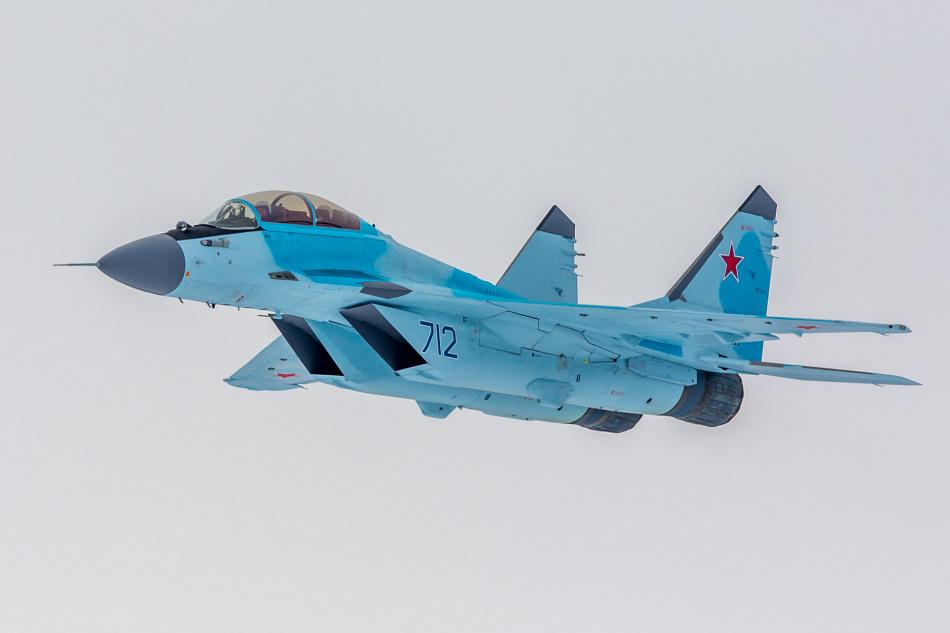
After the collapse of the USSR, the country's military-industrial complex experienced a crisis. Despite this, the light MiG-29 fighters remained in demand and promising. They, like the heavy Su-27, were fourth-generation machines and could develop further. New, improved versions with new names were created on their basis. For example, the modern Su-35S came from the Su-27M, and the MiG-35 came from the MiG-29M/M2.
What happened to the MiGs?
The MiG-29 met the end of the USSR at the peak of its glory. This fighter was one of the best in its class and surpassed many foreign counterparts, such as the F-16, Mirage 2000, and even modern Eurofighters, Rafales, and Gripens.
The MiG-29 was actively exported to friendly countries, and even in difficult times it had good prospects. From the 1980s, when mass production began, to the present day, more than 1,400 MiG-29 aircraft of various modifications have been produced. Over time, the aircraft became better thanks to new technologies and improved equipment.
In the early 1980s, the MiG-29 was one of the most advanced fighters. It was distinguished by high maneuverability and thrust-to-weight ratio. The aircraft weighed 15.3 tons, could lift up to 2 tons of bombs, and had a flight range of about 1430 kilometers. The maximum speed reached 2450 km/h, and the cruising speed was 850 km/h.
The MiG-29 had two RD-33F engines, which produced up to 8.3 tons of thrust each in afterburner. The aircraft was equipped with a powerful radar station and on-board equipment, which allowed detecting enemy ships at a distance of up to 70-80 kilometers and tracking up to 10 targets simultaneously.
The MiG-29's armament included a 30-mm cannon, two R-27R medium-range air-to-air missiles, and up to six R-60/R-73 short-range missiles. For ground strikes, it was possible to use bombs weighing 250 and 500 kg, unguided missiles, or ZB-500 incendiary tanks.
This fighter was a real monster in the sky and became the basis of Soviet fighter aviation for many years.
In the mid-1980s, an upgraded version of the MiG-29 fighter, known as the "9-13", received improved characteristics. It could carry up to 3.2 tons of payload and had an increased flight range.
In 1985, an experimental version of the "9-14" was created. It was equipped with new air-to-ground guided missiles and guided bombs, which made it possible to increase the maximum bomb load to 4.5 tons. Although this version did not go into mass production, its developments became the basis for future modifications.
The modification "9-13S" (MiG-29S) was modified to lift up to 4 tons of payload. New equipment made it possible to attack two targets at once, and new R-77 (RVV-AE) air-to-air missiles were also added. However, by 1991, when these changes began, mass series were no longer planned.
In the 1990s, many modifications of the MiG-29 were created. Some of them, such as the MiG-29SM ("9-12SM") and MiG-29SMT ("9-17", "9-18", "9-19"), became multirole fighters with improved on-board equipment and powerful radars.
MiG-29UB is a two-seat combat training version of the MiG-29, created to train pilots of single-seat models. Over time, it was upgraded to a full-fledged combat vehicle - the MiG-29UBM.
The MiG-29M ("9-15", sometimes called MiG-33) is a deeply modernized version of the MiG-29. Developed in 1986-1991, it combined all the best developments of previous models. The MiG-29M belongs to the "4+" generation and in terms of its characteristics is between the 4th and 5th generations of fighters.
In parallel with this, the Mikoyan Design Bureau was developing its fifth-generation fighter project called "1.44". Some of the technologies from this project were planned to be used in the MiG-29M.
The MiG-29M increased the flight range to 2000 km, while the take-off and landing characteristics remained almost unchanged. The maximum speed increased to 2500 km/h. This was made possible thanks to the new RD-33K engines with digital control, which produced up to 8.8 tons of thrust each. The aircraft could attack up to four enemy vehicles simultaneously. Its combat load reached 4.5 tons, including modern missiles and bombs.
However, in 1991, plans for mass production and deliveries of the MiG-29M to the army collapsed. The new fighter passed state tests in 1991, and mass deliveries were to begin in 1992. Instead, the MiG-29M began to be shown at exhibitions, offered for export, and modernized.
In 2001, a super-maneuverable version of the MiG-29OVT appeared. It had engines with a variable thrust vector. This version was created on the basis of the sixth experimental copy of the MiG-29M. The MiG-29M2 was also developed using one of the previously built MiG-29M machines. Export versions of the MiG-29M were supplied to India, Egypt, and other countries.
Another version of the MiG-29 fighter was the MiG-29K deck modification, known as the "9-31". It was intended for aircraft carriers.
A new milestone in history
In the 2000s, Russia began to restore its armed forces after the crisis of the 1990s. Although Soviet MiG-29s still remained in service, it was decided to update the fighter fleet. In 2009-2016, 40 modernized MiG-29SMTs, 8 MiG-29UBM combat trainers, and 24 MiG-29K and MiG-29KUB shipborne aircraft were produced.
But time passed, and the question arose about creating a new light fighter. In 2007, a prototype of the MiG-35 based on the MiG-29M2 appeared. In 2016, the first MiG-35 took to the air, and in 2017 it was officially presented. In 2018, 6 aircraft were ordered for the Russian Aerospace Forces with delivery by 2023. As of the beginning of 2025, they are still undergoing testing.
Thus, the MiG-35 is a modern Russian fighter that is gradually replacing obsolete models.
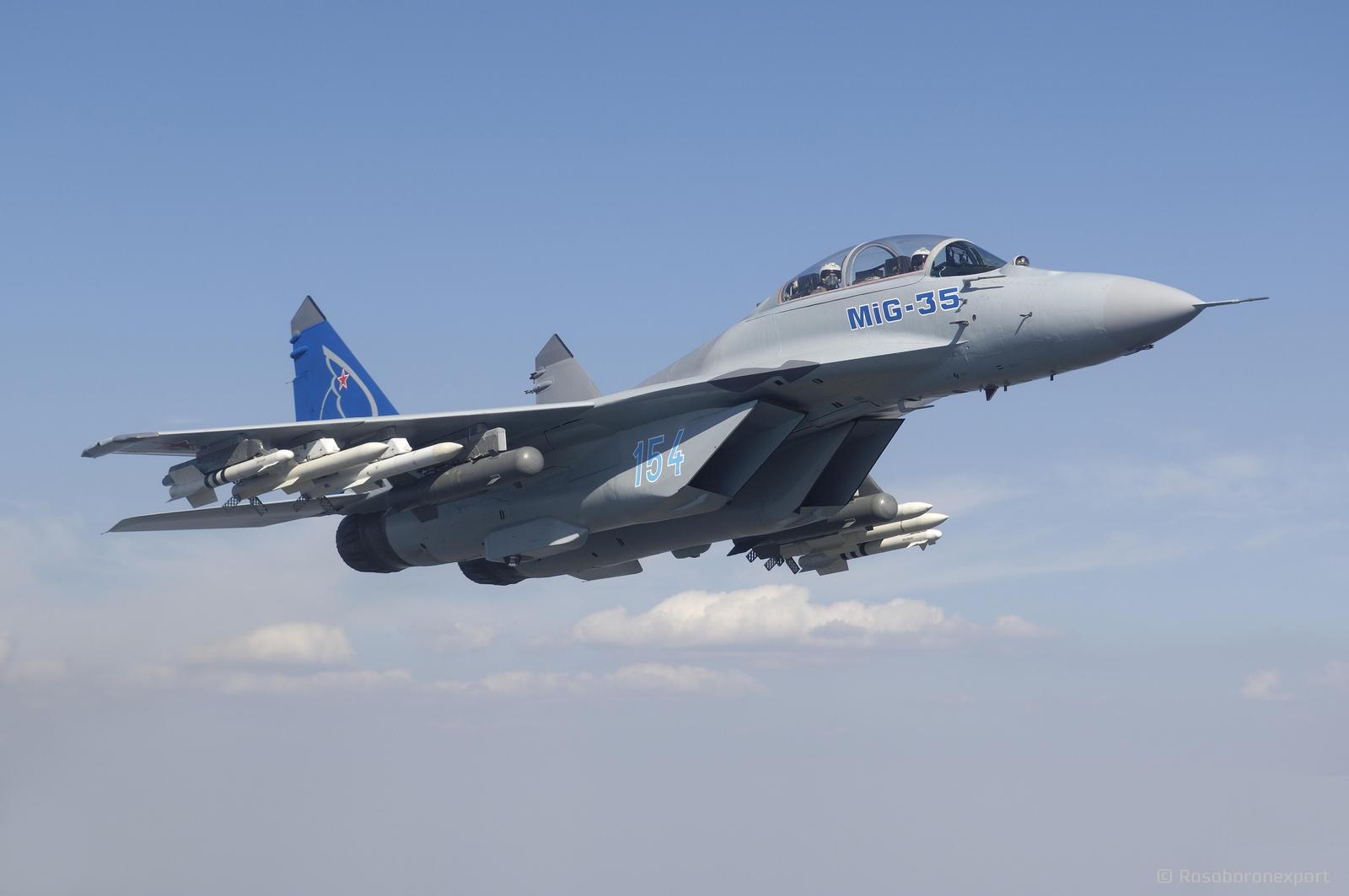
What is the MiG-35?
This aircraft has become even heavier compared to previous models. Its maximum weight is 24.5 tons, and the normal take-off weight is 18.5 tons. The combat load on 8 suspension points reached a record for the MiG-29 family - 6.5-7 tons.
To maintain flight characteristics, the RD-33 engines were modified. Either new RD-33MKs or their RD-33MKB version with a variable thrust vector are used. The afterburner thrust reached 9 tons.
The capabilities of weapons and avionics meet the requirements of the 2020s. It was reported about the use of a new version of the Zhuk-A radar with AFAR (accompanies up to 30 targets, simultaneously attacking up to 6 of them), as well as new missiles, bombs, and other types of weapons.
The MiG-35 can be mass-produced, but there have been no reports about the program after 2022. There are opinions that the military is interested in the new light aircraft of the Sukhoi Design Bureau, which belongs to the full-fledged fifth generation - the Su-75, which will begin its first flights in 2025 or 2026. Because of this, the MiG-35 is allegedly again unclaimed as a "4++" generation machine. However, there is no confirmation of these hypotheses yet.
There are also opposite opinions from the aviation sphere that the MiG-35 will be built in small series from 2025 or 2026, gradually replacing the fleet of all previously produced and surviving MiG-29 aircraft. Therefore, it remains only to assume how the story with the "thirty-fifth" will end.
The MiG-35 is the latest multirole aviation complex of the "4++" generation, created to operate in high-intensity armed conflict zones.
Earlier it was suggested that in the near future the Russian Aerospace Forces may receive a significant reinforcement: new fighters of the "4++" generation MiG-35, equipped with fifth-generation technologies,will begin to enter the troops.
Read materials on the topic:
Behind F-16 and Rafale: Western analysts called the Russian MiG-35 a "complete failure"
"Sukhoi" left MiG behind: Eurasian Times explained why the MiG-35 has to fight for buyers
The "live" MiG-35 fighter will be shown for the first time at the Patriot KVC near Moscow
Never miss our newsAdd this site to your preferred sources to see us more oftenAdd on Google